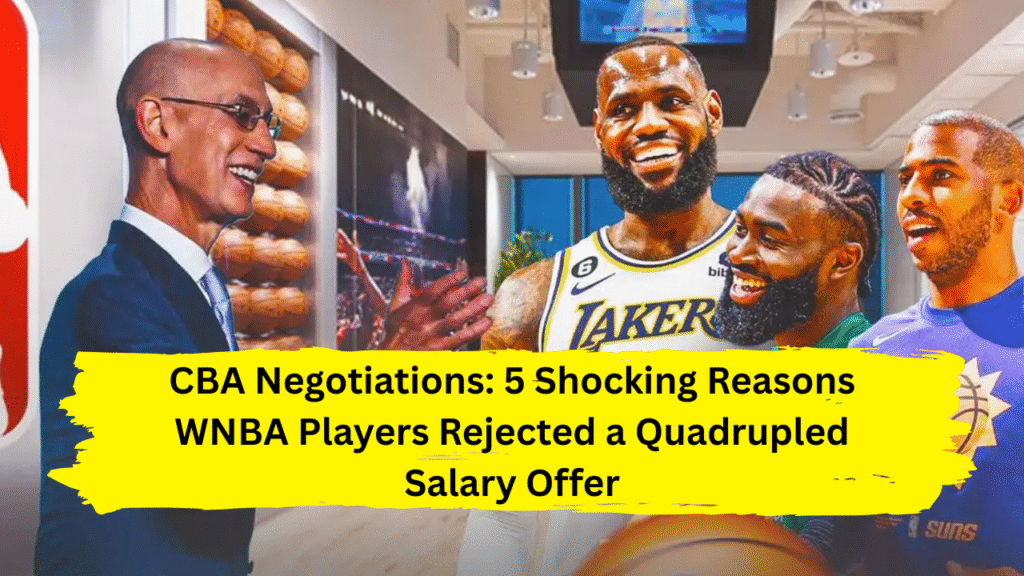
CBA negotiations in the WNBA took a surprising turn when players rejected a quadrupled salary offer. Here are 5 reasons behind this bold decision.
CBA Negotiations: Why WNBA Players Said ‘No’ to More Money
The CBA negotiations between the WNBA and its players have taken an unexpected twist, grabbing headlines across the sports world. Imagine being offered a salary that’s four times bigger than your current one—and still saying no. That’s exactly what happened. But before you scratch your head, there’s a deeper story here. The rejection wasn’t about greed—it was about fairness, respect, and the future of the game.
The Context of the Current CBA Negotiations
Right now, the CBA negotiations are the biggest talking point in women’s basketball. The WNBA and the players’ union are trying to hammer out a new deal, with the league reportedly putting a quadrupled salary offer on the table. On the surface, that sounds like an easy yes. But the players saw issues that went beyond the paycheck.
Reason 1: It’s Not Just About Salaries
The main sticking point in the CBA negotiations is that salaries are only part of the equation. Players want better travel conditions, improved scheduling, and more investment in training facilities. Without those, a pay raise feels like a short-term fix for a long-term problem.
Reason 2: Revenue Sharing Is the Bigger Fight
Even with a quadrupled salary offer, the CBA negotiations have revealed that players want a fairer share of league revenue. Right now, the percentage they receive is far lower than what athletes in other major leagues get. The demand is simple: if the WNBA grows, players should directly benefit.
Reason 3: Player Health and Safety
The CBA negotiations also center around health and wellness. Players are pushing for better medical care, more rest days, and solutions to the league’s controversial travel policies—like the frequent use of commercial flights, which can cause delays, fatigue, and increased injury risks.
Reason 4: Long-Term League Growth
Many players believe that agreeing to the offer without addressing structural issues could slow the league’s progress. The CBA negotiations are about building a foundation for future athletes, ensuring the WNBA continues to grow in popularity, visibility, and profitability.
Reason 5: Respect for the Players’ Voice
Ultimately, the rejection in the CBA negotiations was a show of unity. Players want a seat at the decision-making table, ensuring their perspectives shape the league’s future. A bigger paycheck without structural change feels like treating the symptom, not the cause.
Breaking Down the Quadrupled Salary Offer
While the specifics of the deal are private, reports suggest that the average salary boost would have been significant. However, during the CBA negotiations, players made it clear that money alone can’t buy better conditions, fair representation, or long-term equity.
How CBA Negotiations Could Reshape the WNBA
If the players succeed in these CBA negotiations, the impact could be transformative: better travel arrangements, more marketing investment, stronger player protections, and potentially a bigger fan base.
The Public Reaction
Fans and analysts have been divided over the outcome of the CBA negotiations. Some think rejecting the offer was a bold, strategic move; others feel it was a missed opportunity. But there’s no doubt the decision has sparked necessary conversations about how women’s sports are valued.
League’s Perspective
From the league’s side, the quadrupled salary offer was a big financial commitment. However, the CBA negotiations show that the WNBA will have to think beyond money to meet player expectations.
What Happens If Negotiations Stall?
If the CBA negotiations hit a deadlock, we could see player protests, social media campaigns, or even delays to the season. Both sides have strong incentives to find common ground quickly.
Past CBA Negotiations as a Guide
The last major CBA negotiations in 2020 brought significant gains—like increased pay, maternity benefits, and better travel policies. This time, the stakes are even higher, and the players are aiming for nothing less than a complete shift in how the league operates.
Also Read: Latest Trending News
Conclusion
The CBA negotiations in the WNBA are about more than just money—they’re about respect, safety, and the future of the league. By rejecting a quadrupled salary, players are sending a clear message: financial growth must go hand-in-hand with structural change. Whether you agree or not, one thing’s certain—this is a pivotal moment in women’s basketball history.
FAQs
1. What are CBA negotiations in sports?
CBA negotiations refer to talks between players’ unions and leagues to decide rules, salaries, and working conditions.
2. Why did WNBA players reject a quadrupled salary?
They want better conditions, revenue sharing, and structural reforms—not just higher pay.
3. How could these CBA negotiations impact the WNBA?
They could lead to better travel policies, increased marketing, and fairer revenue distribution.
4. Has the WNBA had tough CBA negotiations before?
Yes, the 2020 CBA brought major improvements, but players believe more change is needed.
5. Where can I find updates on the CBA negotiations?
Check the official WNBA website for the latest news and statements.