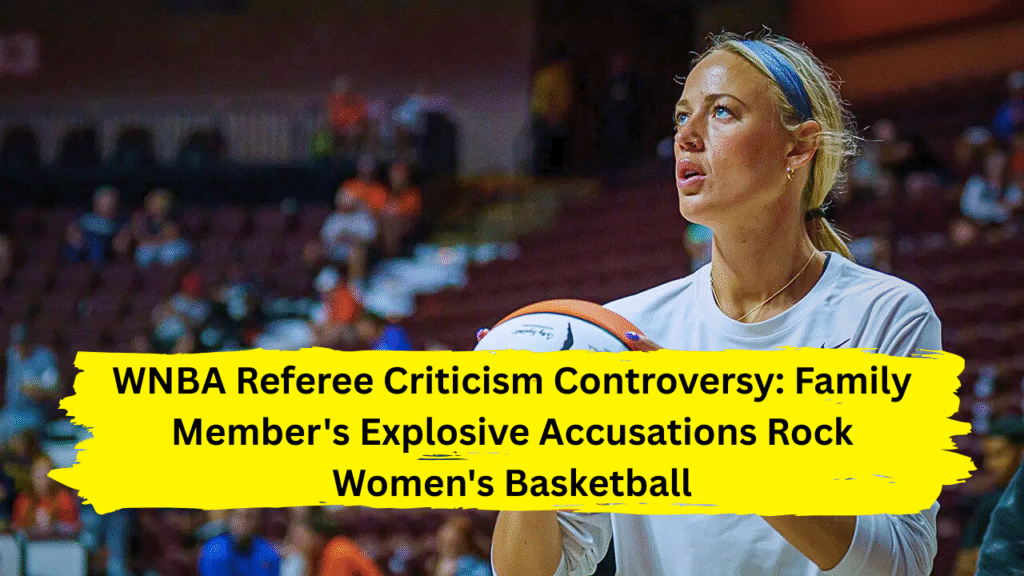
WNBA referee criticism controversy explodes as Sophie Cunningham’s sister blasts officials over devastating knee injury, sparking heated debates about player safety.
The basketball world has been stunned by an unprecedented WNBA referee criticism controversy that erupted when Sophie Cunningham’s sister launched a blistering public attack on league officials following a devastating knee injury suffered by the Indiana Fever guard. This explosive situation has ignited fierce debates about officiating standards, player protection, and accountability in women’s professional basketball.
The WNBA referee criticism controversy has exposed deep-seated concerns about referee performance and safety protocols that extend far beyond a single game or incident. The passionate and detailed nature of the family’s criticism has resonated throughout the basketball community, forcing uncomfortable conversations about whether current officiating standards adequately protect elite female athletes.
The Devastating Injury That Sparked Outrage
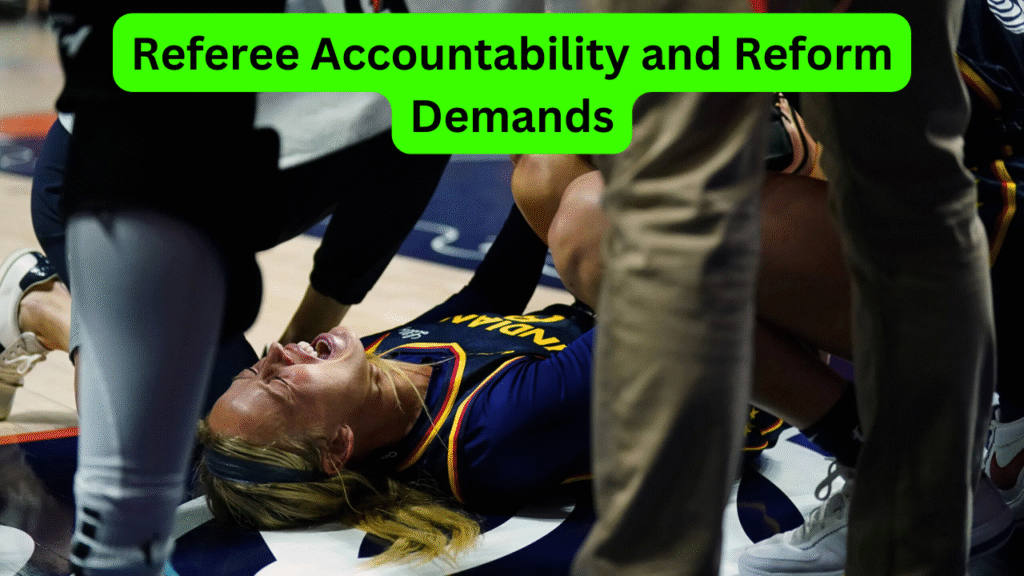
The WNBA referee criticism controversy began during a physically intense game where aggressive play escalated without appropriate official intervention, ultimately resulting in what appeared to be a serious knee injury to Cunningham. The incident occurred during a sequence where multiple questionable plays went uncalled, creating an increasingly dangerous environment.
Video analysis of the injury sequence has become central to the WNBA referee criticism controversy, with slow-motion replays revealing contact and fouls that many observers believe should have been called by the officiating crew. The failure to control escalating physicality has become a key point in the family’s criticism.
Cunningham’s sister immediately took to social media following the game, posting detailed critiques of the officiating crew’s performance throughout the contest. Her analysis included specific timestamps, missed calls, and examples of how referee failures contributed to the dangerous environment that led to her sister’s injury.
The emotional authenticity of her response struck a chord with fans, players, and families throughout the basketball community who have witnessed similar situations where inadequate officiating has led to preventable injuries.
Family Advocacy and Public Outcry
The WNBA referee criticism controversy has highlighted the crucial role that family members play in advocating for player safety when official channels appear insufficient. Cunningham’s sister’s willingness to speak out publicly demonstrates the lengths families will go to protect their loved ones in professional sports.
Her comprehensive social media posts included video evidence, statistical analysis, and detailed breakdowns of officiating failures throughout the game. This thorough approach to the WNBA referee criticism controversy showed serious preparation and study rather than emotional overreaction to a difficult situation.
The viral nature of her criticism was amplified by its authenticity and obvious genuine concern for player welfare. The WNBA referee criticism controversy gained momentum because it represented real family anguish and legitimate safety concerns rather than calculated publicity seeking.
Other player families began sharing similar experiences and concerns, creating a broader conversation about systemic officiating problems and whether the league adequately addresses referee accountability issues.
Examining Officiating Standards and Training
The WNBA referee criticism controversy has forced scrutiny of referee training programs, performance evaluation systems, and accountability measures that govern officiating in women’s professional basketball. Critics argue that current standards may be insufficient to protect players adequately.
The specific officiating crew involved in Cunningham’s injury has faced intense analysis of their game management, call consistency, and ability to control escalating physical play. The WNBA referee criticism controversy has made this crew’s performance a case study in officiating failures.
Questions have emerged about whether WNBA referees receive adequate training in managing physical play while protecting skilled players from dangerous situations. The WNBA referee criticism controversy has highlighted potential gaps in referee education and preparation.
Comparison with officiating standards in other professional basketball leagues has become part of the discourse, with some arguing that women’s basketball doesn’t receive the same level of protective officiating as men’s professional games.
Player Safety Protocols Under Investigation
The WNBA referee criticism controversy has exposed potential weaknesses in league safety protocols and injury prevention measures. Critics argue that the league’s emphasis on maintaining game flow sometimes compromises player protection and safety considerations.
Medical response procedures during and after the injury have come under scrutiny as part of the broader WNBA referee criticism controversy. Questions have been raised about immediate medical attention, proper protocol implementation, and follow-up care for injured players.
The WNBA has historically emphasized player safety in its policies and procedures, but this controversy has revealed potential gaps between written policies and actual game implementation that may put athletes at unnecessary risk.
Emergency response protocols and medical staff training have become additional areas of concern highlighted by the WNBA referee criticism controversy, with families demanding better protection for their athlete relatives.
Impact on League Reputation and Credibility
The WNBA referee criticism controversy has created significant public relations challenges for league officials who must address legitimate safety concerns while maintaining confidence in officiating integrity and professionalism. The viral nature of the criticism has amplified its impact.
Media coverage of the controversy has varied, with some outlets focusing on the emotional family response while others have examined the broader implications for league governance and player safety. The WNBA referee criticism controversy has forced mainstream sports media to address officiating accountability.
Social media discussions have largely supported the family’s criticism, with fans and observers sharing similar experiences and concerns about officiating standards. This public support has strengthened the WNBA referee criticism controversy and increased pressure for meaningful reforms.
The league’s response to this criticism will likely influence public perception of its commitment to player welfare and safety for years to come.
Referee Accountability and Reform Demands
The WNBA referee criticism controversy has generated widespread calls for increased transparency in referee evaluation processes, performance metrics, and disciplinary measures when officiating standards fall short of expectations. Current accountability systems appear insufficient to address systemic problems.
Proposals for reform emerging from the WNBA referee criticism controversy include enhanced video review capabilities, real-time performance monitoring, public reporting of referee evaluations, and more severe consequences for officiating failures that contribute to player injuries.
The controversy has also sparked discussions about referee compensation, training resources, and professional development opportunities that might improve overall officiating quality and consistency throughout the league.
Some critics have suggested that the WNBA referee criticism controversy indicates need for completely restructured officiating oversight and management systems to ensure adequate player protection.
Technology Solutions and Innovation
The WNBA referee criticism controversy has accelerated discussions about technology solutions that could improve officiating accuracy and consistency while reducing human error in critical safety situations. Advanced video systems and real-time analysis tools could enhance referee decision-making.
Proposals for automated officiating assistance, impact monitoring systems, and enhanced communication technologies have gained traction following the controversy. These innovations could address some systemic issues highlighted by the WNBA referee criticism controversy.
The implementation of technology solutions faces practical challenges including cost considerations, training requirements, and integration with existing game management systems. However, the controversy has created political pressure for exploring these options seriously.
Other professional sports leagues are watching the WNBA’s response to this controversy to see how technology might be utilized to improve officiating and player safety across different sports.
Long-term Consequences for Women’s Basketball
The WNBA referee criticism controversy has implications that extend beyond immediate officiating concerns to broader questions about the development and sustainability of women’s professional basketball. Player safety issues can impact league growth and fan confidence.
Injury prevention and player protection directly affect competitive balance, playoff races, and overall entertainment value of the league. The WNBA referee criticism controversy demonstrates how officiating failures can have cascading effects throughout the season and beyond.
The precedent set by the league’s response to this criticism will influence how similar situations are handled in the future and may affect player confidence in league safety protocols and commitment to athlete welfare.
International implications also exist, as the WNBA serves as a model for women’s professional basketball leagues worldwide that may face similar challenges in balancing competitive play with adequate player protection.
Industry Response and Stakeholder Reactions
The WNBA referee criticism controversy has attracted attention from player advocacy groups, sports safety organizations, and medical professionals who specialize in athletic injury prevention and treatment. These stakeholders are monitoring the situation closely.
Insurance companies and legal experts involved in professional sports are also watching the controversy’s development, as injury prevention and liability issues directly impact their relationships with sports leagues and individual athletes.
Former players and coaches have shared mixed reactions to the criticism, with some supporting the family’s advocacy while others have emphasized the challenges facing referees in managing increasingly athletic and competitive games.
The broader sports community is observing how this WNBA referee criticism controversy is resolved, as it may influence approaches to officiating accountability and player safety across multiple professional leagues.
Path Forward and Potential Solutions
The WNBA referee criticism controversy has created opportunities for meaningful dialogue about specific reforms that could address the concerns raised by Cunningham’s family while improving overall league operations and player safety protocols.
Short-term solutions might include enhanced referee training, stricter enforcement of existing safety rules, and improved communication between officials, medical staff, and league administration during games and injury situations.
Long-term reforms could encompass comprehensive review of officiating systems, technology integration, policy updates, and cultural changes that prioritize player safety alongside competitive entertainment value.
Also Read: Latest Trending News at USASportsPulse.com for comprehensive coverage of all major sports developments and breaking news.
Conclusion
The WNBA referee criticism controversy represents a watershed moment that has forced critical examination of officiating standards, player safety protocols, and league accountability in women’s professional basketball. The passionate advocacy from Sophie Cunningham’s family has given voice to concerns shared throughout the basketball community.
This controversy has exposed potential gaps between the league’s stated commitment to player safety and the reality of game management implementation. Whether the WNBA referee criticism controversy leads to meaningful reforms or remains merely a public relations challenge will determine its ultimate significance and impact on player welfare.
The resolution of this WNBA referee criticism controversy will influence player confidence, family trust, and public perception of the league’s dedication to athlete safety for years to come, making it a defining moment in the ongoing evolution of women’s professional basketball.