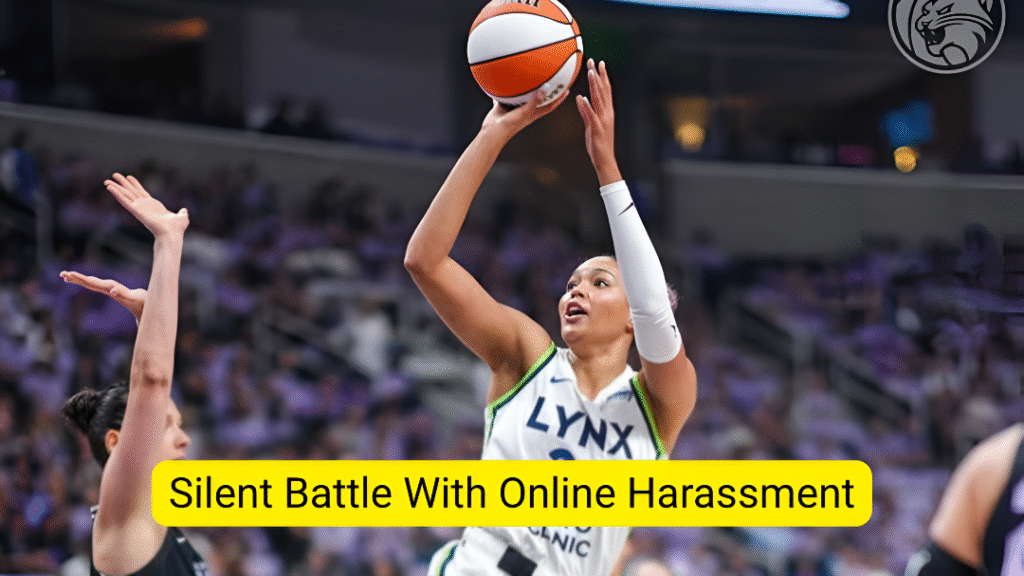
WNBA online harassment is growing, and players are tired of carrying the weight of constant hate. The league has to act before it costs more than just games.
The WNBA is finally having its moment. Ratings are climbing, arenas are filling, jerseys are selling out. For the first time, it feels like people are really paying attention to women’s basketball. But behind the highlight reels and record-breaking numbers, there’s a darker story most fans don’t see.
Players are scrolling through their phones after a big win—or sometimes after a tough loss—and instead of just seeing love from supporters, they’re hit with waves of hate. Not criticism of their game. Not even just “trash talk.” Real, targeted harassment. Ugly words. Threats. Racist slurs. Misogynistic garbage that no human should have to carry on their shoulders.
And here’s the scary part: the league isn’t really ready for it.
The Kind of Hate You Don’t See on ESPN
Unless you’ve been on the receiving end of it, it’s hard to explain how this feels. Imagine playing your heart out in front of thousands, giving every ounce of energy to your team, and then opening your phone to find strangers tearing you down in ways that go beyond basketball.
It’s personal. It’s cruel. And for a lot of WNBA players, it happens daily.
The worst part? Most of us never see it. Unless a player chooses to post screenshots or speak publicly, the harassment stays hidden in DMs, comments, or threads. So from the outside, it can look like everything’s great. But privately, it’s taking a toll.
A Few Teams Are Waking Up
There are bright spots. The Chicago Sky recently took a bold step by teaming up with a tech company to monitor online abuse. It’s the first deal of its kind in the WNBA, and honestly, it shows guts. At least one team is saying: “We’re not going to just hope this problem goes away.”
Some teams are also boosting mental health resources, making therapy and counseling available for players. That’s huge. But if we’re being real, these moves still feel like half-measures. They help players after the damage is done. They don’t stop the hate from reaching them in the first place.
Why What’s Happening Isn’t Enough
Right now, the WNBA doesn’t have a clear, league-wide plan for protecting players online. Every team seems to be figuring it out on their own. Some step up. Others do almost nothing.
And the league itself? Too reactive. Something bad happens, it blows up online, then a statement gets released. By then, the player has already taken the hit—emotionally, mentally, sometimes even physically if threats get real.
Add to that the silence around this issue. A lot of athletes don’t want to talk about how much online hate messes with them because they’re scared of being labeled as “weak.” That stigma just lets the cycle keep rolling.
Why It’s a Bigger Deal Than People Think
This is not just about hurt feelings. It’s about the future of the league.
- Players’ mental health is on the line. Constant harassment breaks people down over time.
- On-court performance suffers. Stress doesn’t stay in your phone—it shows up in your game.
- The WNBA’s reputation is at risk. Sponsors and fans want to back a league that protects its stars.
- The next generation is watching. If young players see their idols being abused online without protection, how many of them will want to step into that spotlight?
What Needs to Happen Next
If the WNBA is serious about protecting its players, it has to stop treating this like a side issue. Here’s what could change everything:
- League-wide policy: No more patchwork. One standard system for reporting, investigating, and punishing harassment.
- Proactive protection: Use tech to flag hate before players even see it. Don’t wait until someone’s already hurting.
- Automatic support: Make therapy, counseling, and safe digital spaces a built-in part of the league—not an optional “perk.”
- Education: Train players on how to guard themselves online, how to track harassment, and what their options are.
- Accountability for fans: Extend the fan code of conduct beyond arenas. If you harass players online, you lose privileges—tickets, access, all of it.
Looking at the Bigger Picture
Other leagues have already shown what’s possible. Some men’s teams have banned fans permanently for abusive behavior. Imagine the WNBA doing the same—not just banning people from stadiums, but publicly holding trolls accountable when they cross the line online.
Transparency would also go a long way. Imagine if the league published quarterly reports showing how many harassment cases were handled. It would build trust. It would prove they’re not just brushing this under the rug.
Small Wins That Could Happen Tomorrow
This doesn’t need to be complicated. A few small moves could change the culture almost overnight:
- Create a “digital safety squad” of tech experts and player reps.
- Give players a private hotline or app for reporting harassment.
- Set public consequences for abusive fans.
- Call out platforms when they fail to act.
These steps wouldn’t solve everything, but they’d show players the league is listening—and that matters more than people realize.
Conclusion
The WNBA is on the rise, finally stepping into the spotlight it’s deserved for decades. But with that spotlight comes shadows. Online harassment is already here, and if the league doesn’t act fast, it could undo so much of the progress that’s been made.
This isn’t about silencing critics. Fans can debate lineups, question coaching decisions, and talk basketball all day long. That’s part of sports. But what players are facing now? That’s not basketball. That’s abuse.
The WNBA has a choice: ignore it until the damage is permanent, or lead the way and prove that women’s sports don’t have to grow with the same toxicity that haunts men’s leagues.
The players deserve better. And the future of the league might just depend on it.
Also Read: Latest Trending News