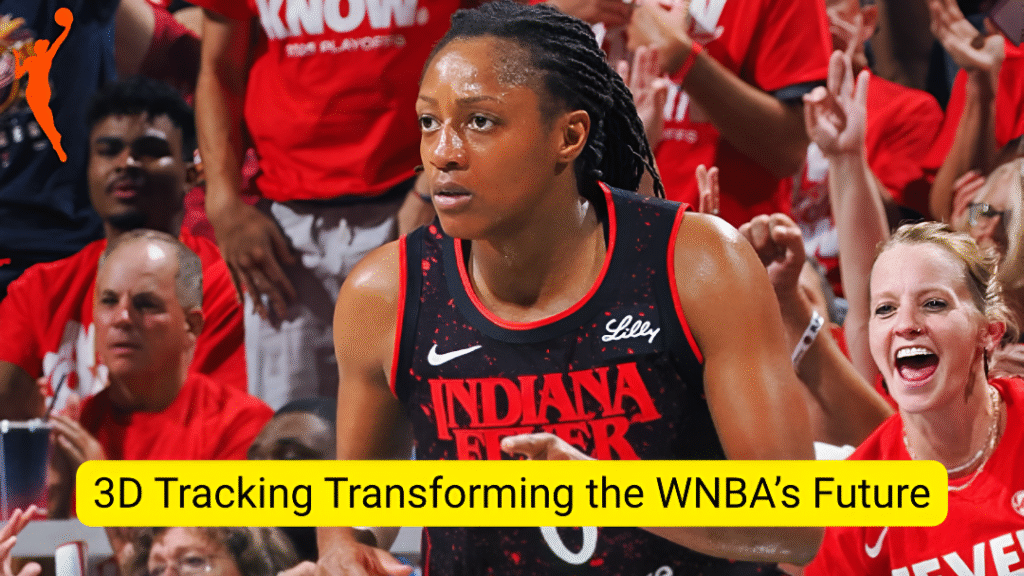
Basketball has always been a numbers game. Points, rebounds, assists. But in the WNBA’s current moment, those numbers are just the beginning. A new frontier of 3D optical tracking and wearable biometrics is creeping into every arena and practice session. These tools aren’t just about stats anymore—they’re about what it means to be elite, how players train, how contracts are made, and even how fans experience the game.
This transformation is happening quietly, but turning up the volume fast. And for many players, coaches, and fans, the questions it raises are bigger than just “who scored more.” It’s about fairness, mental load, and what the future of the league should look like.
1. What Are These Technologies, Exactly?
Let’s break it down in human terms:
- 3D optical tracking means cameras in each WNBA arena can now map out where players are, how fast they move, when they explode to the basket, how they defend, even how often they contest shots. It sees more than what human eyes or simple stats used to.
- Wearable biometric sensors get layered over that—things in the shoe, in the uniform, possibly in bands or clips. They monitor ground forces, jump load, how often you’re pivoting, how your body recovers between games.
In short: for players, it’s like giving a doctor X-rays, MRIs, and real-time health checkups. For coaches, it’s a new set of tools that can sharpen training, reduce injury, and highlight strengths that used to hide behind traditional stats.
2. Why Now? What Changed
- The WNBA decided to become the first U.S. women’s pro sports league with league-wide access to 3D tracking data. That means every arena has the optical tracking setup.
- Simultaneously, the wearable sensor tech has gotten better—lighter, less intrusive, more accurate. So players don’t feel like they’re wearing bulky gear.
Together, that convergence creates a moment: no longer a pilot project or optional extra, but something becoming part of what top-level WNBA life is.
3. What This Means for Players
This is where things get interesting (and complicated).
Empowerment & Performance:
Players get feedback that is more precise. Maybe you discover you’re great at off-ball defense because your tracking data shows you contest more shots than most. Maybe you find out your jump loads are spiking in back-to-backs, and you adjust your training or rest.
Contract Negotiation & Value:
Data could shift how contracts are done. Players who excel in “invisible” contributions (defense, off-ball movement, spacing) may get more recognition. Teams might pay more for players who show efficient movement, fewer wasted steps, or faster recovery.
Health & Injury Prevention:
Because wearables can measure load, fatigue, recovery, you now have tools to catch overuse or warning signs earlier. That could mean fewer injuries, longer careers.
Mental Load & Privacy Concerns:
This data isn’t always “nice.” Being monitored so closely can add pressure. Players might worry about how every micro-movement looks in the data. Do they have control over who sees that data? What if data is used punitively? Also: disparities—teams with more resources will get better tech, more support staff to interpret data, so the gap might widen.
4. How Coaches, Teams & the League Are Using It
- Coaches are leaning on tracking metrics for game planning. Defensive matchups, rotational decisions, who rests when, who plays heavy minutes—they now have objective data to lean on.
- Teams with better analytics departments are building predictive models: expectations for fatigue, performance dips, optimizing rest periods.
- The league itself benefits: broadcast shows can use enriched visuals, fans get more insight. The WNBA can highlight plays and players in ways that tell deeper stories—not just scoring runs, but movement efficiency, defensive impact.
5. Challenges & Risks Along the Way
- Data Understanding: Raw data can be misleading. A player might move a lot but inefficiently. Interpretation needs context.
- Unequal Access: Not all teams have the same budgets for analytics, sports science-staff, wearable hardware. Some players might be on teams/organizations that don’t leverage data well.
- Overuse & Burnout: More monitoring might push workloads higher. If players or coaches lean too much into metrics without balance, rest and mental health could suffer.
- Privacy & Consent: Who owns the data? The player? The team? The league? Is there complete transparency over how it’s used? Is data shared publicly? Could it be used against players?
6. What Fans Will Feel (Whether They Know It or Not)
- The games will start to feel more granular. Broadcasters might show not just “Player A scored 20,” but “Player A consistently contested shots with high effectiveness,” or “defensive matchup advantage here,” or “this bench unit preserves energy best.”
- Social media and commentary could shift focus—less “did she score tonight?” more “how efficiently did she move? How many high impact minutes did she log?”
- There may be new stars—not just scorers—but players who excel in these new, “harder to see” metrics. Off-ball defenders, hustlers, smart decision makers.
7. How the Best Will Navigate the Shift
If I were advising a rising WNBA star or a coach, this is what I’d say:
- Embrace the tech, but insist on ownership/control of your data. Know how your movements are tracked, what is shared, who sees it.
- Work with strength & conditioning, sports science staff who can break down the data with you—not to critique you, but to help you be better, recover smarter.
- Use the metrics to tell your story. If you’re doing things off-ball, hustle plays, defensive work—get those metrics highlighted. Let your contributions be visible.
- Watch rest periods. Use the tech to identify when your body signals “slow down.” Mental recovery matters as much as physical.
8. Why this Might Be a Turning Point
This trend feels like a pivot point for the WNBA. Not just in how the game is played, but in how its stars are valued, how organizations operate, and what fans expect.
We could look back a few years from now and point to this era as when player tracking and wearables moved from “nice extra” to essential. Like video review, like instant stats—what was once high cost or experimental becomes standard.
And if this shift is done thoughtfully—fair access, strong privacy, mental health built in—then it could elevate the league, strengthen players, and deepen fan connections in a way few others have yet managed.
Conclusion
The WNBA is stepping into a new age. An age where what you do between the stats matters almost as much as the stats themselves. 3D tracking and wearables are not just gadgets—they’re rewriting the playbook for performance, value, and fairness in women’s basketball.
If you’re reading this and you care about the future of the game, keep an eye on which teams are leaning hardest into this tech. Notice which players thrive in off-ball work or movement efficiency. Because I believe those will be the stars who define the next chapter.
Also Read: Latest Trending News