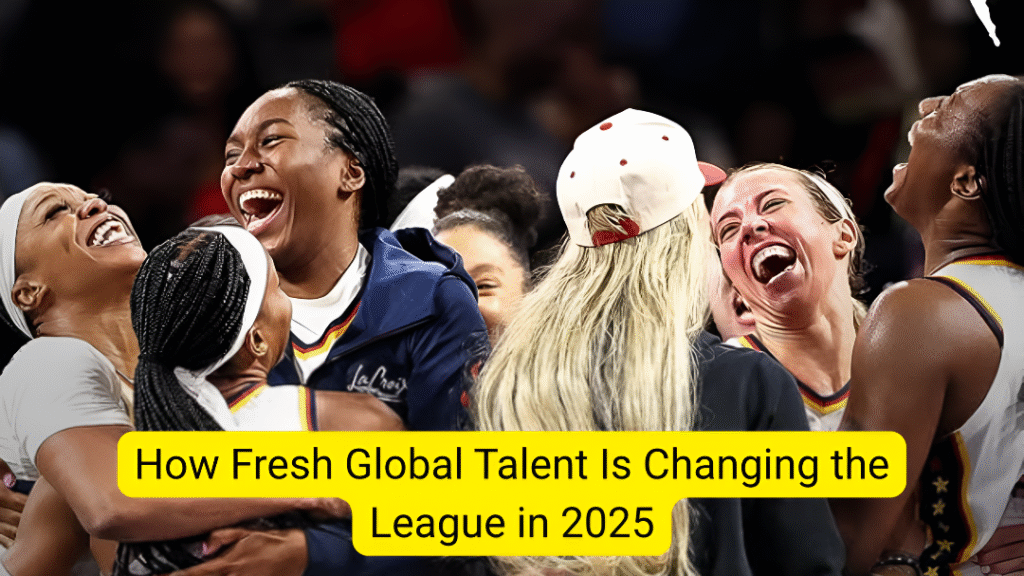
If there’s one quiet revolution happening in the WNBA right now, it’s the arrival of young international stars who are no longer coming over to “learn the league”—they are coming to compete, to start, and to change expectations. 2025 is shaping up to be the year when global talent isn’t just a footnote—it’s a central storyline.
In this article, I’ll walk you through who these players are, why their impact matters, what challenges and opportunities lie ahead, and how the WNBA is being reshaped in very real ways by its global youth infusion.
Who Are These International Young Stars?
A number of rookies and near-rookies from overseas have made big impressions lately. Think of Dominique Malonga (Cameroonian-French, drafted high), Anastasiia “Olairi” Kosu (Russian, very young, EuroLeague pedigree), and others. These aren’t players coming in purely as projects—they have already played at high levels abroad, already faced big competition, and now they’re bringing that experience into the U.S. pro league.
These international youngsters are:
- often younger than many domestic rookies, having begun professional careers overseas or with national young teams
- accustomed to different styles of play (stronger fundamentals, different physicality, varied court spacing), which gives them unique tools
- bringing maturity and versatility early, because overseas systems often demand that
- used to pressure: representing national teams, playing in European or FIBA tournaments. That shows up in composure and basketball IQ.
Why 2025 Is Different
It’s not new to have international players in the WNBA—but 2025 feels like a tipping point. There are a few reasons:
-
More scouts / data on global players
Teams are doing better job identifying talent from outside the US, through overseas leagues, international tournaments, and youth national teams. The visibility has improved. -
The demand for depth and versatility
As the league expands, schedules get tougher, and expectations rise, teams need more than just star power. They need players who can switch roles, who can defend, rebound, shoot well under pressure—even if they’re young. -
Younger international talent is more prepared
Many of these players have professional experience before they reach the WNBA. They’ve handled travel, pressure, different coaching styles. That gives them a shorter adjustment curve. -
Fans and media are more attuned to global stories
Social media, global streaming, and the way folks follow basketball internationally means fans know these players before they even set foot on U.S. courts. That helps with confidence, marketability, and team decisions.
Real Impact: What These Players Are Already Doing
These are not just bench‐warming rookies—they are moving the needle.
- Dominique Malonga, for example, set records for teenage players: scoring, rebounding double-doubles earlier than many people predicted. Her ability to contribute right away as a young international big has turned heads.
- Anastasiia Kosu joined fairly young, with EuroLeague / elite youth credentials, and is being viewed as a sleeper whose minutes and court sense may provide big payoffs. Even when the stats are modest early, there are signs of growth.
- These international young players are also helping teams in unexpected ways: they often improve defensive schemes, bring fresh perspectives, stretch the floor differently, and force opponents to adapt.
- Some teams are using them in rotational lineups in high-stakes games, not just “let’s rest the stars” periods.
These contributions are already shaping playoff races, influencing roster building, and affecting fan interest.
Opportunities & Benefits from This Trend
What makes this surge more than just a novelty is how it benefits the league:
-
Raising the level of competition
When you have more players pushing for starting spots, more international styles blending, the overall standard rises. Everyone has to get better. -
Global fan base growth
Players from overseas bring followers with them. Their success opens up new markets, new media rights possibilities, new merchandise audiences. -
Diversification of styles of play
The infusion of international training, strategies, and flavor enriches what the WNBA looks like on the court—different pace, spacing, defensive schemes. -
Long-term talent pipelines
International young players with early exposure to pro play can become stars faster; that helps the league build stable core rosters over years, not just through big trades or marquee names.
Challenges They Face
Of course, this transition isn’t seamless. There are hurdles:
-
Adjustment time
Even highly skilled international players need to adapt: travel, cultural differences, the style of officiating, rules variation, even lifestyle differences. -
Roster and playing time competition
Domestic players, established veterans will push back. Young internationals have to earn trust. Not every team gives equal opportunity. -
Exposure and support
Language, marketing, fan familiarity matter. Sometimes international young players don’t get the same spotlight (or endorsements), which can affect confidence and off-court opportunities. -
Expectations management
Sometimes hype and early promise can lead to inflated expectations. If a young international arrives with great overseas stats, fans expect immediate dominance—when often what matters is consistent growth.
What To Watch: Players & Teams Leading the Charge
Here are things to pay attention to if this trend deepens:
- Rookies or early-career international players stepping into starting lineups or heavy rotational minutes earlier than expected.
- Young internationals whose defensive metrics, rebounding, or “impact per minute” stats are strong—even if raw scoring is low.
- Teams that build scouting / development pipelines outside the U.S.: investing in overseas leagues, training camps, global youth tournaments.
- Off-season performances by these players internationally: often that’s where you see real growth which translates into WNBA seasons.
- How coaches utilize them: Are they pigeonholed to certain roles (“just the shooter,” “just the rebounder”), or are they being developed as full players?
Why This Might Be the WNBA’s Biggest Under-Cover Story
Because while star narratives (MVPs, scoring leaders) dominate headlines, this international youth wave has quietly huge stakes. It affects the league structure, the business model, fan growth, and competitive balance.
If this trend continues, in a few years:
- There may be more international young players who are clear All-Star or even MVP candidates.
- Teams may shift strategy to global scouting and recruiting even more aggressively.
- Players’ salaries and contracts may reflect this increased value—young internationals with proven overseas performance may command more.
- The fan demographics and market reach of WNBA will extend further globally, which could change media deals, sponsorships, and the global positioning of the league.
Possible Turning Points & What Could Stall This Trend
To keep this momentum, certain things will need to go well:
- WNBA’s collective bargaining agreement, team contracts, and rules need to support the integration of young international talent (e.g. visa, travel, training, rest, exposure).
- Coaching staffs need to embrace patience, allowing younger internationals to develop without excessive pressure.
- Media and marketing platforms must highlight these players—not just as “international curiosities,” but as core contributors—with stories, profiles, and airtime.
- Support off-court matters: transition assistance, language/cultural support, mentorship so these players can thrive psychologically as well as physically.
If any of these falter, the growth might be there but with lots of wasted potential or disappointment.
Conclusion: A New Era Is Emerging
The 2025 WNBA season feels like the beginning of a subtle but powerful shift. The arrival and rise of international young players isn’t a gimmick—it’s a meaningful force changing how teams build, how fans connect, and how the league grows.
Every season has its breakout stars—but this wave of global youth has the potential to reshape the WNBA’s future more deeply. For fans, teams, and the sport itself, this is one storyline to follow, not because it’s flashy, but because it’s foundational.
Also Read: Latest Trending News