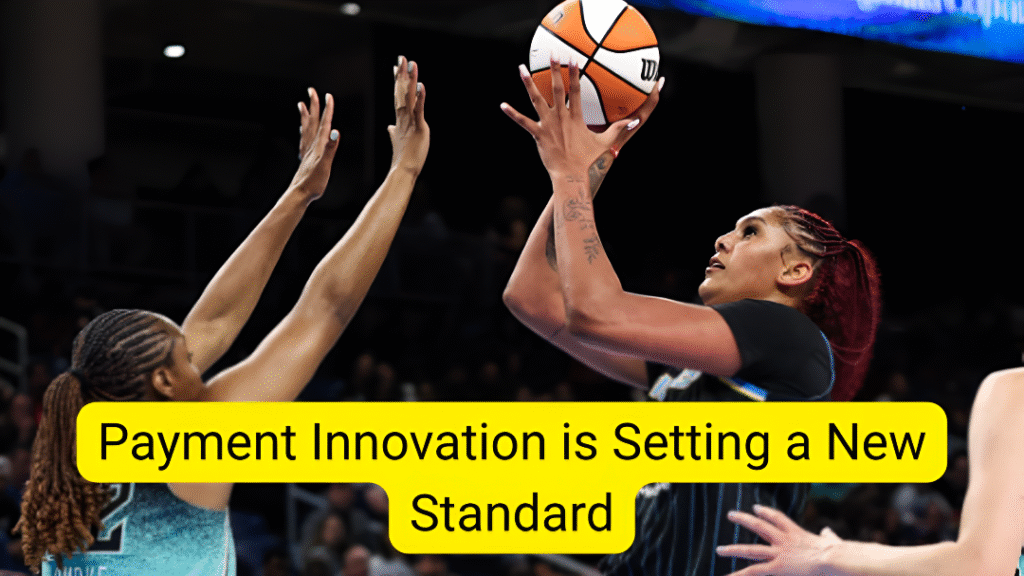
Imagine walking into a game at Wintrust Arena and every purchase—from your ticket to your concession snack—is seamless, almost invisible. No waiting in line, no fumbling for cash or credit cards, no slow checkout at halftime. Just smoothness. That’s not a fantasy. Because the Chicago Sky is doing something quietly revolutionary: using payment-platform innovation to reshape what being a fan really means. This isn’t about flashy trades or superstar stats. It’s about the infrastructure behind the scenes—the tech, the data, the systems—that gets us closer to the game, less distracted by friction, more focused on excitement. And as the WNBA continues its ascent, these kinds of changes might be what separates great fan bases from legendary ones.
Why Payment Matters More Than We Realize
We often focus on players, coaching, social media, or attendance numbers. But in any live experience—especially in sports—the small annoyances can add up. Waiting too long for food, slow or insecure payment methods, disconnected loyalty or merch systems—these frustrations chip away at enjoyment. Fans today expect digital speed and personalization everywhere they go. If the WNBA wants to scale its audience and keep fans attending in person, innovations in how fans pay, how fast they transact, and how their data is used to make their experience smoother, must be prioritized.
The Chicago Sky Move: What They’re Doing Differently
The Sky’s partnership with a leading payment-innovation platform (Ordr) is a case study in what future-forward fan experience can look like. What makes it unique:
- Unified payment layer: Every dollar a fan spends, whether at merchandise, concessions, tickets, or parking, gets tracked and processed under one system. That means less fragmentation, fewer errors, smoother reconciliation, and better service.
- Faster checkout & less friction: Using cutting-edge payment data systems (including AI models behind the scenes), the Sky are reducing transaction wait times, enabling faster service points, and optimizing queues. No more long delays during breaks.
- Data-driven personalization: Because the system knows (with proper privacy protections) where fans spend, what they buy, and how they move through the arena, there’s potential to deliver tailored offers, suggestions, and experiences—special deals midway through the game, notifications about merch that match what the fan typically buys, even predictive offers.
- Operational efficiency: For the team and arena operations, fewer payment failures, better integration with vendors, less human error. That means costs go down, staff are less stressed, and focus can shift towards enhancing the game environment instead of fixing tech glitches.
What This Means for Fans
For the people who show up to support the Sky, or plan to in future, these changes translate into very real improvements:
- Time saved — Less standing around, less delay, more time enjoying pre-game atmosphere, halftime entertainment, celebrating wins.
- More convenience — Whether you’re buying food, merch, or parking, it feels more like using your phone or smart card smoothly rather than negotiating with cashiers or broken machines.
- Customized experiences — If the system knows you always buy a particular snack or merch item, perhaps you get early access, a discount coupon, or an alert when it’s on special.
- Peace of mind — Security features built into modern payment systems reduce fraud, mistakes; when fans trust the system, they feel more comfortable spending.
Wider Implications for the WNBA
Chicago Sky’s move matters not just for one team, but as a template. Here are several broader implications:
- Benchmarking for all teams: Others will likely look to replicate what Sky is doing. Soon, similar payment innovation may become expected in every arena. Teams that don’t upgrade may fall behind in fan satisfaction.
- Revenue implications: Smoother transaction flows often lead to higher per-fan spend. Fewer lost sales due to long lines or payment errors; impulse purchases increase when convenience and speed are higher.
- Sponsor & vendor attraction: Companies want to align with teams that are modern and tech-savvy. If your arena offers seamless payment plus data insights, you can offer sponsors more value (e.g. targeted product placement, behavior-based offers). Vendors prefer systems that integrate easily, reduce overhead, and improve customer throughput.
- Fan retention & growth: Especially with younger fans and digital natives, expectations are high. If someone visits once and is annoyed by slow service or payment friction, they may not return. Improving these behind-scenes systems helps convert casual fans into loyal ones.
- Data ethics & privacy: As payment systems gather more data, teams and league must commit to strong privacy standards. How is data used, who has access, what permissions fans give—this will become a talking point as much as jersey colors or player contracts.
Challenges & What to Be Aware Of
Innovation isn’t without risk. The Sky, and others aiming to follow, need to navigate:
- Implementation costs: Upfront investment in payment infrastructure, vendor upgrades, staff training, maintenance. It’s not free.
- Security risks: More data means more responsibility. Systems must resist hacking, fraud, data leaks. Ensuring secure transactions and protecting fan financial data is crucial.
- Vendor coordination: Concession stands, merch stalls, parking providers—all need to integrate smoothly. If one vendor lags, the whole experience stutters.
- Change resistance: Staff used to older systems, fans used to paying with cash or older cards, even technophobes in the audience. Transitioning will need clarity, support, maybe incentives.
- Keeping fan trust: If payment features are buggy, or privacy isn’t assured, fans may opt out or develop distrust. Transparency about what data is collected and how it’s used is non-negotiable.
What Else to Watch in 2026 & Beyond
If we follow the digital footsteps, here are developments to monitor:
- Does Sky’s system expand features: mobile ordering from seat, order ahead, dynamic pricing, loyalty rewards built into payment, etc.?
- Will other WNBA franchises announce similar payment/data innovations? How fast will the standard shift?
- Do broadcasters and streaming partners integrate payment/data info—e.g. adverts or promo at halftime tied to what fans in the arena usually buy or browse online?
- How will fan survey data respond — are fans feeling happier, doing more purchasing, feeling less friction?
- What new privacy policies emerge? Will leagues adopt standard privacy transparency around payment data, opt-ins for marketing, etc.?
Conclusion
The world of sports is changing, often in ways fans don’t see—but feel. Chicago Sky’s move toward reimagined, AI-enabled, data-rich payment systems is a quiet revolution that could change how we define “game day.” It isn’t about rebounds or buzzer beaters here—it’s about moments between those plays: standing in line, buying a snack, grabbing merch, settling in for tip-off. When those run smoothly, the energy stays high, the focus stays on the game, and fans feel more valued.
In 2025 and beyond, expect to remember not just who won games, but which franchises made attending a WNBA game feel futuristic, frictionless, fun. If Chicago is getting there first, we’ll all benefit from the standard they set. And for fans, that might just be what turns a good evening at the arena into an unforgettable one.
Also Read: Latest Trending News