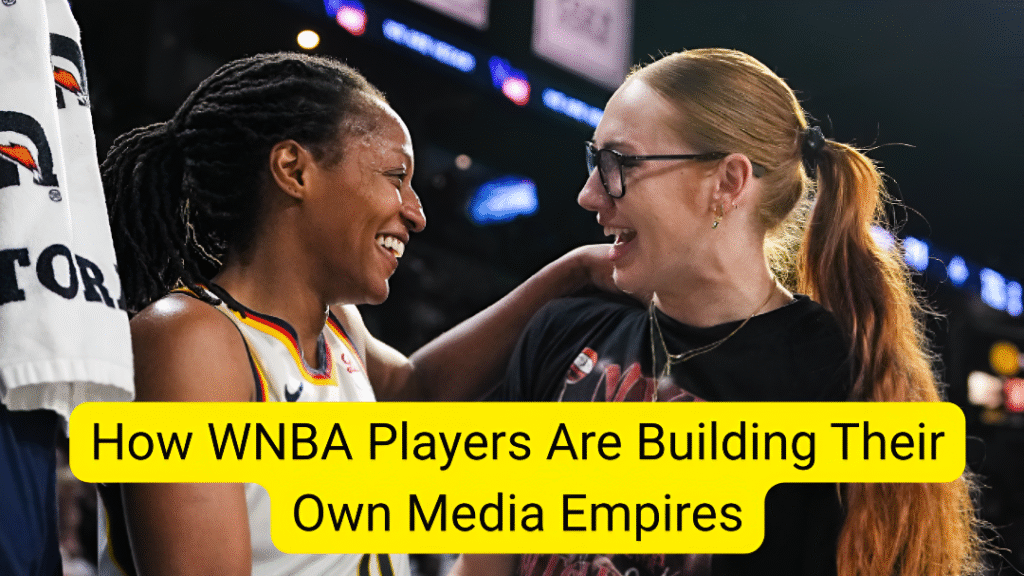
The next frontier in women’s basketball isn’t just who scores the most points or grabs the most rebounds—it’s who controls their own narrative. As the WNBA enters a new era of cultural relevance and digital reach, a stealth revolution is unfolding: players are becoming independent media producers, content creators, and personal brands in ways that threaten to reshape the league’s storytelling.
This is the WNBA player-led media revolution — and unless you’re paying deep attention, you might miss it. But the ripple effects are already starting to warp how fans consume the sport, how sponsors engage, and how legacy media covers the league.
Let me take you inside this quiet uprising and show you why you should be among the first to write about it in depth.
Prologue: Why It Matters Now
WNBA search interest and digital engagement have exploded in recent seasons. The league now leads major sports properties in terms of global search growth, with its fastest rise ever in online attention.
That surge isn’t happening through traditional broadcast alone. It’s being driven by social media, TikTok reels, streaming snippets, multimedia athlete content—and increasingly, by the players themselves.
The timing is perfect. As audiences shift from passive consumption to interactive, creator-driven media, WNBA players are positioning themselves to be the voices that define their era—not merely the subjects of someone else’s coverage.
1. From Spotlight to Soundboard: The Shift in Control
In the past, players might appear in interviews, scheduled documentaries, or promotional features. But now, many are going direct—with Twitch live streams, DIY behind-the-scenes vlogs, podcast shows, and ongoing content series that they fully own.
This isn’t just side hustle content. It’s narrative control.
No filters, no PR intermediaries—just raw voice. A player can share struggles, triumphs, routines, off days, or social causes in a way no assigned media can replicate. And for fans, that access feels deeper and more trustworthy.
When athletes are storytellers—when they control release, editing, interaction—they change the power balance. Instead of being interpretation subjects, they can become interpretative agents.
2. Pioneers You Already See (But Haven’t Fully Seen)
Every revolution needs visible first movers. In the WNBA, a few stars are already stepping into that frontier:
- A handful of players are hosting regular livestreams or social content that blend humor, identity, fashion, and basketball life.
- Some are launching branded content series or mini-documentaries about training, travel, wellness, and activism.
- Others are experimenting with crossover content—beauty, style, fashion, mental health—that sits at the intersections of sports and culture.
These early adopters are testing formats and building core audiences. But most coverage still treats them as novelty side-stories rather than structural shifts. That’s where you can come in: analyzing why these moves matter, how they scale, and where they go next.
3. The Fan Experience Rewired
What does this player-led media mean for how fans experience the WNBA?
First, it shrinks distance. Instead of seeing a polished halftime interview, fans can watch kitchen banter, travel conversations, or team huddles. You see the human side.
Second, it deepens loyalty. Fans who follow a player’s journey—including content beyond the court—build emotional investment that survives injuries, trades, or down seasons.
Third, it enables community. In comment threads, direct live chat, fan Q&A sessions, interactive polls, players can shape feedback loops. Fans feel heard, not just spectators.
Fourth, it creates new monetization paths. Patreon, subscription tiers, exclusive content drops, merchandise tied to content series—these are revenue lines separate from the game paychecks.
4. Opportunities for Brands, Sponsors & the League
This isn’t just disruptive for media—it’s a playground for brands and the league itself (if they embrace it).
- Brand alignment with authenticity. Brands that collaborate with players on content (not just endorsements) can embed meaning and story alongside product.
- Creative fees, not just sponsorships. A player producing regular content becomes a creative partner, not just a face for a 30-second campaign.
- Platform partnerships. Platforms (YouTube, Twitch, emerging apps) could partner directly with leagues or players for exclusive content windows.
- League media integration. The WNBA could build a content distribution arm or incubator that helps players launch or scale their own media houses, while preserving authorship.
If done well, league and brand collaboration with player media can create a virtuous cycle—better content, deeper fan engagement, stronger revenue, more visibility. If done poorly, it risks co-optation or dilution of authenticity.
5. Challenges & Tension Points
This revolution won’t be frictionless. There are many risks and potential traps.
- Bandwidth & burnout. Players already juggle training, travel, recovery. Creating regular media content adds mental load.
- Quality vs authenticity. As audiences grow, expectations rise. Do you hire editors and producers? When does “amateur charm” slip?
- Brand pressure. Sponsor demands might shape content direction. Will players retain autonomy over controversial or sensitive topics?
- League and media resistance. Traditional media outlets may feel displaced. The league may want to regulate or centralize narrative control.
- Revenue disparity. Top players will likely win most of the monetization. How do emerging players break in?
- Risk of missteps. Unfiltered commentary can invite backlash, misinterpretation, or controversy.
The key will be balancing growth and guardrails—support structures that allow creative freedom without exploitation.
6. What to Track from Here
If you want to stay ahead, watch these signals:
- New content series or channels launched by WNBA players (YouTube, Twitch, podcast).
- Collaborations between brands and players in content creation, not just product deals.
- League or team investments in content studios, media incubators, or digital support units.
- Shifts in how mainstream sports media frames coverage—are they quoting player creators more?
- Rookie players with content ambitions backed by early followers or brand interest.
- Platform experiments (e.g. exclusive drops, paywalls, NFTs tied to behind-the-scenes access).
In short: if content comes first, game coverage becomes contextual and richer.
7. The Narrative You Can Own First
As the first publisher to name and frame this shift as the WNBA player-led media revolution, you get to own the vocabulary, the framing, and the critique. You can be the reference point other writers echo.
Here’s how you can make it happen:
- Profile pioneers. Interview a few players producing content. Ask about their motivations, challenges, ambitions.
- Map the infrastructure. What tools, platforms, editors, funding are backing them? Where are the gaps?
- Analyze incentives. How do revenue, audience growth, league support push or pull their decisions?
- Compare ecosystems. Look at how individual creators in other sports (soccer, tennis, content creators) are navigating similar terrain.
- Forecast future models. Subscription tiers, content collectives, multi-player creator houses, studio partnerships.
Epilogue: Why This Is Bigger Than Basketball
The WNBA player-led media revolution isn’t just a niche sports trend. It’s part of a broader cultural shift: creators are reclaiming power, identity, storytelling. In women’s sports—where narratives have historically been mediated, underrepresented, or filtered—this shift is especially meaningful.
Every time a player controls the lens through which she’s seen, she rebalances the narrative. Every time fans follow her voice, not someone else’s interpretation, they become part of the story.
You have the chance to be the first to tell that story in your zone—to own the frame, to define the stakes. And when this wave becomes mainstream, you’ll be the one your readers remember as having spotted it first.
Also Read: Latest Trending News