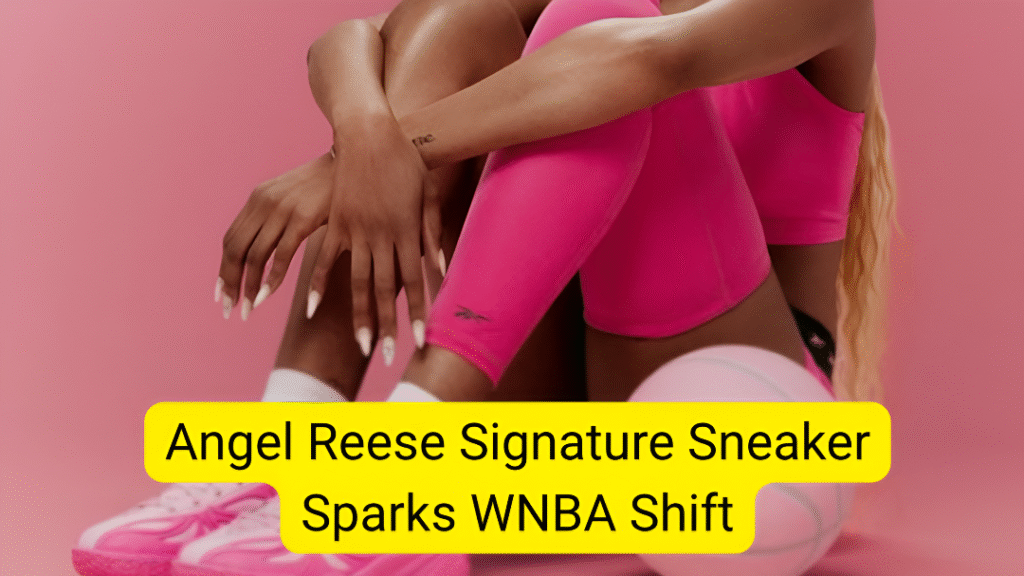
A new chapter opened quietly in the WNBA when Angel Reese, just in her second professional season, dropped her very first signature sneaker with Reebok. It isn’t just another shoe deal—it’s a disruptor in a league where players rarely get branding currency on that level so early. The buzz isn’t coming from box score lines or playoff heroics, but from a sneaker that symbolizes trust, marketability, and growing belief in women’s basketball as cultural product. Reese joins the elite few—A’ja Wilson, Breanna Stewart, Sabrina Ionescu—who carry the weight of their own footwear lines. But the catch here is her youth: she’s doing it faster, earlier, and with more raw momentum behind her, fueling conversations about brand growth, athlete equity and the future of WNBA commerce.
From the moment the Reese 1 launch dropped, it sold out almost immediately. There were no oversized marketing pushes, no lengthy teasing campaigns—just demand. The sneaker’s rapid sellout speaks less to hype machines and more to a shifting consumer perception: fans want to invest in WNBA stars as brands, not just players. In a league long hungry for crossover appeal, Reese’s signature line suggests we’re entering a new phase where women’s basketball stars are not only heroes on court, but fashion icons, business leads, and media symbols. In that instant, sneaker culture and WNBA narrative collided.
What makes Reese’s story more compelling is the timing. The WNBA is flourishing: expansions, rising viewership, and cultural relevance pushing it into broader conversations. But until now, most elite sneaker endorsements have favored veterans already established. Reese breaking in early upends that paradigm. It signals a growing belief from brands and sports businesses that investment in young women athletes is not just cosmetic or moral—it’s profitable.
The Reese 1 sneaker is more than rubber and leather. It’s a statement that the WNBA’s stars deserve equity in brand extension and ownership. It sets a benchmark for rookies and second-year players: if Reese can land her own signature shoe early, others will expect similar doors. The pressure now isn’t just to score or rebound—it’s to build your brand, your image, your portfolio. And it’s a pressure Reese seems primed for.
Reese’s path also spotlights how footwear narratives shape legacy. Think back to how signature shoes elevated Michael Jordan, Kobe Bryant, even LeBron. Those lines became part of their enduring mythology. In the WNBA, when Reese’s fall collection sells as fast as her debut, when retro colorways come, when we talk “Reese 1.5”—those will be the moments when a WNBA legend is being woven in real time. It rewrites how “greatness” is measured: not just in rings, but in cultural footprints.
This launch also pressures brands to change how they evaluate women athletes. No longer should brands wait until a player has a decade of accolades. Talent, trajectory, social voice, style, identity—all become markers of viability. Reese’s sneaker legitimizes that. It creates a blueprint: young, bold, vocal players can demand meaningful brand partnerships.
For fans, the Reese 1 is more than merch—it’s a connection. Wearing the shoe isn’t just supporting your favorite team—it’s signaling support for a star’s journey, believing in the WNBA’s narrative direction. It closes the gap between athlete and audience, making each purchase an act of fandom in the same way a ticket or jersey is. That emotional loyalty will sustain the league more deeply than media deals or box office numbers.
The ripple will also be felt in league structures. Revenue-sharing models, licensing compensation, merchandising splits—now those conversations carry new urgency. How will future players negotiate their brand rights? Will the WNBA rework how it shares profits from signature lines? Reese’s deal forces the institution to evolve or risk stagnation. It’s not just about one sneaker—it’s about fairness and structure.
Some will push back, say it’s early to bet so strongly on a second-year player. But that’s the point: the WNBA no longer has the luxury of incremental growth. It needs bold bets. Reese’s line says the next wave of stars won’t wait for approval—they’ll build their platforms now. The league must keep pace or be left behind.
As the season continues, eyes will shift from who’s leading in scoring to who’s leading in sales. Reese’s impact will be tracked not only in basketball analytics but in social metrics, sneaker resale markets and crossover media narratives. The success of Reese 1 could inspire a flood of new signature shoes, each one a cultural artifact of a league in transformation.
In years to come, when we chart the WNBA’s growth arcs, Reese’s signature line will not be a footnote—it will be a pivot. It marks an inflection where women’s basketball stopped being purely about competition and began staking claim in fashion, culture, commerce. That single sneaker is both a milestone and a first act. And in that moment, the WNBA changed shape.
Also Read: Latest Trending News