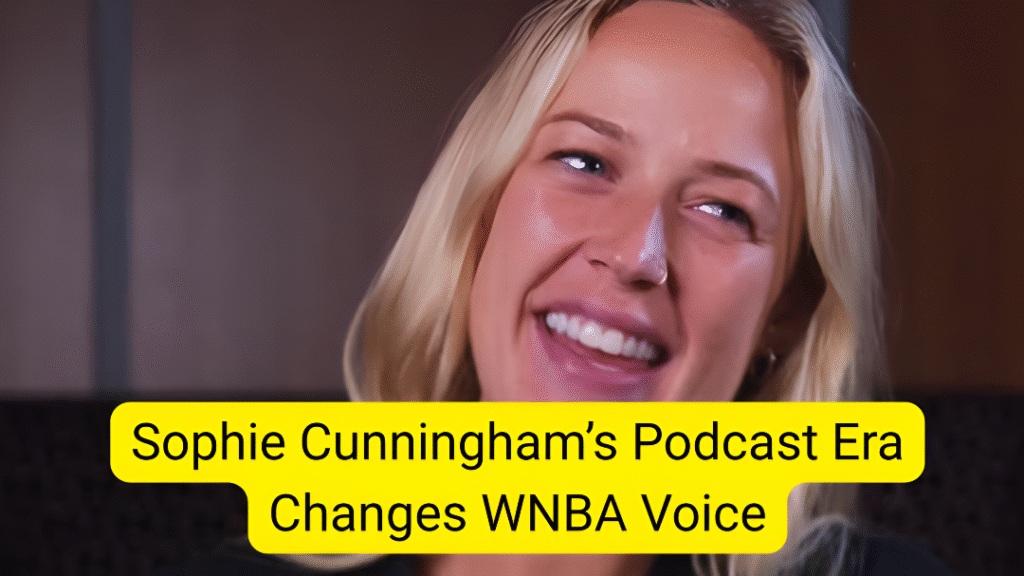
Sophie Cunningham, long known for her tenacious defense and mid-range scoring, is now launching a podcast called Show Me Something with Bravo personality West Wilson—a move few saw coming, but one that may quietly shift how WNBA players control narrative and reach audiences beyond the arena. This isn’t just athletes dabbling in media—it’s an assertion that those voices deserve direct platforms, that the stories beyond the stat sheets are as compelling as how many points you drop. The intrigue begins with how she frames it: not as a “WNBA podcast” but a lifestyle, culture, sports, food, travel hybrid. In doing so, Cunningham signals that WNBA athletes are multifaceted and ready to transcend the “athlete” label.
Cunningham’s timing is electric. After a high-profile moment defending Caitlin Clark during a heated game in 2025, her social media reach spiked, making her not just a role player on court but a presence off it. Now, instead of waiting for media to notice or frame her, she’s inviting listeners into her world on her terms. The podcast becomes a domain where she can reflect, push back, laugh, open up, and challenge media tropes—where she is host, not guest. For WNBA fans tired of fragmented quotes and filtered narratives, this is offering genuine presence.
What makes Show Me Something distinct is its blending of candid humor, real life, and sports. Rather than being slotted into basketball podcasts, it opens room for personality—fashion, travel, food, identity. That breadth invites new audiences: someone who might not care about box scores but will tune in for a food talk, for travel stories, for real talk about mental health. This podcast is a Trojan horse for visibility; she brings mainstream ears into WNBA stories in a way traditional coverage rarely can.
In a league where many players feel filtered through media frames, Cunningham is saying: I will tell my own story. She won’t wait for sound bites. She’ll host conversations, pick topics, decide tone. That shift—that agency—makes this move more than entertainment. It signals a next phase of media empowerment: not just players doing ads or guesting on shows, but building their own media brands.
Already, she’s inspiring. Other players will see that building a podcast, a show, a visual series is less about “off season hustle” and more about long-term footprint. It becomes a career hedge: when athletic prime fades, your media brand can carry influence. That’s especially important in women’s sports where careers are shorter, media equity is evolving, and legacy demands more than what you did on the court.
This move also affects how the WNBA itself is seen. As players like Cunningham build media verticals rooted in the league’s culture, the league becomes more organically plugged into cultural conversations—music, movies, style, life. Rather than the WNBA needing to reach into pop culture, pop culture now leans into WNBA voices. As such podcasts grow, they reinforce the idea that the league is not peripheral—it’s central to broader cultural storytelling.
Listeners will hear pieces of her life not often aired: travel in Europe between seasons, locker room tension unedited, relationships, how she views activism, balancing performance pressure with personal identity. With no editorial filter, the podcast can bring nuance to how fans see WNBA athletes—not monolithic icons but people with contradictions, dreams, vulnerabilities. That emotional proximity builds loyalty stronger than highlight reels ever could.
Imagine seasons ahead when a player’s podcast following is considered in endorsement deals, when media companies compete to partner with athletes who already host shows, when a WNBA star’s media brand is as valuable as her on-court stats. Cunningham is helping open that door. In a transition era for women’s sports, having control of narrative becomes a powerful asset.
In time, Show Me Something might be referenced as a turning point: the moment when WNBA athletes stopped being subjects of media and became media themselves. The boldness lies not in having a podcast, but in choosing voice over silence. And as fans lean in, I believe we’ll see more episodes, more stars, and more athletes who realize that legacy lives not only in championship trophies, but in the stories they tell, the audiences they touch, and the control they reclaim.
Also Read: Latest Trending News