WNBPA lockout debate heats up as questions rise about conflict of interest, player-owned rival leagues, and whether the union really wants a deal with the WNBA.
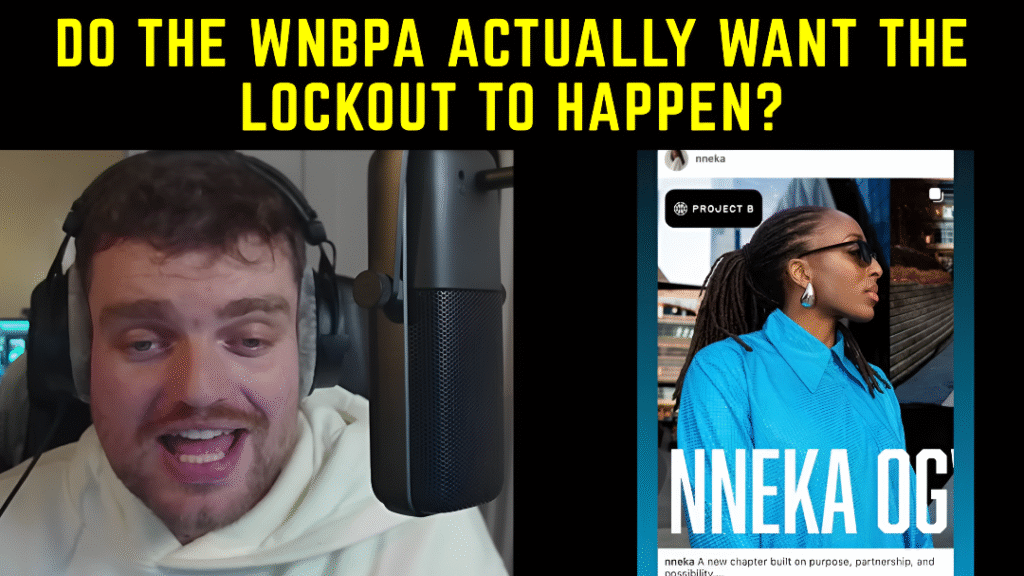
Something about this entire WNBPA situation feels… off. Like there’s something deeper going on that no one really wants to say out loud. You’ve got Nneka Ogwumike — president of the WNBPA — holding an ownership stake in a rival league, and suddenly, the players’ union seems oddly comfortable with the idea of a WNBA lockout. That’s not just bad optics; that’s a potential conflict of interest staring everyone right in the face.
Now, let’s be fair — people invest in things all the time. Athletes have every right to build wealth, start businesses, and create new ventures. No one’s denying that. But when you’re leading labor negotiations for one league while holding equity in another that stands to benefit from your main league shutting down? Yeah, that’s where the problem begins.
The WNBPA, whether intentionally or not, is walking a razor’s edge between “protecting players” and “sabotaging the league.” And here’s the uncomfortable truth — if the WNBA stops operating, rival leagues like Project B or Unrivaled gain massive short-term traction. Suddenly, all those investors, including active players, see their stakes skyrocket in value.
But let’s get real for a second — that doesn’t mean women’s basketball as a whole benefits. The WNBA is still the only platform with the infrastructure, the audience, and the money to pay 200+ players real salaries. We’re talking six-figure deals, chartered flights, sponsorships, national TV deals — things no other league can replicate right now, unless maybe, the Saudis back it.
And even then, the so-called “vision” of these rival projects sounds more like a rich person’s fantasy than a sustainable sports model. They want to strip team loyalty, turn the game into individual showdowns, and make everything feel like a Formula 1 circuit with personal brands instead of franchises. It might sound flashy, but it doesn’t feel authentic. It doesn’t feel like basketball.
Here’s what really bothers people: it’s not that the players are fighting for better pay or treatment — they should. It’s that every move the union makes right now feels strategically convenient for a few individuals at the top, not the average player trying to stay in the league.
Take the issue of exclusivity. WNBA owners reportedly want players to sign exclusive contracts — meaning no hopping between leagues during the offseason. On paper, that’s restrictive. But if the owners agreed to almost every other demand — salary bumps, better travel, higher caps — and the only hold-up was exclusivity, would the union still reject it? Because at that point, it’s not about fairness anymore. It’s about protecting side ventures.
And that’s where the moral gray zone turns pitch black. Because think about it — if rejecting that clause helps protect a rival league where certain players have millions invested, are we really watching a union fight for everyone? Or just a handful of stars protecting their portfolios?
No one’s saying Nneka, Stewie, or Napheesa Collier are villains. They’re not. They’re smart, powerful athletes who’ve earned influence. But they’re also human. And humans make decisions — especially financial ones — that protect their own interests first. If that means risking the WNBA’s stability to safeguard another league they own part of, then we have to ask: is this really about “women’s basketball,” or about leverage and control?
It’s wild, because the narrative on social media is so different. Every time someone even mentions “conflict of interest,” they get labeled anti-player or accused of tearing down women’s sports. But that’s the whole problem — the WNBPA has turned negotiations into social media warfare. They tweet. They post. They rally fans online. But none of that helps inside the actual negotiation room. Hashtags don’t write contracts. Retweets don’t settle CBA terms.
And if that’s where their energy is going — to PR battles instead of practical progress — then yeah, a lockout starts to feel less like a threat and more like a plan.
Maybe I’m wrong. Maybe they’ll figure it out, shake hands, and we’ll see the WNBA continue to grow stronger than ever. But the fact that we can even ask whether the people leading the players’ union want the league to exist… that’s a massive red flag.
Because if the final roadblock to saving the season ends up being exclusivity — not pay, not healthcare, not equity — just exclusivity — then what we’re witnessing isn’t just negotiation. It’s self-interest disguised as activism.
And that could destroy everything they’ve built.
Also Read: Latest Trending News