For decades, the NBA has sold itself as the world’s most competitive basketball league, a place where talent, hard work, and greatness decide everything. Fans are told the game is fair, the rules are the same for everyone, and discipline is applied equally. But deep down, almost every NBA fan has felt it at some point — a strange pause during a replay, a whistle that doesn’t come, a suspension that feels harsher than expected, or a superstar who somehow always escapes the worst consequences. And that feeling leads to one uncomfortable question that never really goes away: Is the NBA quietly protecting certain superstars while punishing others?
This isn’t about one game. It’s not about one season. It’s not even about one player. This is about patterns. Long-term patterns that fans notice, debate, argue over, and sometimes refuse to admit. Because once you start pulling on this thread, the entire structure of how the NBA markets its stars begins to unravel.
The NBA is not just a sports league. It is a global entertainment company worth billions of dollars. Its stars are not just players; they are brands. Jerseys, sneakers, television contracts, streaming deals, international markets — everything revolves around recognizable faces. And when money, image, and global reach collide with competition and discipline, fairness becomes complicated. Very complicated.
Every era has had its untouchables. In the 1980s, the league needed Magic Johnson and Larry Bird. Their rivalry revived basketball when ratings were struggling. The physicality of that era was brutal, but certain players were allowed to express emotion, complain to referees, or play through borderline behavior because the league needed them on the floor. Michael Jordan later became bigger than the NBA itself. When he spoke, the league listened. When he drove to the basket, whistles followed. Fans still argue whether Jordan got special treatment or whether his greatness forced refs to react. The debate never ended — it just evolved.
Fast forward to the modern NBA, and the same conversations exist, only louder. Social media slowed the game down frame by frame. Every missed call becomes a clip. Every fine becomes a headline. Every suspension becomes a war between fanbases. And now, fans don’t just ask whether stars get special treatment — they expect it.
Take technical fouls. Watch how different players interact with referees. Some players scream, wave their arms, stalk officials across the court, and rarely get penalized. Others look at a ref the wrong way and instantly pick up a tech. Fans notice this. Commentators notice it. Players notice it. The league insists that officials are trained to manage personalities, but fans see favoritism. Whether intentional or not, perception becomes reality.
Then there’s physical play. The NBA claims it protects players. Flagrant fouls, suspensions, and fines are supposed to discourage dangerous behavior. But enforcement feels inconsistent. Some players develop reputations as “enforcers” or “dirty players,” while others are labeled “emotional competitors.” The actions on the court can look similar, but the consequences are wildly different.
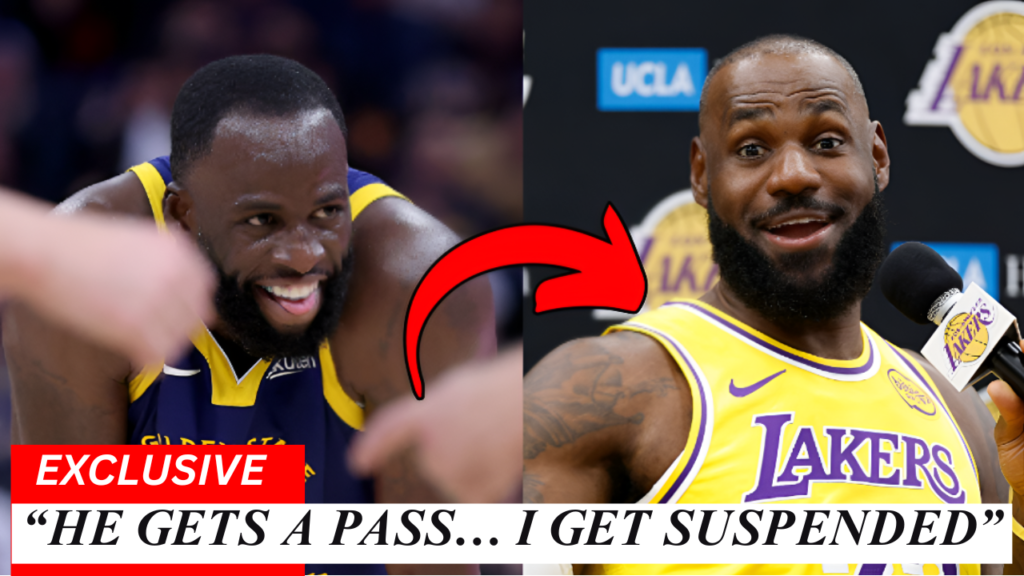
Draymond Green sits at the center of this debate like a lightning rod. His career is filled with moments that sparked outrage — kicks, punches, chokeholds, verbal explosions. Some fans believe he is protected because he plays on a successful franchise, contributes to championships, and generates attention. Others argue the league has punished him more than anyone else, using him as an example. Both sides feel strongly, and that’s exactly why the controversy never dies.
But Draymond isn’t alone. Throughout NBA history, certain players became symbols of “acceptable aggression,” while others were labeled problems. Once a label sticks, everything a player does is judged through that lens. A hard foul becomes dirty. Trash talk becomes toxic. Passion becomes immaturity. Meanwhile, stars with cleaner reputations are allowed emotional freedom. Fans ask why.
Now let’s talk about the faces of the league. Every major sport needs heroes. The NBA markets its superstars as role models, leaders, and ambassadors. These players drive international growth, especially in markets like China, Europe, and Africa. When a player represents billions in revenue, discipline becomes more than a basketball decision — it becomes a business decision.
LeBron James is often at the center of these conversations, whether fair or not. Some fans believe he gets away with excessive complaining. Others argue he absorbs more physical punishment than anyone in history with fewer calls. Both claims exist at the same time. That contradiction alone fuels endless debate. The truth likely lies somewhere in between, but perception is powerful. When fans believe a player is protected, every whistle reinforces that belief.
Stephen Curry represents another interesting case. He is beloved by fans and marketed as a revolutionary figure. Yet many argue he gets fouled off the ball constantly without calls. Some believe refs allow more contact because of how dangerous he is as a shooter. Others think the league lets defenders grab him because it balances the game. Either way, it creates the sense that rules bend depending on who you are and how you play.
Then there’s discipline off the court. Few situations exposed the league’s priorities more than high-profile suspensions tied to image. Ja Morant’s suspension reignited a firestorm. Fans compared his punishment to past incidents involving other stars. Some argued the league had no choice and needed to protect its image. Others felt the punishment was excessive and inconsistent. The debate wasn’t really about Ja — it was about fairness.
When discipline happens quickly and publicly, fans assume it’s about sending a message. But when similar situations in the past were handled quietly or differently, trust erodes. Fans begin to believe the league reacts based on optics rather than principles. And once fans lose trust, every future decision becomes suspect.
Media plays a massive role in shaping these narratives. The same behavior can be framed in completely different ways depending on the player. One athlete is “fiery.” Another is “out of control.” One is “competitive.” Another is “selfish.” These labels stick and influence public perception, which in turn pressures the league. Media narratives and league decisions feed off each other in a loop that fans can’t ignore.
Small-market players often feel this the most. Without constant media coverage, they don’t get the benefit of the doubt. Their mistakes define them. Their successes get minimized. Fans argue that stars in big markets receive more patience, more forgiveness, and more protection. Whether intentional or structural, the imbalance feels real.
The NBA insists that every decision is made fairly, case by case. And to be fair, refereeing and discipline are incredibly difficult. The game is fast. Emotions run high. Context matters. But when fans see similar actions lead to different outcomes, logic gives way to suspicion. And suspicion breeds controversy.
What makes this topic truly evergreen is that it never ends. Every season introduces new examples. A missed call in the playoffs. A suspension that feels too long or too short. A superstar allowed to vent while another gets silenced. Fans don’t forget. They store these moments and bring them back every time the debate resurfaces.
Social media has amplified everything. Clips are shared without context. Narratives spread faster than facts. Fanbases mobilize instantly. The league no longer controls the conversation — it reacts to it. And reactions often come too late.
The NBA wants parity, fairness, and global growth. But it also needs stars. This tension is impossible to escape. Protect the stars too much, and fans cry favoritism. Punish them too harshly, and the league risks losing its biggest attractions. Every decision sits on a knife’s edge.
So the real question isn’t whether the NBA protects certain superstars. The real question is whether it even can avoid doing so. In a league driven by entertainment, money, and global reach, pure fairness may be an ideal rather than a reality.
Fans will continue to argue. Comment sections will stay divided. Podcasts will revisit the same debates year after year. And every time a whistle blows — or doesn’t — the controversy lives on.
Because in the NBA, talent may win games, but perception controls the narrative. And as long as fans believe some stars are untouchable, this debate will never die.
Also Read: Latest Trending News