For decades, the NBA has sold itself as the most competitive basketball league in the world. Pure talent. Pure grind. The best players rising naturally to the top. That’s the story we’ve all been told. But here’s the uncomfortable question NBA fans keep whispering, arguing about, and sometimes outright screaming on social media: is the league really letting everything play out organically, or is it quietly choosing who gets elevated, protected, and crowned as the next global superstar? Because when you start lining up the patterns, the coincidences don’t feel like coincidences anymore.
Every era of the NBA seems to have a “chosen one.” Not just a great player, but a player the league fully wraps its arms around. Someone whose highlights flood every platform, whose flaws are softened by narratives, whose losses come with excuses, and whose wins feel larger than life. Think about how quickly certain players become untouchable in media conversations. A bad playoff series turns into “lack of help.” A poor shooting night becomes “gravity.” Meanwhile, another star with similar numbers gets labeled a choker, overrated, or exposed. Same league. Same rules. Completely different treatment.
The NBA doesn’t just sell basketball. It sells stories. Heroes. Villains. Dynasties. Redemption arcs. And stories need main characters. That’s where the controversy begins. Because when a league’s financial success depends on marketable superstars, it creates a dangerous incentive. Not to rig games outright, but to gently guide outcomes, narratives, and perceptions. Enough to tilt the table without flipping it over.
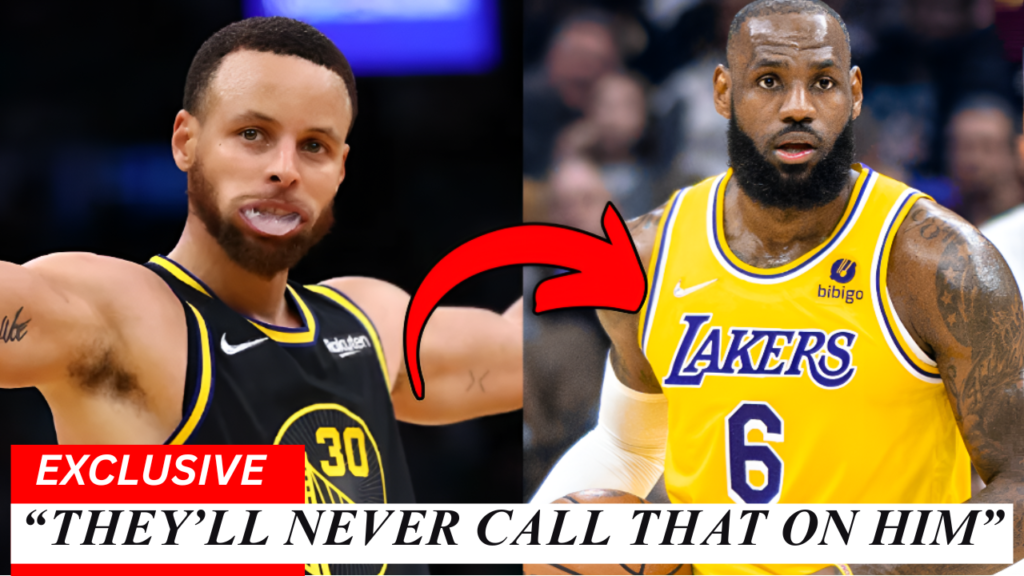
Let’s talk about officiating, because this is where fans feel it first. Everyone who watches basketball regularly knows that not all fouls are called the same way. The rulebook might be identical for every player, but the whistle rarely is. Some stars are allowed to initiate contact and still get free throws. Others get hammered in the paint and hear nothing but sneakers squeaking. Late-game possessions somehow always seem to favor the league’s biggest names. And when fans point this out, they’re told they’re just salty or imagining things. But the eye test tells a different story.
When a superstar drives to the basket, defenders often look scared. Not because of the player’s skill, but because one wrong move could result in a quick whistle. That hesitation alone changes the outcome of games. It opens lanes. It boosts efficiency. It pads stats. Over time, it builds legacies. Meanwhile, less marketable stars have to fight through contact just to get the same respect. Same play. Different result. That’s not randomness. That’s reputation influencing reality.
And here’s the part people don’t like admitting: the NBA benefits from this. A lot. Superstars mean ratings. Superstars mean jersey sales. Superstars mean international growth. The league doesn’t want a world where the best player is quiet, awkward with the media, or plays a style that doesn’t translate well to highlights. It wants charisma. Flash. Viral moments. Players who can sell sneakers in Shanghai and Paris, not just win games in Milwaukee or Memphis.
That’s why media coverage matters so much. Turn on any major sports network and notice who dominates the conversation. Some players can score 40 and it barely makes the headlines. Others drop 25 on average efficiency and it becomes a national event. MVP conversations start months before the season ends, and once the narrative is locked in, it’s almost impossible to break. Voters claim objectivity, but they’re human. They absorb the same coverage we do. They hear the same talking points repeated over and over until it feels like truth.
This is how legacy gets manufactured in real time. A superstar loses in the playoffs, and suddenly the conversation shifts to injuries, roster construction, or coaching failures. Another star loses, and the discussion becomes about heart, leadership, or mental toughness. Fans notice this imbalance, and it fuels resentment. Not because one player is good and another is bad, but because the standards keep changing depending on who the league wants to protect.
Then there’s the playoff storyline problem. Every year, certain matchups feel almost scripted. Big markets surviving elimination games. Rivalries conveniently revived. Stars getting just enough help at just the right moment. No one is saying referees sit in a room and plan outcomes. That’s not how influence works. Influence is subtle. It’s a call here. A no-call there. A momentum swing that changes everything. Basketball is a game of runs, and momentum is fragile. One whistle can flip a season.
Ask yourself this: how often do the league’s most marketable stars go out quietly in the first round? It happens, sure, but far less often than probability would suggest. And when it does, the damage control begins immediately. Injury reports. “They’ll be back stronger.” “This loss doesn’t define them.” Meanwhile, other stars are never given that grace. One bad series can follow them for years, no matter how well they play afterward.
The most controversial part of this discussion is that fans don’t even agree on who benefits the most. Some say it’s American-born stars. Others say international players are now being pushed for global expansion. Some believe big-market teams always get help. Others argue certain small-market players are elevated to prove the league isn’t biased. That confusion actually strengthens the theory. Because if everyone feels like someone else is being favored, it suggests favoritism exists, just not in one simple direction.
Let’s talk about the stars who never got chosen. Every era has them. Players with elite stats, elite impact, and elite consistency who somehow never get the same shine. They don’t get the commercials. They don’t dominate debate shows. Their MVP cases get brushed aside with vague excuses. When they win, it’s about the system. When they lose, it’s on them. Over time, fans internalize these narratives, and a player’s entire career gets framed through a distorted lens.
What makes this topic truly evergreen is that the names change, but the behavior doesn’t. In the 90s, people whispered about Jordan getting superstar calls. In the 2000s, it was Kobe and Shaq. In the 2010s, LeBron was at the center of everything. Now, a new generation is under the microscope. Different faces, same arguments. Same accusations. Same debates.
And the NBA has never done itself any favors by being transparent. Referee reports come out selectively. Mistakes are admitted after games, when nothing can be changed. Fans are told to trust the integrity of the league, while simultaneously watching inconsistent enforcement of rules night after night. If the league truly wanted to shut down these conspiracies, consistency would be the cure. But inconsistency is exactly what keeps the debate alive.
Social media has only poured gasoline on the fire. Every missed call is clipped, slowed down, zoomed in, and shared millions of times. Fans compare identical plays with different outcomes. One player gets free throws. Another gets silence. The receipts are there. And once fans feel like they’re seeing behind the curtain, trust becomes harder to restore.
The NBA’s defenders will say this is all just part of sports. That stars have always gotten favorable treatment. That fans are emotional. That refs are human. And all of that is true. But it doesn’t fully explain the scale of the pattern. Because when the same players consistently benefit, and the same players consistently don’t, it stops feeling random. It starts feeling strategic.
The most dangerous thing for the league isn’t that fans believe this. It’s that fans are still watching anyway. Because controversy sells. Debate drives engagement. Arguing about fairness becomes part of the entertainment. In a strange way, the NBA might not even want these questions to disappear completely. As long as fans are talking, tweeting, and fighting in comment sections, the league stays relevant.
And here’s the final uncomfortable truth. Even if the NBA isn’t consciously choosing winners, the system it’s built naturally favors certain types of players. The ones who draw fouls. The ones who create highlights. The ones who fit clean narratives. The league doesn’t have to rig anything if the ecosystem already nudges outcomes in a predictable direction. That’s what makes this debate impossible to kill. Because you can’t prove intent, but you can feel impact.
So the next time a superstar gets a soft whistle late in the fourth quarter, or a role player gets ignored on the same play, ask yourself this. Is this just basketball chaos? Or are we watching a league that has learned how to quietly shape its future without ever leaving fingerprints?
That question is why this debate will never go away. And that’s why NBA fans will still be arguing about it ten years from now, with new stars, new faces, and the same uneasy feeling that something behind the scenes isn’t as fair as we’re told.
Also Read: Latest Trending News