For years, NBA fans have been told a simple story: if you’re great enough, the league will find you. Talent rises. Superstars shine. The best players always get the respect they deserve. But what if that story isn’t completely true? What if greatness alone isn’t enough anymore? What if where you play matters just as much as how you play? Tonight, we’re pulling back the curtain on one of the NBA’s most uncomfortable questions — a question fans argue about every season, every award race, every playoff run — is the NBA quietly favoring big-market superstars while holding small-market stars to a different standard?
This isn’t about conspiracy theories or secret meetings in dark rooms. This is about patterns. Patterns that repeat year after year. Patterns fans notice but the league never addresses directly. Because if you say it out loud, it sounds ugly. It sounds like basketball isn’t just about basketball anymore. It sounds like branding, market size, television ratings, and global appeal might shape narratives just as much as points, rebounds, and wins.
Think about how NBA stardom is created today. It doesn’t start with MVP trophies. It starts with visibility. National TV games. Highlight packages. Social media clips. Debate shows. Commercials. Jerseys everywhere. If fans don’t see you constantly, it doesn’t matter how dominant you are. And that’s where the gap begins to form — not between good players and bad players, but between marketable players and invisible ones.
Every season, the same conversation repeats itself. A superstar in a smaller market puts up historic numbers. Efficient scoring. Winning basketball. Advanced stats off the charts. Yet the media conversation always sounds hesitant. “He’s great, but…” There’s always a “but.” But does he move the needle? But is he exciting enough? But does anyone outside that city really watch him? Meanwhile, another star in a massive media market has a good season — not historic, not flawless — and the conversation feels completely different. He’s everywhere. Debates. Headlines. Commercials. Viral moments. The league doesn’t say he matters more. They don’t have to. The exposure says it for them.
This is where fans start to feel something is off. Because basketball is supposed to be the great equalizer. A court is the same size everywhere. Ten-foot rims don’t change by city. But attention does. Coverage does. And attention shapes legacy. It shapes who gets called “the face of the league” and who gets labeled “underrated” for their entire career.
Look at MVP races over the last decade. How often does narrative outweigh dominance? How often does “story” beat stats? Fans notice how certain players need to be perfect just to be considered, while others can afford flaws and still sit at the center of the conversation. The bar isn’t the same. And when fans say that out loud, they’re told they’re biased. They’re told it’s just media opinion. But when the same patterns repeat over and over again, it stops feeling random.
Then there’s the playoff spotlight. Small-market teams win a big game, and the headline often becomes about what the other team did wrong. Big-market teams win, and the narrative becomes about legacy, greatness, and championship DNA. It’s subtle, but it adds up. One side gets framed as “surprising.” The other gets framed as “inevitable.” Surprise fades. Inevitability becomes history.
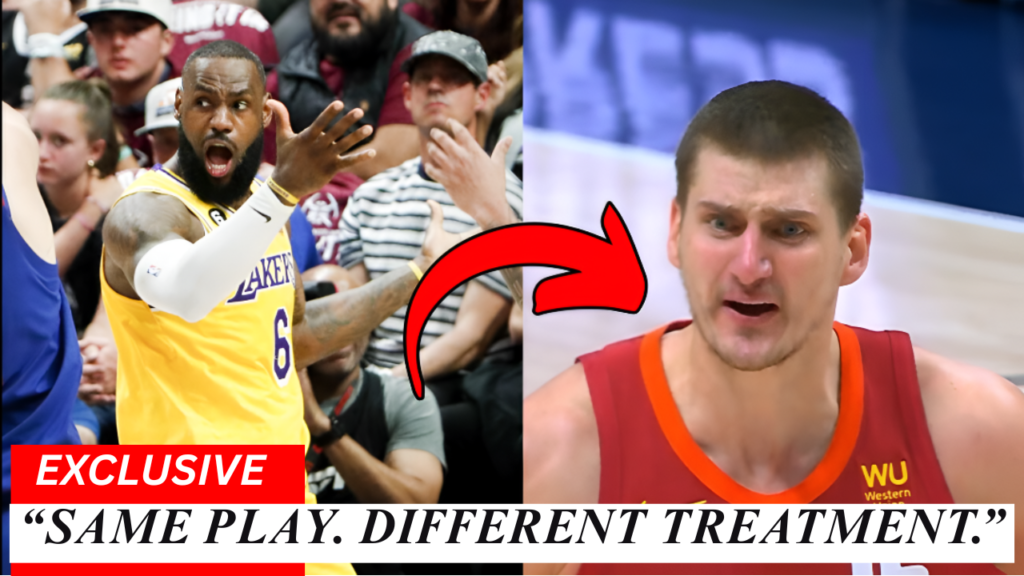
Now let’s talk about officiating — the most explosive part of this discussion. No one wants to say games are rigged. But fans constantly point out how certain stars get a whistle others don’t. How physical defense is allowed against some players but instantly penalized against others. How driving to the basket means different things depending on who you are. The league says referees are human. Fans agree. But then they ask the harder question — why do those human mistakes seem to favor the same names over and over again?
This is where emotion takes over. Because when a small-market star gets knocked to the floor with no call, fans don’t just see a missed foul. They see disrespect. When a big-market star gets a soft whistle, fans don’t just see free throws. They see protection. And once that belief sets in, every call feels like confirmation.
The NBA is a business. That’s not an accusation. That’s reality. Television deals, sponsorships, global branding — these things matter. And big markets bring eyeballs. They bring casual fans. They bring international attention. When a superstar plays in Los Angeles, New York, or another major media hub, the league benefits financially. That doesn’t mean the league tells refs what to do or scripts outcomes. But it does mean the ecosystem naturally amplifies certain players more than others.
Marketing plays a huge role here. The NBA loves faces. Faces sell shoes. Faces sell jerseys. Faces sell the league globally. But marketing requires accessibility. A star in a big market is easier to sell. More cameras. More press. More lifestyle appeal. A dominant player in a quieter city doesn’t fit the same mold — not because he’s less talented, but because the machine around him is smaller.
And here’s where it gets uncomfortable. Some players don’t even realize they’re benefiting from this system. Others feel it deeply. Former players have hinted at it. Anonymous quotes. Side comments. “If he played in a bigger market…” That sentence alone says everything. Because it admits the truth without accusing anyone directly.
Fans feel this most when awards season arrives. All-NBA teams. MVP voting. Defensive Player of the Year. Suddenly, narratives matter more than numbers. Media voters shape history. And media coverage shapes voters. It becomes a loop. Exposure leads to recognition. Recognition leads to legacy. Legacy leads to protection. And protection leads to more exposure.
What happens to the players outside that loop? They grind. They dominate. They win quietly. They become “the best player no one talks about.” And that label sticks. It follows them even into retirement. Years later, fans argue whether they were truly great or just statistically impressive. Meanwhile, stars who lived in the spotlight are remembered as icons, even if their on-court impact was comparable.
This isn’t about jealousy. It’s about balance. Fans aren’t asking the NBA to tear down its biggest stars. They’re asking for fairness in attention. For equal respect. For greatness to be recognized regardless of zip code. Because when fans feel the system is tilted, trust erodes. And once trust erodes, every moment feels suspicious.
Social media has made this debate louder than ever. Clips go viral. Side-by-side stats get posted. Fans build cases. Arguments explode. And the NBA can’t control the narrative the way it used to. That’s why this conversation refuses to die. Every new season adds fuel. Every new star becomes a test case.
And the most fascinating part? This debate doesn’t need a conclusion. Because the league will never admit bias. The numbers will never fully explain perception. And fans will never stop comparing. That’s what makes this topic evergreen. It survives eras. It survives rule changes. It survives superteams and rebuilds.
The real question isn’t whether the NBA favors big markets. The real question is whether it even can afford not to. In a league driven by entertainment, is pure basketball enough anymore? Or does visibility define value in ways the league will never openly discuss?
So when you watch the next MVP debate, the next controversial call, the next primetime showcase, ask yourself this — are you watching the best basketball story, or the best business decision? And if a superstar in a small market disappears from the conversation despite doing everything right, is that coincidence… or is it the system working exactly as designed?
Because once you start noticing the patterns, you can’t unsee them. And once fans can’t unsee something, the debate never ends.
That’s why this conversation keeps coming back. That’s why it dominates comment sections. That’s why it divides fanbases. And that’s why the NBA, no matter how powerful it is, will never fully control this narrative again.
The question now isn’t whether this bias exists. It’s whether fans are finally ready to stop ignoring it.
And that’s where the real controversy begins.
Also Read: Latest Trending News