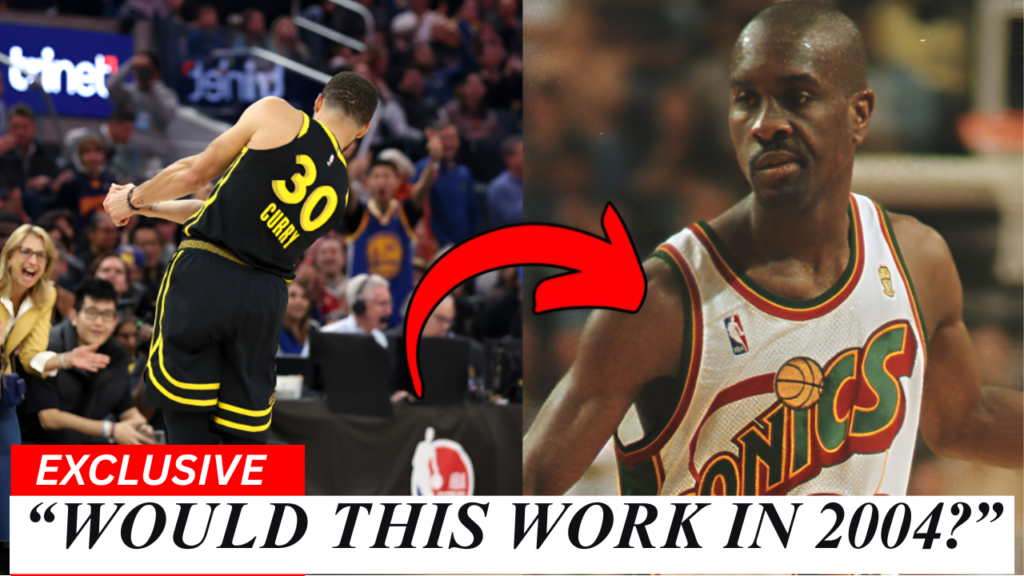
The NBA wants you to believe what you’re watching is evolution. Faster players. Better shooting. Higher skill. A natural progression of the game. But there’s a growing number of fans, players, and even former legends who believe something very different. They believe defense didn’t slowly fade away. They believe it was pushed out. Deliberately. Systematically. Quietly. And once you start looking at the game through that lens, modern NBA basketball feels less like pure competition and more like controlled entertainment.
The league rarely says it out loud, but its actions tell a clear story. Scoring sells. Highlights sell. Individual stars sell. Defense, on the other hand, doesn’t trend. A perfectly timed rotation doesn’t go viral. A great closeout doesn’t dominate social media. A hard-fought 92–89 game doesn’t generate clips that flood timelines. But a 45-point night, a step-back three, or a poster dunk does. And over time, the NBA has reshaped the rules, the whistle, and the culture to make sure those moments happen more often.
This isn’t about nostalgia. This isn’t about saying older basketball was “better.” This is about asking whether today’s game is being artificially tilted toward offense — not to improve basketball, but to manufacture superstars.
Look at how defense is treated today. Defenders are told where they can stand, how close they can get, how long they can stay, and how much contact they can absorb before being penalized. Offensive players, meanwhile, are encouraged to initiate contact, exaggerate movement, and force the referee to make a decision. The burden is no longer on the scorer to beat the defender cleanly. The burden is on the defender to avoid existing in the scorer’s space.
Hand-checking didn’t just disappear. It was removed because it slowed stars down. Freedom of movement rules weren’t introduced for fairness. They were introduced to open the floor. Defensive three-second violations weren’t about balance. They were about removing rim protection. Each rule change by itself seems reasonable. Together, they form a system where defense is constantly reacting, constantly guessing, constantly at risk.
And the result is predictable. Scoring explodes. Records fall. Players average numbers that once felt impossible. Casual fans celebrate the spectacle. But hardcore fans start asking uncomfortable questions. Are players really that much better? Or is the game simply easier for scorers?
The NBA tells us skill has improved. And it has. Shooting is better. Spacing is smarter. Training is more advanced. But skill alone doesn’t explain the complete disappearance of resistance. It doesn’t explain why defenders are punished for doing exactly what defense requires: physicality, positioning, timing, and intimidation.
Watch a modern defender try to guard an elite scorer. They can’t put a hand on the hip. They can’t cut off the drive without risking a foul. They can’t contest too aggressively without being called reckless. They can’t slide under a shooter without being labeled dirty. They can’t even celebrate good defense without risking a technical. Defense isn’t just difficult. It’s discouraged.
Now look at how offensive players are officiated. They jump sideways into defenders and get rewarded. They hook arms and draw fouls. They stop abruptly on drives, forcing contact. These moves are celebrated as “crafty” and “high IQ.” But what they really are is exploitation of a system designed to protect offense at all costs.
This creates a distorted version of dominance. When a scorer puts up 40, fans cheer. When someone averages 30 for a season, it’s treated as historic. But how many of those points come against defenders who are terrified of the whistle? How many come because help defenders can’t rotate freely? How many come because the defender’s job has been made impossible by design?
The NBA doesn’t frame this as manipulation. It frames it as entertainment. Faster pace. More points. More excitement. But competition suffers when one side of the ball is constantly handicapped. Basketball becomes less about solving problems and more about showcasing individuals.
And that’s where the superstar factory comes in.
The league doesn’t just benefit from stars. It needs them. TV deals, sponsorships, global reach — all of it depends on recognizable faces. So the game is shaped to ensure those faces shine. The rules make sure stars can score. The whistle makes sure stars stay on the floor. The media narratives make sure stars are celebrated even when they struggle.
Defense doesn’t fit into that equation. A lockdown defender doesn’t sell sneakers. A player who holds opponents to bad nights doesn’t generate headlines. So defensive impact is minimized, ignored, or redefined as something less important.
This is why defensive awards feel disconnected from reality. This is why elite defenders often feel underappreciated. This is why teams built on defense struggle to get respect unless they also have a top scorer. The message is clear: offense matters more.
The most controversial part of this conversation is era comparison. Because once defense is removed from the equation, everything changes. Numbers inflate. Pace increases. Efficiency skyrockets. And suddenly, fans are told today’s stars would dominate any era, while players from previous eras would struggle now.
But that argument ignores context. It ignores rule enforcement. It ignores physicality. It ignores the psychological pressure defenders once applied. It ignores how difficult it was to score when every drive came with contact, when help defense was real, when the paint was crowded, when referees let defenders decide outcomes.
If you allowed modern defenders the same freedom offensive players enjoy, the game would look completely different. Scoring would drop. Efficiency would normalize. And some “unstoppable” players would suddenly look human.
That’s not an attack on players. It’s a critique of the system they play in.
And the system rewards one thing above all else: points.
The NBA rarely celebrates a great defensive game. It celebrates scoring explosions. It builds MVP cases around points per game. It markets rivalries based on offensive firepower. Defense becomes an afterthought, something mentioned briefly before returning to the main attraction.
Even commentary reflects this shift. Broadcasters gush over step-back threes while barely acknowledging blown coverages. They praise scorers for “finding space” when that space exists because defenders aren’t allowed to close it. They frame defensive contact as unnecessary or reckless, even when it’s fundamentally sound.
This shapes fan perception. Younger fans grow up thinking defense is secondary. They see highlights, not possessions. They see box scores, not stops. They equate greatness with scoring alone.
And that’s exactly what the league wants.
Because offense is easy to sell globally. You don’t need deep basketball knowledge to enjoy a dunk or a deep three. You don’t need context to appreciate a scoring run. Defense requires understanding. Patience. Appreciation for nuance. That doesn’t translate as easily across screens and cultures.
So the NBA simplifies the product. It leans into offense. It amplifies stars. It minimizes friction.
But in doing so, it risks something important: credibility.
Fans can accept change. What they struggle to accept is dishonesty. And when the league insists today’s game is simply “better” without acknowledging how much it has been altered, fans push back. They bring up tape. They bring up rule books. They bring up numbers adjusted for era. They bring up the eye test.
And once that debate starts, it never stops.
Because deep down, fans don’t just want entertainment. They want authenticity. They want to believe what they’re watching is earned. They want to believe greatness is measured fairly.
Right now, the NBA feels like it’s measuring greatness through a distorted lens.
That doesn’t mean modern players aren’t talented. They are. Incredibly. But talent flourishes when challenged. And the modern game often feels too accommodating.
Defense should be allowed to fight back. Physicality should be respected. Stops should matter. A great defensive possession should be celebrated as much as a deep three.
Until that balance returns, this controversy will only grow louder.
Fans will keep asking if records mean the same thing. They’ll keep questioning whether stars are being manufactured rather than discovered. They’ll keep arguing about eras. They’ll keep debating whether the NBA chose highlights over honesty.
And every time a defender gets called for doing their job, the conversation reignites.
The NBA may never admit it shaped the game this way. But the evidence is on the floor every night.
Defense didn’t disappear.
It was pushed out.
And the league is still benefiting from it.
Also Read: Latest Trending News