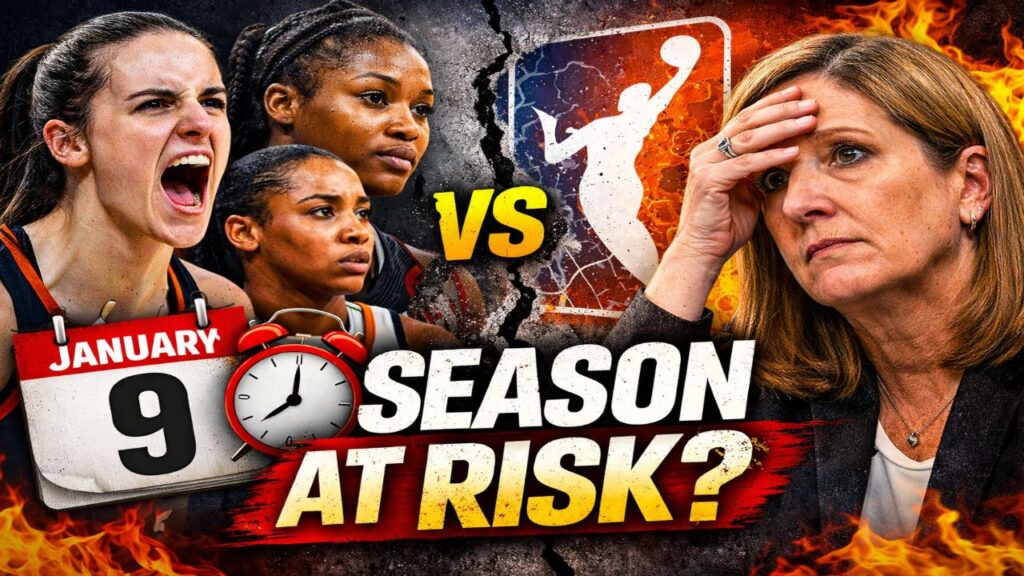
The WNBA has never been louder, never been more visible, never been closer to mainstream relevance than it is right now — and yet, behind the scenes, the league is standing on the edge of one of the most dangerous moments in its history. While fans are talking about rising viewership, sold-out arenas, expansion teams, and superstar momentum, a far more uncomfortable conversation is unfolding in private rooms, tense meetings, and stalled negotiations. A conversation that could decide whether the next WNBA season even starts on time… or at all.
What most fans don’t realize is that the WNBA is currently locked in a silent war between the league office and its players — a war over money, power, control, and the future identity of women’s basketball. And the scariest part? The deadline is real. The tension is real. And the consequences are very real.
At the center of this storm is the Collective Bargaining Agreement — the CBA — a document most casual fans never think about, but one that determines everything from player salaries to revenue sharing, roster limits, travel standards, and job security. This agreement is expiring, and negotiations for a new one have reached a breaking point. Players believe this is their moment. The league believes this is a dangerous gamble. And neither side is backing down.
For years, WNBA players accepted low salaries, limited benefits, and unstable conditions because the league claimed it was still “building.” Players were told to be patient. To trust the process. To wait for growth. And now that growth has arrived — record TV numbers, booming social media engagement, jersey sales exploding, new franchises on the way — the players are asking a simple but explosive question: where is our share?
The union is pushing for a dramatic increase in revenue sharing, demanding a model that reflects the league’s newfound visibility and commercial success. Players want a larger slice of total basketball-related income, higher maximum salaries, better minimum contracts, improved travel conditions, and long-term security. From their perspective, this is overdue justice. They carried the league when nobody was watching. They built the culture. They sacrificed earnings during their prime years. And now that the league is finally profitable on paper, they refuse to be left behind.
But the league office sees a very different picture. Executives argue that while popularity has grown, profitability is still fragile. They claim that adopting the players’ proposed revenue split could push the league into massive financial losses. According to internal projections, the league insists that agreeing to these terms could result in hundreds of millions of dollars in deficits over the life of the agreement. In their view, the players are demanding NBA-level financial structures without NBA-level revenue stability.
This is where the controversy explodes.
Because from the outside, fans are asking: how can a league that just secured major media deals, announced expansion cities, and boasts record attendance still claim it can’t afford to pay its players more? How can the league celebrate growth publicly while pleading poverty privately? And if the WNBA truly believes in its own momentum, why is it hesitating to invest in the very athletes driving that growth?
The silence from the league has only made things worse. Players submitted proposals. The union waited. And waited. And waited. With the deadline approaching, the league still has not delivered a counteroffer that satisfies the players’ core demands. To the athletes, this feels like disrespect. Like delay tactics. Like an attempt to run out the clock and force concessions through pressure rather than partnership.
Behind closed doors, frustration is boiling over.
Veteran players are openly discussing the possibility of a work stoppage. Younger stars are watching closely, realizing that the contracts negotiated now will shape their entire careers. Agents are warning clients to prepare for chaos. And fans are beginning to hear a word no one wants to hear: lockout.
A lockout wouldn’t just be a temporary inconvenience. It would be catastrophic.
The WNBA is in a fragile moment of cultural relevance. Momentum is everything. Cancelled games or delayed seasons would risk losing casual fans who are just starting to pay attention. Sponsors might hesitate. Media partners could shift focus. Expansion plans could slow. And the narrative could flip overnight from “women’s basketball is rising” to “the WNBA can’t get out of its own way.”
Yet from the players’ perspective, this may be the only leverage they’ll ever have.
Because history has taught athletes one brutal lesson: if you don’t fight at the peak of your power, you never get another chance. Previous generations of WNBA players didn’t have this visibility. They didn’t have this social media influence. They didn’t have this fan engagement. Today’s players do. And many believe that accepting a weak deal now would lock them into another decade of underpayment.
This is where internal divisions start to surface.
Not all players agree on strategy. Some stars believe compromise is necessary to protect the season and the league’s growth. Others believe compromise is exactly what’s kept wages suppressed for so long. There are whispers of disagreement between union leadership and certain high-profile players. Quiet conversations about whether holding the line is worth the risk. And when those debates leak into the public sphere, the narrative becomes even more volatile.
Fans have already started choosing sides.
Some argue that players deserve every dollar they’re asking for, pointing to the massive gap between WNBA and NBA salaries as evidence of systemic inequality. Others worry that pushing too hard could collapse a league that still relies on careful financial balancing. Comment sections are filled with accusations, defenses, emotional arguments, and outright hostility. And the longer negotiations stall, the uglier those debates become.
Social media has poured gasoline on the fire.
Every vague quote, every non-answer from league officials, every frustrated comment from players gets dissected, clipped, and amplified. Influencers frame the situation as exploitation. Critics frame it as entitlement. And nuance disappears in favor of outrage.
What makes this situation even more explosive is the timing. The WNBA is preparing for expansion, which brings new revenue but also new costs. Teams are investing in facilities. Cities are competing for franchises. The league is trying to project stability to investors and partners. A labor war at this exact moment threatens that entire image.
And then there’s the question no one wants to answer honestly: who actually has the power here?
The league technically controls the schedule, the contracts, and the infrastructure. But players control the product. Without them, there is no league. And unlike previous eras, today’s players have platforms. They can speak directly to fans. They can shape public opinion. They can apply pressure in ways that weren’t possible before.
This power shift scares executives.
Because once players realize their collective influence, the balance changes forever. And that’s why some believe the league is trying to slow negotiations — to avoid setting a precedent that could echo for decades.
But delays carry risks.
If the deadline passes without progress, legal mechanisms could trigger a lockout. Training camps could be postponed. Schedules could be scrapped. And suddenly, all the optimism surrounding women’s basketball would be overshadowed by headlines about dysfunction and dispute.
The irony is painful.
At a time when the world is finally paying attention to women’s sports, the WNBA might silence itself.
And fans are caught in the middle.
They want better pay for players. They want sustainable growth. They want exciting basketball. They want the season to happen. But right now, those goals are colliding rather than aligning.
The most uncomfortable truth is that both sides are probably right — and that’s what makes this so dangerous. Players deserve more. The league does face financial constraints. Growth does cost money. Exploitation has occurred. Risk does exist. There is no villain with a mustache here. Just competing visions of the future.
Yet history doesn’t care about intentions. It only remembers outcomes.
If the WNBA mishandles this moment, it could undo years of progress. If players miscalculate their leverage, they could face backlash that weakens public support. And if compromise comes too late, the damage may already be done.
Right now, the league is holding its breath. Players are holding their ground. And the clock is ticking.
This isn’t just about salaries. It’s about respect. About trust. About whether a league that preaches empowerment is willing to practice it when it becomes expensive. It’s about whether growth means shared success or centralized control. And it’s about whether the WNBA’s brightest moment becomes the spark for its biggest crisis.
One way or another, this standoff will define the next decade of women’s basketball.
And when the history of this era is written, people won’t remember the slogans or press releases. They’ll remember whether the league chose partnership over power — or whether it let a golden opportunity slip through its fingers.
Because sometimes, the most dangerous controversies aren’t loud scandals or viral clips.
They’re the quiet battles happening behind closed doors — right before everything changes.
Also Read: Latest Trending News