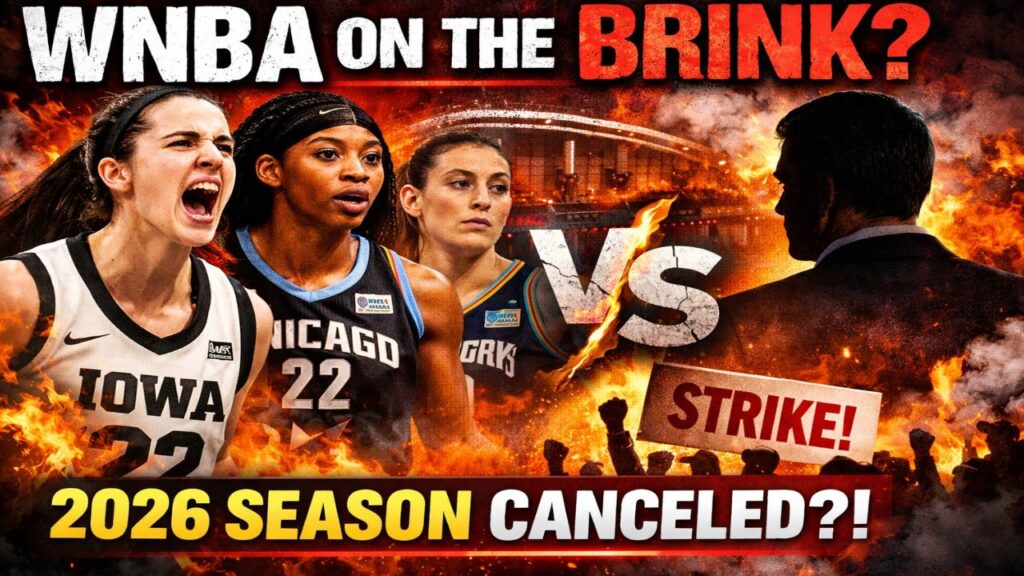
The WNBA is on the edge of something it has never experienced before. Not a tough season. Not a ratings dip. Not even a star player leaving. This time, the entire league itself is at risk. Right now, behind closed doors, there is a power struggle unfolding that could cancel the 2026 season, break the relationship between players and owners, and permanently change women’s basketball. Fans see Caitlin Clark hitting logo threes, Angel Reese crashing the boards, and Breanna Stewart dominating both ends of the floor. But what they don’t see is the ticking time bomb sitting underneath the league. A labor war. And if it explodes, everything the WNBA has built over the last decade could collapse overnight.
For the first time in league history, WNBA players are openly talking about walking away. Not just from a game. From an entire season. And they aren’t bluffing. The Collective Bargaining Agreement that governs how much they get paid, how revenue is split, how teams are run, and how the league operates has expired. Negotiations have stalled. And instead of compromise, both sides are hardening their positions. What makes this moment so dangerous is that the WNBA has never been more popular, more visible, or more financially promising than it is right now. That means the stakes are higher than ever before.
At the center of this storm is a simple question that has become incredibly complicated. Who actually owns the future of the WNBA? Is it the league and its investors who claim they are taking all the financial risk? Or is it the players who believe their talent, star power, and viral popularity are finally driving real money into women’s basketball? For years, the WNBA was seen as a passion project. Something that existed because it should exist, not because it made money. But now, everything has changed. Arenas are filling up. Jerseys are selling out. Broadcast deals are growing. And young stars like Caitlin Clark are pulling in fans who never watched women’s basketball before.
This surge in popularity has given players something they never had before. Leverage. And they know it.
Inside the players’ union, the message has become clear. They are done accepting what they see as crumbs while the league grows richer. They want a major increase in revenue sharing. They want higher salary caps. They want better benefits, better travel, better treatment, and a bigger slice of the money their labor creates. From their point of view, the WNBA is no longer a struggling league that needs charity. It’s a growing sports business that should pay its athletes like professionals.
But on the other side of the table, league executives and team owners see a very different picture. They argue that despite rising popularity, the WNBA is still not profitable in the way the NBA is. They claim the costs of expansion, marketing, travel, and operations are massive, and that the league still depends heavily on support from the NBA. From their perspective, the players’ demands would push the league into deep financial losses. And they believe that could threaten the long-term survival of the WNBA itself.
So now you have two sides telling completely different stories. Players say the league is hiding money and underpaying them. The league says the players are demanding more than the business can sustain. And in between is a fanbase that is bigger, louder, and more emotionally invested than ever before.
That’s what makes this so volatile.
Because this isn’t happening in some quiet corner of sports. This is happening right when women’s basketball is exploding in the mainstream. Social media is filled with debates about Caitlin Clark, Angel Reese, and the future of the game. Young girls are wearing WNBA jerseys to school. College stars are bringing millions of new eyes into the sport. And now, just when everything looks like it’s finally taking off, it might all come crashing down.
The players know this. That’s why they are willing to go further than ever before. For decades, women athletes were told to be grateful for whatever they got. They were told the money wasn’t there. They were told the audience wasn’t big enough. They were told to be patient. But now, the audience is here. The sponsors are here. The TV networks are here. And the players are done waiting.
Inside union meetings, the tone has changed. This is no longer about small raises or incremental improvements. This is about respect. It’s about being recognized as the engine of the league, not an expense to be managed. Players believe that stars like Caitlin Clark are generating millions in ticket sales, merchandise, and media deals. And they want that reflected in their paychecks.
From the league’s side, the fear is just as real. They worry that giving in to these demands could force teams to cut corners, slow down expansion, or even fold. They point to the fragile financial structure of women’s professional sports and argue that one bad deal could undo years of progress. And they don’t want to set a precedent that they can’t afford to maintain.
So now we’re in a standoff. Neither side wants to blink. And the clock is ticking.
If no agreement is reached, players can strike. That means no games. No season. No revenue. No momentum. And that’s where the nightmare scenario comes in. Because if the 2026 season is canceled or delayed, it doesn’t just hurt owners. It hurts the players, the fans, the sponsors, and the entire movement behind women’s sports. It gives critics ammunition. It gives rival leagues an opening. And it risks turning the biggest moment in WNBA history into its most painful.
This is where new competitors enter the picture. Alternative women’s basketball leagues are watching this chaos very closely. They know that unhappy WNBA players might be willing to jump ship if they are offered better pay or better conditions. If the WNBA stumbles, those rival leagues could suddenly look very attractive. And once stars start leaving, it becomes much harder to bring them back.
For the first time, WNBA players don’t just have to choose between playing and not playing. They might have other options.
That possibility terrifies the league. Because stars are the lifeblood of any sports league. Lose Caitlin Clark, and you lose millions of eyeballs. Lose Angel Reese, and you lose viral moments. Lose Breanna Stewart, and you lose credibility. The WNBA’s current boom is built on these players. And if they feel disrespected or undervalued, they might not stay loyal.
Fans are already taking sides. Some argue that the players deserve every dollar they ask for. Others say that killing the season would be selfish and destructive. Social media is filled with heated debates, conspiracy theories, and emotional posts. Every rumor of a stalled negotiation sends shockwaves through the basketball world.
And the craziest part is that this is all happening quietly. There are no press conferences. No dramatic walkouts yet. Just tense meetings, leaked information, and growing anxiety. But make no mistake. This is a ticking bomb.
History shows us what happens when sports leagues go to war with their players. Fans get angry. Sponsors get nervous. And once trust is broken, it takes years to rebuild. The WNBA has worked too hard to get where it is now. But if both sides refuse to compromise, all of that progress could be thrown away.
This isn’t just about money. It’s about power. It’s about who gets to decide the future of women’s basketball. Is it the executives who manage the business? Or the athletes who put their bodies on the line and draw the crowds?
The next few months could decide everything. A fair deal could launch the WNBA into a new era of growth and respect. A failed deal could push it into chaos.
One way or another, the league will never be the same again.
And that’s why this is the most dangerous moment in WNBA history.
Because sometimes, the biggest threat isn’t what happens on the court. It’s what happens behind closed doors.
Also Read: Latest Trending News