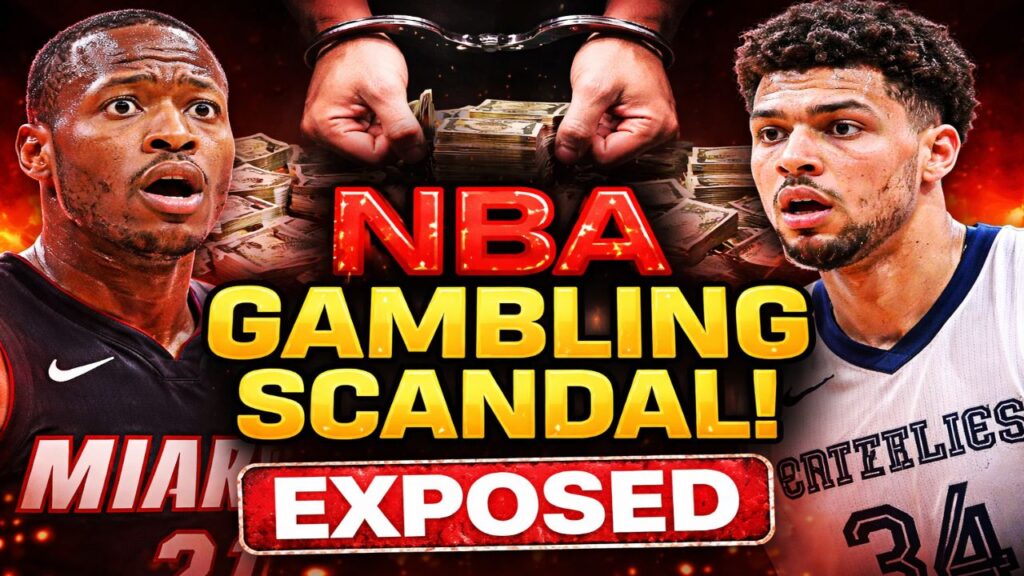
Basketball has always sold us a promise. That when the ball leaves a player’s hands, what happens next is real. Unscripted. Earned. Decided by talent, effort, and pressure in the moment. Fans invest their emotions, their time, and increasingly their money into that promise. But what if that promise was quietly broken? What if some NBA games weren’t just being played for wins and losses, but for betting slips, insider texts, and manipulated outcomes? This is not a conspiracy theory anymore. This is a confirmed scandal. And now, for the first time, someone connected to it is going to prison.
The NBA gambling scandal didn’t explode all at once. It crept in slowly, hiding behind flashy sponsorships, betting odds scrolling across broadcasts, and the normalization of sports gambling as “just part of the game.” Fans were told it was safe, regulated, harmless entertainment. But behind the scenes, something darker was brewing. Something that threatens the very integrity of professional basketball. When the first prison sentence was announced, it sent a chilling message: this wasn’t just about one bad actor. This was about a system that failed — or worse, looked the other way.
To understand why this moment matters so much, you have to understand how deeply gambling has woven itself into the NBA’s ecosystem. Just a decade ago, betting was treated like a dirty secret. Now it’s front and center. Pre-game shows discuss point spreads like box scores. Commentators casually mention betting lines. Arenas are sponsored by sportsbooks. The league didn’t just accept gambling — it embraced it. And with that embrace came access. Information. Opportunity. Temptation.
At the center of this scandal is a web of bettors, insiders, and players — some proven, some still under investigation — who allegedly used inside information to place suspicious bets on very specific player outcomes. Not wins. Not championships. But minute details. Early substitutions. Limited minutes. Unexpected performances. The kind of things only someone close to the locker room would know. When betting patterns flagged these anomalies, investigators started pulling threads. And once they did, the entire sweater began to unravel.
One of the most disturbing aspects of this case is how subtle the manipulation appears to have been. This wasn’t a player missing free throws on purpose in the final seconds. This wasn’t an obvious throw. This was quieter. A shortened stint. A player being pulled early for “injury management.” A sudden lack of aggression. Enough to swing prop bets without raising alarms among casual viewers. And that’s what makes it so dangerous. Because if fans can’t see it, how can they trust what they’re watching?
When authorities announced the first prison sentence connected to the scandal, it marked a turning point. For months, rumors had circulated. Fans argued online. Some dismissed it as overblown. Others suspected the league was trying to keep things quiet. But prison time changes everything. Prison means evidence. It means wire transfers, messages, timelines, cooperation. It means this wasn’t just speculation. This was real, criminal behavior tied directly to NBA games.
And that’s where the fear sets in — not just for fans, but for the league itself. Because this sentence isn’t the end of the story. It’s the beginning of the consequences. Once one person goes down, pressure builds. People talk. Deals get made. Names surface. The question is no longer “did something happen?” The question is “how far does this go?”
What makes this scandal especially explosive is the involvement of player-adjacent figures. Even the suggestion that active or recently active NBA players could be connected to gambling manipulation sends shockwaves through the sport. Players are the product. The league’s entire value rests on fans believing players are competing honestly. If that belief collapses, everything collapses with it — TV deals, sponsorships, fan loyalty. The NBA knows this. Which is why critics argue the league’s response has felt cautious, even defensive.
Some fans believe the NBA acted too slowly. That it ignored early warning signs because gambling revenue was too lucrative to disrupt. Others argue the league was caught off guard, blindsided by how sophisticated modern betting operations have become. Both possibilities are troubling. One suggests negligence. The other suggests lack of control. Neither inspires confidence.
Then there’s the moral dilemma. Players today aren’t just athletes — they’re brands, influencers, and in many cases, young men suddenly surrounded by wealth and access. Sportsbooks offer enormous financial incentives. Friends and acquaintances see opportunities. The line between legal betting, insider knowledge, and illegal manipulation becomes dangerously thin. Especially when the league itself promotes gambling so aggressively. When you profit from the culture, can you truly police it?
The prison sentence also raises uncomfortable questions about accountability. Who really pays the price when scandals like this happen? Is it the gambler who placed the bets? The insider who leaked information? The player who may have altered behavior? Or the league that created an environment where all of this became possible? Fans are already debating whether this sentence is justice — or simply a convenient way to isolate blame.
Social media reactions have been explosive. Some fans feel betrayed. Others feel vindicated, claiming they’ve suspected manipulation for years. Comment sections are filled with clips of “suspicious plays,” early exits, and questionable rotations being reexamined through a new lens. Once trust is broken, everything looks different. A missed shot becomes suspicious. A coach’s decision becomes questionable. The game itself starts to feel scripted, even when it’s not.
That erosion of trust is the most dangerous outcome of all. Because sports don’t survive on perfection. They survive on belief. Fans accept bad calls. They accept losses. They even accept scandal — as long as they believe the competition itself is real. When that belief fades, fans disengage emotionally. And when fans disengage, the league loses its soul.
This scandal also forces a broader conversation about modern sports culture. Gambling isn’t just an add-on anymore. It’s embedded into how games are consumed. Apps send notifications mid-game. Odds change in real time. Viewers aren’t just watching — they’re speculating. That constant financial layer changes how fans experience basketball. It adds excitement, but it also adds pressure. Pressure on players. Pressure on insiders. Pressure on outcomes.
And pressure creates cracks. Cracks that bad actors exploit.
The NBA now faces a defining moment. It can treat this as an isolated incident — a bad apple, a rare breach — or it can confront the systemic risks head-on. That means stricter rules. Deeper investigations. Real transparency. And potentially uncomfortable revelations. Because if the league doesn’t clean this up fully, someone else will. Federal investigators don’t care about brand image. Courts don’t care about TV ratings. Once the legal system is involved, control shifts.
There’s also the international angle. The NBA isn’t just an American league anymore. It’s a global product. Fans from Europe, Asia, and beyond watch games and place bets. Trust in the NBA extends far beyond U.S. borders. A scandal like this doesn’t stay local. It damages credibility worldwide. Other leagues are watching closely. Regulators are watching closely. And so are sportsbooks themselves, who have billions at stake.
For players, the fallout could be brutal. Even those with no involvement may face increased scrutiny. Privacy will shrink. Communication will be monitored. Innocent mistakes could be misinterpreted. The relationship between players and fans could grow colder, more transactional. When suspicion enters the room, authenticity leaves.
Yet despite all this, the league still has a chance to recover. Sports history is filled with scandals — some survived, some didn’t. Recovery depends on honesty, accountability, and reform. Fans don’t expect perfection. They expect effort. They want to know the league values integrity more than profit. That basketball still means something beyond betting odds.
The first prison sentence is a warning shot. It tells us this story isn’t over. It tells us more details are coming. More names. More uncomfortable truths. The real question is how the NBA responds when those truths emerge. Will it protect the game? Or protect itself?
Because in the end, basketball isn’t just about highlights and championships. It’s about trust. And once trust is broken, winning it back is the hardest game of all.
So the next time you watch an NBA game, ask yourself: are you watching competition — or calculation? Passion — or probability? And if the line between the two keeps getting thinner, what does that mean for the future of the sport we love?
This scandal isn’t just about gambling. It’s about belief. And right now, belief is on the line.
Also Read: Latest Trending News