The WNBA spotlight keeps getting brighter, and with that spotlight comes something the league hasn’t always been used to — constant conversation, constant headlines, and constant drama surrounding its biggest stars. And right now, few names generate more attention than Caitlin Clark. Whether it’s her performance on the court, her impact on TV ratings, or her partnerships off the court, Clark has become one of the most talked-about athletes in all of basketball. But recently, a moment involving Sophie Cunningham, a teammate and fellow competitor, sparked a wave of discussion online — not because of a game, but because of a comment that many fans interpreted as a subtle shot at Nike and a reflection of the complicated relationship between brands, players, and recognition in the modern WNBA.
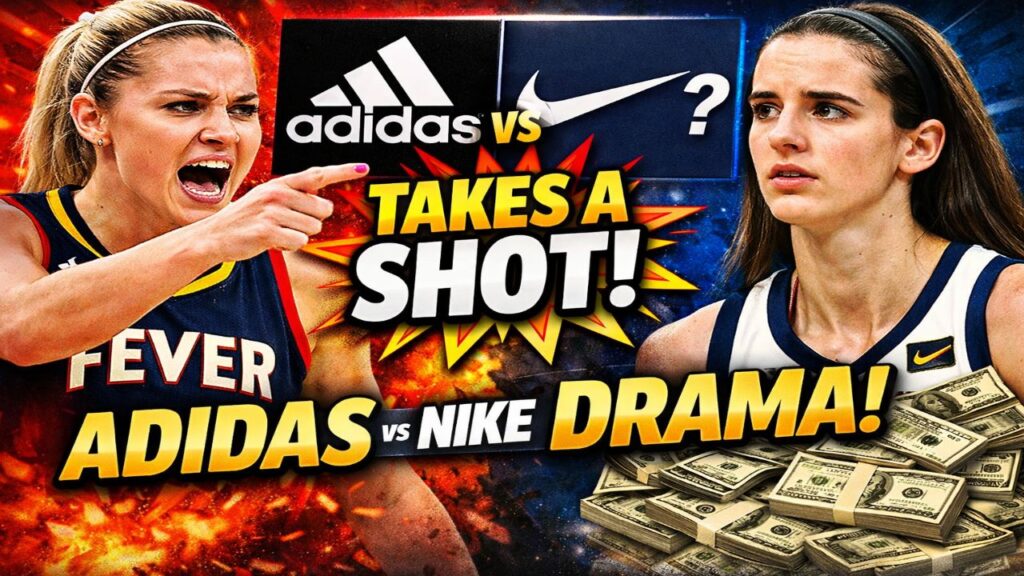
It all started with what seemed like a casual social media interaction. Sophie Cunningham shared a post showing Adidas sneakers she had received. That alone wouldn’t normally turn heads. Players receive gear all the time, and brand partnerships are a routine part of professional sports. But what caught people’s attention was a comment exchange that followed — playful on the surface, but layered enough to send fans into debate mode. When Caitlin Clark joked about the shoes not being her favorite, Cunningham responded with a line that instantly became headline material: a suggestion that Adidas athletes are treated better. It sounded lighthearted, the kind of teasing teammates often engage in publicly. Yet in today’s sports media environment, even small jokes can carry big implications.
To understand why this moment resonated so strongly, you have to understand Caitlin Clark’s relationship with Nike and the expectations surrounding it. Clark didn’t just enter the WNBA as a top draft pick — she entered as a cultural phenomenon. Her college career transformed women’s basketball viewership numbers. Arenas sold out. Television ratings exploded. Social media engagement skyrocketed. She became more than a player; she became a movement within the sport. And when an athlete reaches that level of influence, brand partnerships become part of the story.
Nike signing Clark was seen as inevitable and monumental. The partnership symbolized the merging of the sport’s fastest-rising star with the most powerful brand in basketball culture. Fans expected immediate campaigns, signature merchandise, and a rollout that matched the scale of Clark’s popularity. But early on, many observers felt the promotion didn’t match the moment. There were questions online about visibility, marketing strategy, and whether Nike was fully capitalizing on Clark’s unprecedented momentum.
That perception — fair or not — became part of the public narrative. Sports marketing analysts debated whether Nike was taking a long-term approach or simply moving too slowly. Fans compared Clark’s situation to other athletes who seemed to receive faster product launches or more aggressive promotional campaigns. Social media amplified every comparison, every delay, and every rumor.
This is where Cunningham’s comment landed differently than a typical joke between players. It touched on something fans were already discussing. Even if meant humorously, it echoed a sentiment that had existed in online conversations for months — the idea that Clark’s brand power might not have been fully utilized early in her professional career.
And in sports culture, perception matters almost as much as reality.
Clark herself has never publicly criticized Nike. In fact, her partnership with the company has included major moments, including wearing Kobe-inspired player editions and appearing in high-profile campaigns. From a business standpoint, the relationship appears strong. Signature shoe development, which often takes years, is widely expected to be part of her future with the brand. Industry insiders frequently point out that Nike tends to play the long game with generational athletes.
Still, fans remember the early months of Clark’s rookie season, when excitement around her popularity felt bigger than the marketing response surrounding her. During that time, even small signals — like social media posts from people close to Clark expressing frustration — added fuel to speculation that the rollout could have been bigger or faster.
That context is why Cunningham’s playful remark sparked conversation far beyond one Instagram comment. It tapped into an ongoing debate about recognition, marketing priorities, and how brands navigate the rapid rise of superstar athletes in the WNBA.
Another layer to this story is the growing competition between athletic brands in women’s basketball. For years, Nike has been the dominant force in the sport. But Adidas, Under Armour, Puma, and other companies have been increasingly aggressive in signing players and building visibility. The women’s game is expanding commercially, and brands see opportunity in becoming closely associated with its next generation of stars.
When Cunningham mentioned Adidas athletes being treated well, some fans interpreted it as more than playful loyalty — they saw it as a reminder that players now have real options. The WNBA’s growth means endorsement leverage is changing. Athletes entering the league today have larger platforms than ever before, and brands know that securing the right partnerships can shape public perception for years.
The Indiana Fever, Clark’s team, sit at the center of this transformation. The franchise has become one of the most watched teams in the league, driven largely by Clark’s arrival and the young core around her. With players like Aliyah Boston already established and others gaining recognition, the Fever represent both the present and future of the WNBA’s popularity boom.
Team chemistry appears strong, which is why many fans ultimately interpreted the Cunningham-Clark exchange as friendly banter rather than genuine criticism. Teammates often joke publicly, especially in an era where athletes interact directly with fans online. But even friendly banter can reveal underlying truths about the business side of sports — truths about branding, expectations, and how players perceive their value.
One important factor often overlooked in these discussions is timing. Major endorsement strategies rarely happen overnight. Signature shoes, in particular, involve design cycles, testing, marketing planning, and global release coordination. Even for superstars, the process can take years. Nike’s history shows that patience often leads to bigger launches, not smaller ones.
If Clark does receive a signature shoe — something many analysts believe is inevitable — it could redefine the market for women’s basketball footwear. Her popularity spans beyond traditional WNBA audiences, reaching college fans, casual sports viewers, and younger athletes who see her as a role model. A successful shoe launch could become one of the most important commercial moments in the league’s history.
That possibility is part of why fans react so strongly to any conversation involving Clark and Nike. The stakes feel bigger than a single endorsement deal. They feel connected to the broader growth of women’s basketball as a business.
Cunningham’s comment also highlights how player voices shape brand narratives today. In previous eras, endorsement conversations happened mostly behind closed doors. Now, social media creates a space where even small interactions can influence public opinion. Athletes are not just endorsers anymore; they are personalities with direct communication channels to millions of fans.
This shift changes how brands operate. Companies must think not only about campaigns but about relationships — how athletes feel valued, how teammates talk about partnerships, and how fans interpret everything in real time. Marketing is no longer just advertising; it’s storytelling.
And Caitlin Clark’s story is still being written.
Her rookie season proved she could handle the pressure of being the league’s most visible player. She adjusted to the professional game, improved throughout the year, and helped elevate the Fever into one of the WNBA’s most compelling teams to watch. Off the court, she continued to draw crowds and attention at levels rarely seen in the league before.
Moments like the Cunningham comment remind everyone that superstardom comes with constant scrutiny. Every partnership, every post, and every interaction becomes part of the narrative surrounding a player of Clark’s magnitude.
Yet there’s also a positive side to this kind of attention. The fact that fans care so deeply about endorsement deals in the WNBA shows how far the league has come. Not long ago, marketing conversations around women’s basketball rarely reached mainstream sports discussion. Now they’re debated daily online.
That growth benefits everyone involved — players, teams, sponsors, and fans.
It also creates a competitive environment where brands must continuously prove their commitment to athletes. Recognition matters. Visibility matters. Feeling valued matters. Cunningham’s playful remark resonated because it touched on those universal truths within professional sports.
At the same time, the bigger picture suggests stability rather than conflict. Clark’s partnership with Nike appears secure. The expectation of future signature products remains strong. And the Fever’s locker room chemistry continues to look positive from the outside.
In many ways, this moment says less about tension and more about the evolving culture of the WNBA. Players are more outspoken. Fans are more engaged. Brands are more invested. And the league’s stars are becoming global sports figures.
As the next season approaches, attention will return to basketball itself — Clark’s development as a player, the Fever’s growth as a team, and the WNBA’s continued expansion in popularity. But off-court narratives like this one will remain part of the landscape, reflecting how closely business and sport are now connected.
If there’s one thing this situation proves, it’s that Caitlin Clark’s influence extends far beyond scoring points or making highlight passes. She has become a central figure in the conversation about the future of women’s basketball — not just how it’s played, but how it’s marketed, supported, and celebrated.
And sometimes, all it takes to spark that conversation is one small joke between teammates.
Because in modern sports culture, even the lightest moment can reveal how much the game is changing — and how bright the future of the WNBA really is.
Also Read: Latest Trending News