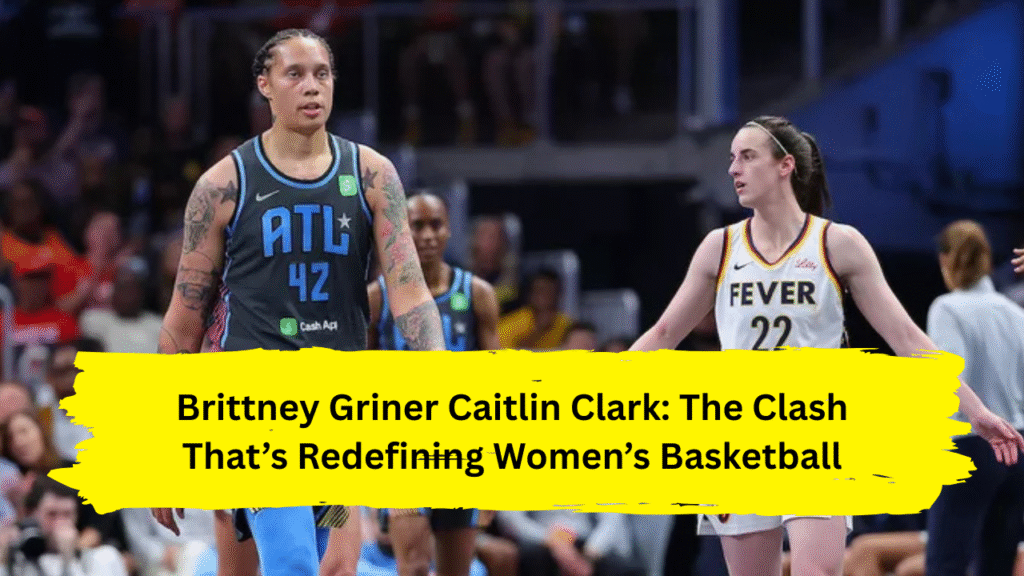
What happens when WNBA icon Brittney Griner and rising star Caitlin Clark collide? Discover how their on-court matchup and off-court buzz are reshaping women’s basketball forever. Dive into this powerful sports moment that’s sparking debates, headlines, and a cultural shift.
Brittney Griner Caitlin Clark: A Generational Showdown or Just the Beginning?
What if we’re witnessing more than just a basketball rivalry? The recent buzz surrounding Brittney Griner and Caitlin Clark isn’t just about a couple of games. It’s a flashpoint — a cultural moment — that’s turning women’s basketball into must-watch TV. On one side, you’ve got Griner, a seasoned powerhouse and Olympic gold medalist who’s long been a pillar of the WNBA. On the other, Caitlin Clark, the NCAA phenomenon bringing fresh eyes to the league with her deep threes, charisma, and record-breaking popularity.
So, why is this moment so explosive? And what does it mean for the future of women’s basketball? Buckle up, because we’re diving deep into this rising rivalry, how it’s sparking a national conversation, and why it’s got everyone—from die-hard fans to casual viewers—talking.
The Legacy of Brittney Griner: A Trailblazer in Her Own Right
Before Caitlin Clark was even in high school, Brittney Griner was already dominating headlines. Drafted No. 1 overall in 2013, Griner’s career with the Phoenix Mercury has been nothing short of historic. She’s a seven-time WNBA All-Star, an Olympic champion, and one of the league’s most dominant centers ever.
Griner’s game isn’t just about stats. It’s about presence. She dunks. She blocks. She intimidates. But perhaps most importantly, she’s always played with a boldness that challenged how the world views women’s basketball.
And off the court? From standing up for racial justice to publicly surviving wrongful imprisonment in Russia, Griner’s become a symbol of resilience and advocacy. She’s not just a player—she’s a movement.
Caitlin Clark: From NCAA Darling to WNBA Lightning Rod
Caitlin Clark entered the WNBA with a storm of expectation. After smashing college scoring records and drawing sellout crowds for Iowa, she was seen as a savior of sorts—someone who could finally bring massive mainstream attention to the WNBA.
And she has. Clark’s WNBA debut wasn’t just a game, it was a broadcast event. Ratings soared. Merchandise flew off shelves. Suddenly, everyone had an opinion about Clark—and about the WNBA.
But popularity doesn’t always translate to smooth sailing.
The Collision Course: Griner vs. Clark Sparks a Firestorm
It was bound to happen. Two titans of different generations—Brittney Griner and Caitlin Clark—met on the hardwood. And when they did, it wasn’t just about the final score. The game brought tension, physicality, and a collision of styles.
Griner, the veteran, made it clear she wasn’t about to hand over the spotlight. Clark, the rookie, pushed through with the fearlessness that got her here. When Griner rejected Clark at the rim, the clip went viral. Not just because it was a great block—but because it symbolized a deeper power struggle.
Was it a “welcome to the league” moment? Or was it something more?
Generational Friction or Media Overhype?
Let’s be real. Sports media loves drama. The Brittney Griner vs. Caitlin Clark narrative practically writes itself: veteran vs. rookie, establishment vs. disruptor. But is it even real?
Some players and analysts say the friction is exaggerated. Others argue it reflects genuine tensions—between old guard and new fame, between earned respect and social media clout.
In truth, it’s probably both. The WNBA has long demanded attention, but now that it’s finally here (largely thanks to players like Clark), there’s a natural adjustment. And friction? That’s just part of the growing pains.
Race, Respect, and the “Unwritten Rules” Debate
It’s impossible to ignore the undercurrent running beneath this conversation: race. Clark is white. Griner is Black. And when you add the media narratives and fan reactions, things get complicated.
Some critics argue that Clark is being given a platform that Black players were denied, despite similar or better performance. Others feel Clark is unfairly targeted by veterans defending their turf. In this messy middle, Brittney Griner and Caitlin Clark have become symbols for larger societal debates—whether they asked to or not.
It’s uncomfortable, but necessary. Because the way we talk about these players says a lot about who we value and why.
What This Means for the WNBA’s Future
Here’s the exciting part: all of this noise? It’s growing the game.
The tension between Griner and Clark is pulling new fans in. It’s forcing old fans to re-examine the league. It’s creating must-watch moments and conversations that spill beyond sports pages.
The WNBA has never had this much attention. And while it’s not always pretty, it is powerful. Rivalries make leagues matter. This one could define a generation.
The Business Boom: Why Controversy Equals Cash
Like it or not, drama drives dollars. Since Clark’s arrival, WNBA ticket sales have spiked. TV deals are expanding. Merch sales are off the charts. And every time Griner and Clark share a court, the numbers climb higher.
This isn’t just about basketball. It’s a business evolution. And the league is cashing in.
Even brands are jumping on board. They see Clark as a marketing goldmine, but Griner’s authenticity and legacy remain magnetic. Together, they’re making the WNBA more lucrative—and culturally relevant—than ever.
Is This the Rivalry Women’s Sports Needed?
We all love a good rivalry. Magic vs. Bird. Serena vs. Sharapova. Could Brittney Griner vs. Caitlin Clark be the next great chapter?
Maybe. Maybe not. But even if it isn’t a long-term feud, it’s a flashpoint. A moment where past, present, and future collided in the form of two extraordinary athletes.
And that’s worth celebrating.
A League Evolving Before Our Eyes
There’s something poetic about this moment. Griner, the battle-tested veteran, still dominating. Clark, the wide-eyed newcomer, reshaping what’s possible. Their clash? It’s a metaphor for a league caught between eras.
Change is uncomfortable. It brings tension, missteps, even backlash. But it also brings growth.
So whether you’re Team Griner, Team Clark, or just Team WNBA, one thing’s clear: you’re witnessing history.
Conclusion: Brittney Griner Caitlin Clark – More Than Just a Game
The rise of Brittney Griner and Caitlin Clark as headline-makers in the WNBA isn’t just a sports story. It’s about identity, growth, and the collision of legacy with potential. It’s a reminder that progress isn’t always neat, but it’s always worth the mess.
As fans, we’re lucky to watch it unfold. And as the league grows, this rivalry—or partnership—will be etched into the foundation of what’s to come. So the next time these two share the court, don’t just watch the scoreboard. Watch the history being written.
FAQs
Q1: Are Brittney Griner and Caitlin Clark actually rivals?
They may not be personal rivals, but their generational clash on the court has symbolized much bigger shifts in the WNBA and public perception.
Q2: Why is Caitlin Clark so popular?
Clark gained massive popularity due to her NCAA scoring records, deep shooting range, and charismatic style, attracting new audiences to women’s basketball.
Q3: Has Brittney Griner commented on Caitlin Clark directly?
Griner has acknowledged the excitement Clark brings but also emphasizes that respect in the league has to be earned—not just given based on hype.
Q4: Is race a factor in the Griner vs. Clark discussion?
Yes, race is a significant part of the broader debate, especially in how media and fans treat players differently based on identity and background.
Q5: What impact does this rivalry have on the WNBA?
It’s boosting ratings, ticket sales, media coverage, and cultural relevance—helping to elevate women’s basketball to new heights.
Also Read: Latest Trending News