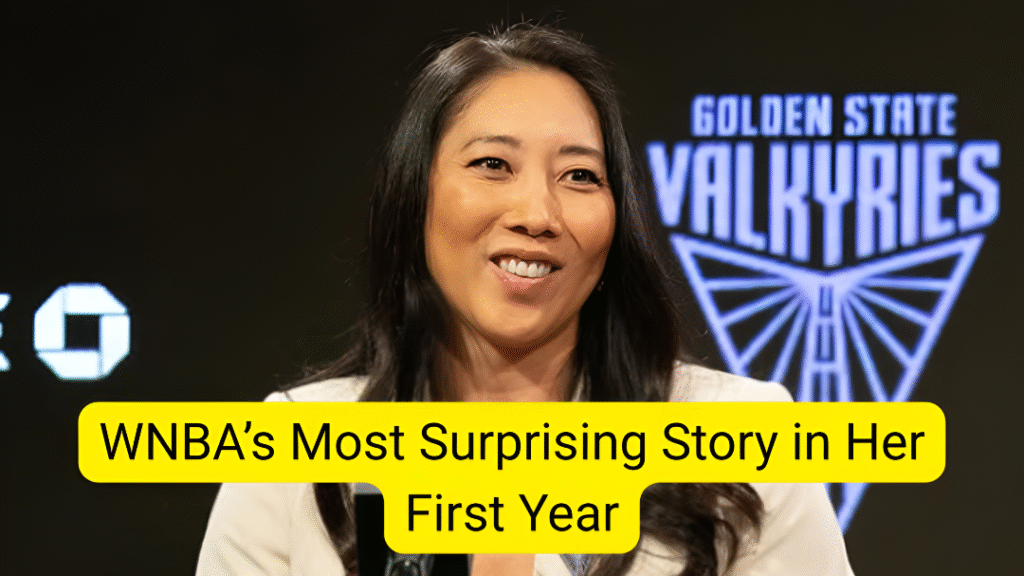
When a first-year head coach takes over an expansion team, most expect growing pains. Losses. Disjointed rosters. A season of trying to find identity. But Natalie Nakase did something few believed possible: she built cohesion, culture, and results almost immediately. Her Golden State Valkyries didn’t just survive their inaugural season—they changed what everyone thought was possible for a new franchise. This is a story of leadership, strategy, resilience—and how one coach’s vision redefined the blueprint for building a WNBA team from scratch.
The Challenge of Being New
Starting from zero isn’t just hard—it’s brutal. Expansion teams have to:
- Draft wisely, often without the top picks.
- Build chemistry among players who’ve never played together.
- Establish culture, identity, and values before wins happen.
- Deal with fan skepticism, media expectations, and internal pressure.
Nakase came into this knowing all of that. But she didn’t shrink. She got to work.
Vision & Culture: Laying the Foundation
From Day One, what set Nakase apart was clarity of purpose. She built culture around:
- Defense first — focusing on stopping opponents, contesting shots, controlling pace.
- Effort and togetherness — insisting that even if the team lacks stars, it doesn’t lack hustle, communication, accountability.
- Role clarity — every player understood their strengths, weakness, what was expected. Versatility was valued.
That kind of structure in an expansion season often sets the groundwork—but very rarely translates into early stability. Nakase bridged that gap.
Tactical Moves That Made the Difference
It wasn’t just culture. The tactical decisions she made differentiated the Valkyries from other new teams:
- Using a mix of veteran leadership + promising younger/upside players rather than leaning purely on marquee names.
- Adjusting game plans intelligently — more zone, forced turnovers, smart rotations, emphasizing transition offense.
- Investing in three-point shooting and spacing so that defenses couldn’t collapse on bigs or clog the paint.
- Giving under-the-radar players chances, watching who steps up under pressure.
These choices amplified what the roster could do and kept opponents guessing.
Key Players Who Flourished Under Nakase
A coach is only as successful as how she elevates her roster. Several players showed unexpected growth:
- Players with modest prior roles stepped up big in clutch moments.
- Those who were role-players became dependable starters.
- Versatile two-way contributors rose—those who can defend multiple positions AND contribute offensively.
These weren’t just statistical improvements; they were identity-forming moments. Each game, each win, added to belief.
Surpassing Expectations: Wins & Milestones
Here’s where the magic becomes undeniable:
- An expansion team making the playoffs in Year One is almost unheard of—but that’s what happened.
- They didn’t just squeak in; they competed. They had close games won, moments of poise, and they forced higher-seeded teams to adjust.
- Defensive metrics rose. Opponent shooting percentages dropped when facing them. Fast breaks and transition were weaponized.
These achievements weren’t by accident—they were the product of strategy + leadership + player buy-in.
Lessons from a Coach Who Listens & Adapts
One trait that separates great coaches from good ones is adaptability. Nakase:
- Adjusted tactics mid-season when initial strategies weren’t consistently working.
- Balanced minutes and managed the load of players, avoiding burnout even under pressure.
- Kept morale high even when losses stung, focusing on incremental growth rather than perfection.
- Played to opponent weaknesses—if a team was shaky inside, she exploited that; if they defended the perimeter well, she attacked the paint.
This kind of responsive leadership earns trust, respect—and results.
Implications for the WNBA
Nakase’s success isn’t only a feel-good story—it has bigger ramifications:
- Expansion teams may no longer be assumed to be easy wins. Future expansion will face higher bar for expectations.
- Hiring coaches with diverse experience (assistant roles, international, non-star names) gets renewed credibility. It’s not always about past head-coach awards; it’s about vision, adaptability.
- Front offices will look more closely at culture, scheme, and development, not just star power. Investing in role depth, defensive identity, player growth becomes premium.
- Fan engagement and support grow when teams are competitive early. The Valkyries showed that building excitement isn’t only through signing big stars—it’s through inspiring effort and surprising wins.
What’s Next: Sustaining Momentum
Every breakthrough year invites new questions. For Nakase and her Valkyries, things to watch:
- Can they avoid the “first-season honeymoon” dip in Year Two, when teams adjust to their style?
- Will roster continuity be possible? Keeping core players, avoiding too many disruptions.
- How will opponents game-plan against them now that they’re no longer an unknown?
- How will Nakase and the front office keep building depth, especially bench and role players?
- Can they maintain or improve their defensive efficiency and execution under scrutiny?
Sustainability will test the very systems they built.
Emotional Impact & Identity
One often overlooked aspect: the emotional and psychological effect this kind of rise has:
- On players, who now believe more in themselves and in the system.
- On fans, who find a new favorite not because of legacy, but because of heart, surprise, and unexpected wins.
- On the league’s narrative: she becomes a role model for coaches, especially women, who might not have been considered for a head-coach spot or for big expectations.
Identity is being built—not just winning games, but showing that something new in the WNBA can be born with integrity, grit, and substance.
Conclusion
Natalie Nakase didn’t follow the typical script for first-year head coaches, especially not for an expansion team. She rewrote it. She didn’t just coach from above; she built from within. She didn’t simply aim to compete—she aimed to transform.
If you’re watching the WNBA now, simple truth: the Golden State Valkyries under Nakase represent one of the most inspiring, forward-looking stories yet. They’ve done more than exceeded expectations—they’ve set new ones.
And for you as a fan, a writer, a follower of the game: keep your eyes on them. Because what’s coming next might be even more surprising, more ambitious, and even more deeply charged with promise.
Also Read: Latest Trending News