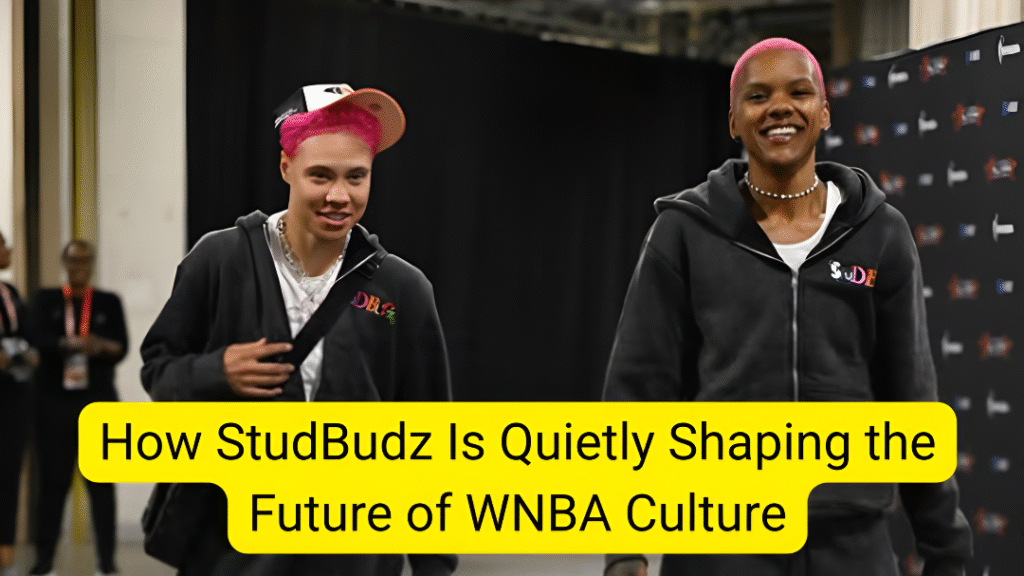
When most fans think of breakout stars or league disruptors in the WNBA, names like A’ja Wilson, Caitlin Clark, or Napheesa Collier come to mind. But over the summer of 2025, two Minnesota Lynx players quietly unleashed something far more subtle — and potentially transformative — in the intersection of culture, identity, and fandom: StudBudz.
Courtney “Court” Williams and Natisha “T” Hiedeman launched a Twitch livestream under the alias StudBudz, riffing off queer Black femme/masculine identity language and sharing their off-court lives in real time. It started as a behind-the-scenes fun side-project; by All-Star Weekend it had become a cultural moment.
What makes StudBudz worth your deep dive? Because it represents not just a new content trend, but a tectonic shift in how WNBA players are reclaiming narrative, pushing inclusivity, and shaping fandom in their own image. In other words: they’re remixing the league from inside the culture.
Below is how StudBudz is quietly changing the WNBA — and why every fan, journalist, and league executive should be watching.
1. From Locker Room Banter to Main Stage Storytelling
What began as playful banter in team spaces evolved into full livestreams: travel diaries, hair experiments, teammate reactions, even glimpses behind closed doors. The authenticity and unscripted nature drew attention fast.
During the 2025 All-Star Weekend, the duo pledged a 72-hour continuous stream — even while sleeping. The result: unfiltered peeks into the WNBA world, amplified to over 300,000 weekend views. That level of access — showing players off the clock, unpolished and human — is an insurgent play against sanitized league narratives.
They also embraced visual symbolism: matching pink hair became a signature look, a visual brand that spread across social media.
In essence, they turned behind-the-scenes glimpses into cultural content, not just publicity stunts.
2. Visibility and Queer Representation, Center Court
One of the most profound impacts is around identity and visibility. Williams and Hiedeman situate themselves within queer Black femme/masculine frames — identities that have often been marginalized or exotified in sports media. The word stud itself has deep roots in Black queer communities, used historically to describe more masculine-presenting women.
By centering that identity, StudBudz offers counterpoints to the typical media spotlight (which often privileges femme or heteronormative representation). It says: yes, there are queer, Black masculinities in pro basketball, and we don’t need to hide them. That alone is a powerful, culture-shifting act.
It’s one thing to support pride nights or themed games; it’s entirely another for players to weave identity and storytelling into their own content ecosystem. StudBudz amplifies the lived experience — internal perspectives, confessions, humor, doubt, self-care — in players’ own voices, not through third-person media filters.
3. Disrupting the Player–Fan Divide
Historically, professional leagues have maintained a rigid wall between “on-court superstar” and “fan consumption.” Players are seen in games, pressers, interviews — not in day-to-day unguarded life moments. StudBudz flips that structure.
Fans now see the nighttime routines, the hotel room jokes, the roommate squabbles, the teammates’ reactions, down to what’s in the travel bag. This intimacy fosters deeper emotional connection: viewers feel like companions, not consumers.
That matters. Because when fans feel seen into rather than just at, they become more invested. That can drive jersey sales, social media virality, retention of fans beyond flashy highlight plays — and perhaps unlock new revenue avenues (subscription tiers, merchandise, co-created content).
4. Brand Opportunities with Guardrails
Unlike one-off campaigns or celebrity tie-ins, StudBudz is content that flows from within the league — and thus potentially more sustainable and authentic. Already, the duo has attracted attention from apparel and content brands.
However, this comes with delicate balance. Brand partnerships must respect authorial voice and community boundaries. If external forces push too hard, the authenticity collapses. The next challenge is how StudBudz scales — aligning influence with integrity.
How does the league support or monetize these player-led narratives without co-opting them? That question looms large, and the answer could shape future athlete-driven media models in women’s sports.
5. Cultural Ripple Effect: Beyond Basketball
StudBudz doesn’t just impact WNBA fans; it reverberates across Black queer, female, and feminist cultural spheres. It’s a reclaiming of media spaces for voices often marginalized. And it shows younger athletes — especially queer athletes — that their full selves can live in the spotlight, not just sanitized halves.
This ripple extends to creative fields too: content creators, fashion, podcasting, streaming communities — all may look at Williams and Hiedeman’s model as a reference point. Already, it’s being discussed in sports media circles as a sign that the next era of women’s basketball is about narrative power, not just stats.
6. Challenges Ahead — and Why the Stakes Are Real
Of course, this path isn’t without friction. A few key challenges:
- Public margin for error is thin. When your content is public and unfiltered, missteps are magnified. Maintaining voice while managing reputational risk is a delicate dance.
- Monetization vs. purity. Growing audience and monetizing via sponsorships or subscriptions might pressure content direction. The core question: can they keep creative control?
- League or media pushback. Traditional media or league partners might feel threatened by athlete-owned platforms that disrupt established coverage. Tensions over gatekeeping could emerge.
Still, the upside is compelling: power over narratives, expanded fandom, deeper representation, and content influence that outlives any single season.
7. What to Watch from Here
To spot whether StudBudz becomes “momentary fad” or “cultural pillar,” watch for:
- Platform growth & expansion — new series, guest features, merchandise, spin-off content.
- Brand partnerships that align with identity — not merch slapped on, but collaborations co-designed.
- League reaction — will WNBA and teams support, regulate, partner, or ignore this emergent media path?
- Imitation or competition — will other players launch similar channels or collectives?
- Long-term narrative influence — will media coverage of WNBA shift tone, depth, and framing because of voices like StudBudz?
Conclusion: Why This Topic Needs Your Voice
StudBudz is the kind of story that doesn’t scream at you. It smolders, then catalyzes. It turns players into storytellers, audiences into witnesses. It centers marginalized identity without tokenizing it. And if the WNBA continues its growth trajectory, narratives like this may define the league as much as on-court stars.
You can be the first publisher in your sphere to treat this deeply, not just as a celebrity gossip angle, but as a lens into culture, identity, media, and the business of women’s sports. Dive in, interview Williams or Hiedeman (if possible), trace the content evolution, and argue the stakes.
Also Read: Latest Trending News