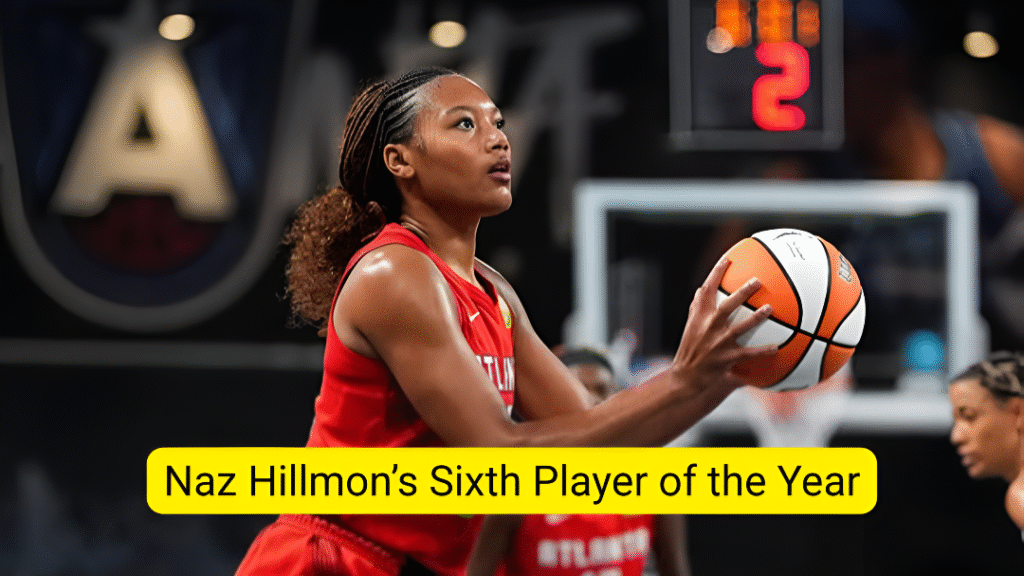
When most people talk about WNBA standouts, they think starters, star scorers, All-Stars. But 2025 is whispering — no, shouting — that the value of the deep bench game-changer is redefining what winning looks like. And no one personifies that more than Naz Hillmon, this season’s Sixth Player of the Year.
Hillmon didn’t come in with all the hype. She didn’t dominate the first minutes, but she grew into the kind of player whose presence shifts momentum, whose production off the bench changes how coaches rotate, and whose role is now being analyzed just as closely as starters. This blog dives into her breakout, what “sixth player” means today, why teams are leaning deeper, and what this shift suggests for how the WNBA is evolving.
Who Is Naz Hillmon — The Perfect Example of Bench Brilliance
Naz Hillmon’s story this season is worth studying. She wasn’t the one the headlines shouted first, but when the game mattered, she was the one you turned to. She won the Sixth Player of the Year in 2025 not just because of raw stats, but because of how, when, and where she contributed: coming off the bench, shifting lineups, changing floor spacing with unexpectedly strong three-point shooting, rebounding, and defensive energy.
Her efficiency rose. Her clutch minutes mattered. When starters were tired, hurt, or neutralizing defenses, Hillmon’s bursts made the difference. By season’s end, she wasn’t just a backup—not in the respect she commanded, not in how opponents planned for her, and not in how teammates needed her.
What “Sixth Player” Used to Mean — And What It Means Now
Historically, “Sixth Player” meant an excellent reserve: someone who gives starters rest without losing intensity at all. But in 2025, that role is evolving. Key shifts:
- Scoring Versatility: Bench players now are asked not just to defend or rebound, but to stretch the floor, knock down threes, drive, create second chance points.
- Defense & Energy: A fresh player coming in needs to maintain or shift momentum. Hillmon’s defensive hustle, transitions, and rebound work are huge.
- Role Flexibility: Lineups are fluid. Coaches want bench players who can start if needed, guard multiple positions, switch between roles (scorer, rebounder, defender) depending on matchups.
- Clutch Moments Off the Bench: It’s no longer about just garbage time. Bench rotations are trusted in tight spots. Momentum plays (a block, steal, a 3-pointer, defensive stop) from non-starters are game turning.
- Chemistry & Identity: The best benches work cohesively. They fit culture, sustain energy, take pressure off stars. Teams with strong deep benches often have fewer scoring droughts, more balanced contributions.
Naz Hillmon embodies many of these evolved expectations. Her three-point shot improved significantly this year; her timing in games was pivotal; her reliability off the bench meant the Dream could lean on her in tight moments.
Why Teams & Fans Are Paying More Attention to Bench Game-Changers
This shift isn’t random. It reflects strategic, business, and cultural evolution in the WNBA.
-
Roster Depth Is More Critical Than Ever
As seasons get intense, playoff races tighten, and injuries occur, teams that can lean on strong bench production stay consistent. Star players get fewer minutes, but teams still need winning firepower throughout rotations. A deep bench acts as insurance. -
Differing Styles Between Teams
With more teams investing in spacing, pace, and versatile skills, having bench players who can shoot, defend, and adapt allows coaches to mix lineups, counter matchups, and keep starters fresh without dropping performance. -
Fan & Media Interest in the Unexpected
Fans love underdog moments. When someone like Hillmon, not the expected star, delivers big plays, it creates narrative — unexpected heroics. It makes games more unpredictable, which drives engagement. -
Financial & Recognition Incentives Growing
Bench players who contribute in ways that clearly correlate with wins are earning awards, media attention, and contract leverage. As recognition grows, more players will strive to be that “sixth player” rather than just fighting for starter roles.
Key Moments That Show the Shift
Here are specific moments and patterns that make this trend tangible:
- Hillmon’s improved three-point attempts and efficiency — moving from very few to becoming a real threat from deep as a reserve. That forces defenses to adjust every time she checks in.
- Her rebounding and defensive stats in key stretches—when turned rotations, especially late in games, make a difference.
- Bench + starter lineups (those mixed lineups) where bench spurts swing momentum. Dream games where off-starter runs powered by Hillmon shifted outcomes.
- Coaches visibly trusting her in pressure moments. Minutes in close 4th quarters, crunch time rotations.
- The Dream’s overall performance when Hillmon was active versus off bench minutes — the plus/minus and net ratings tilt toward when she’s in.
Challenges & What Needs to Be Maintained for This Trend to Grow
A trend is only as sustainable as the infrastructure around it.
- Consistent Role Definitions: Players need clarity. Coaches must identify bench roles early and provide opportunity. If players are shuffled too much, they can’t settle into confidence.
- Support & Recognition: Less recognizability, fewer endorsements historically for bench players. As this role becomes more prominent, media, sponsorships, and fan stories need to spotlight these contributors.
- Rotations and Fatigue Management: Teams have to balance rest and rhythm. Starters resting shouldn’t mean bench collapse. Bench players need developmental reps in practice, recovery resources, mental preparation.
- Adapting Expectations & Analytics: Analysts, fans, coaches using deeper metrics—net rating, on/off, clutch analytics—to measure bench impact accurately. Sometimes impact is subtle (defensive positioning, setting screens, spacing) and doesn’t show up in raw scoring.
What This Means for Players & Coaches
For players:
- Being ready to impact immediately off the bench is increasingly valuable. Working on shooting efficiency, defensive mobility, rebounding, hustle plays is now not just “nice” but essential.
- Versatility will be rewarded: guard/forward flexibility, ability to guard multiple matchups, contribute in different roles.
- Mental toughness and resilience matter: coming off the bench sometimes means less attention, less glory—but more opportunity to surprise.
For coaches:
- Building systems that allow bench depth to shine: rotations that give meaningful minutes, trust in reserve players in big moments.
- Player development focused not just on starters but on backup roles: stamina, skills, mindset.
- Game planning that expects bench contributions: when starting lineup struggles, having bench options who can fill holes.
Why Naz Hillmon’s Win Might Be the Spark that Changes the Narrative
Hillmon’s Sixth Player award is more than personal. It sends a message: the league is watching bench production. Her ability to earn that award as a game-changer off the bench means every team will take a second look at their reserves. The narrative of what “star power” is may begin to shift: it’s not only about who starts, but who contributes when the game is tight, who shifts momentum, who changes matchups unexpectedly.
Her season could inspire others who start the season in limited roles. It could inspire coaches to experiment more with bench rotations. It might also influence contract negotiations and how players view their value.
How This Could Shape the WNBA Going Forward
- More deep benches, more parity: Teams that invest in their reserve players will likely compete closer with traditionally stronger franchises.
- Shift in awards & accolades: More “Sixth Player” conversations, perhaps expanded awards around bench impact.
- Evolution of player roles: The distinction between starter vs reserve might blur—if bench players are seen as equally vital, starters will need to command more to keep their positions.
- Fan appreciation shift: Fans may gravitate also toward bench stars, not just big names. Media coverage could follow.
- Roster strategy changes: Teams may draft or sign players not just for starting upside but for their “bench game-changer” potential.
Conclusion
Naz Hillmon’s breakthrough as Sixth Player of the Year isn’t just her reward—it may be the canary in the coal mine for a broader transformation in the WNBA. The deep bench game-changer role has quietly become one of the season’s defining trends. As 2025 finishes, what we may look back at is not just who scored the most, but who helped shift games from the sidelines.
The WNBA is showing that the difference between a good season and a great season might come from those who weren’t expected to carry the load—but ended up doing exactly that. And Naz Hillmon? She just proved that sometimes the loudest impact comes from the bench.
Also Read: Latest Trending News