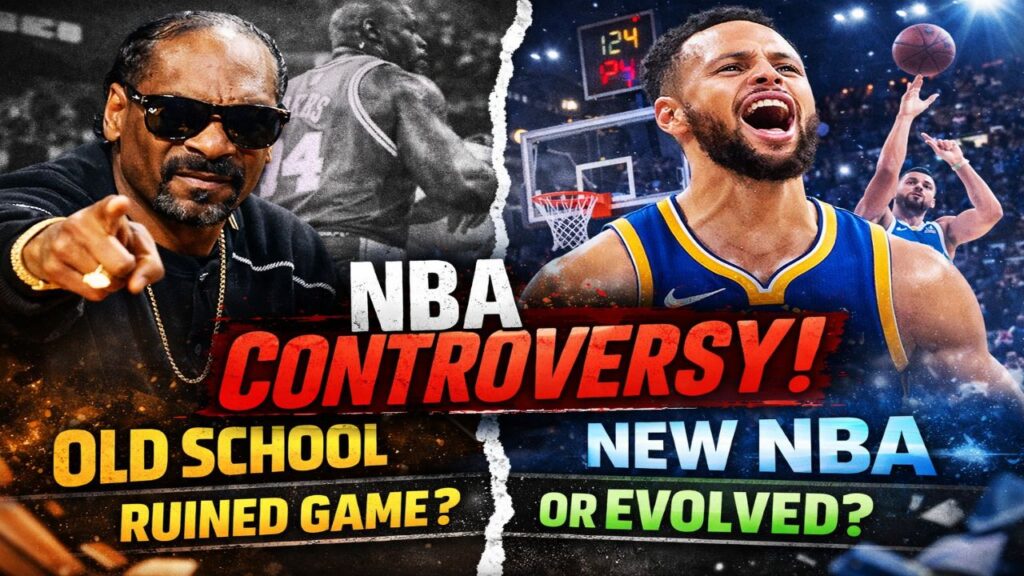
The NBA is changing — and not everyone is happy about it. In fact, some of the loudest voices in sports culture are now openly questioning whether the game we’re watching today even resembles the basketball that built legends, dynasties, and lifelong fans. What started as a few comments has now exploded into a full-blown controversy, dividing fans, players, analysts, and even celebrities into two opposing camps. And at the center of this storm is a statement that shook the basketball world: the claim that the modern NBA has abandoned real basketball.
When a cultural icon with decades of influence speaks, people listen. When that person directly challenges today’s NBA stars, coaches, and the league itself, the internet catches fire. Suddenly, debates flood social media timelines. Clips get replayed millions of times. Fans start choosing sides. And one uncomfortable question refuses to go away — has the NBA gone too far in changing the game?
For many longtime fans, this debate isn’t just about strategy or analytics. It’s personal. It’s about memories of physical battles in the paint, about dominant big men demanding the ball on the block, about hard fouls that sent messages, and about a time when toughness was a badge of honor. To them, today’s NBA feels unfamiliar. Too many threes. Too much spacing. Not enough grit. They argue that the league traded soul for efficiency.
Supporters of the modern game couldn’t disagree more. They see today’s NBA as the most skilled, intelligent, and globally influential version of basketball ever created. They argue that players are faster, smarter, and more versatile than ever before. To them, complaining about the modern NBA is just nostalgia talking — an inability to accept evolution. And this is where the controversy deepens, because both sides believe they are protecting the game they love.
The criticism that ignited this firestorm centered on one main accusation: modern players don’t play “real basketball” anymore. The argument claims that posting up has disappeared, that big men have been reduced to screen-setters and spot-up shooters, and that defenses have been neutralized by rules favoring offense. According to this view, basketball has turned into a three-point contest disguised as a team sport.
That accusation hit a nerve — especially among current NBA players. Some responded subtly, others directly. Several stars pushed back, pointing out that scoring efficiently from three isn’t laziness — it’s intelligence. They argued that spacing the floor opens opportunities, extends careers, and makes the game more exciting for fans worldwide. But critics weren’t convinced. They believe excitement shouldn’t come at the cost of identity.
As the debate grew louder, former players began weighing in. Some Hall of Famers sided with the criticism, saying they wouldn’t recognize today’s game if dropped into it cold. Others defended the modern NBA, insisting that if past legends played today, they would adapt and dominate just the same. This sparked another viral argument: would yesterday’s stars survive in today’s league, or would today’s stars dominate any era?
This question alone fuels endless comment-section battles. Fans pull out stats, highlight clips, and hypothetical matchups. Could a dominant post player thrive against modern defenses that double instantly and recover faster than ever? Could a modern perimeter scorer handle the physicality of earlier eras without today’s protective officiating? There are no definitive answers — only opinions, pride, and emotion.
What makes this controversy so powerful is that it isn’t just about basketball tactics. It’s about values. Old-school fans value toughness, physical dominance, and hierarchy. Modern fans value efficiency, freedom, and creativity. One side believes the game has become soft. The other believes the game has become smarter. Neither side is willing to back down.
The league itself is stuck in the middle. On one hand, offensive explosions bring ratings, highlights, and global appeal. On the other, criticism about defensive rules, load management, and lack of intensity threatens the NBA’s credibility as a competitive sport. When fans start questioning whether players care as much as they used to, that’s a dangerous narrative for any league.
This controversy also exposes a deeper fear — that tradition is being erased. For decades, the NBA sold its legends as mythical warriors. The battles between giants, the rivalries, the intimidation. Today’s NBA sells skill, pace, and personality. Jerseys are lighter, games are faster, and players are brands as much as athletes. For some fans, this feels like progress. For others, it feels like loss.
Yet the modern NBA didn’t change randomly. Analytics reshaped the game because they worked. Teams discovered that three points are worth more than two, that spacing beats congestion, and that efficiency wins championships. Coaches didn’t abandon the post because they wanted to — they did it because defenses learned how to neutralize it. Evolution wasn’t optional. It was survival.
Still, critics argue that something essential was sacrificed along the way. They say young players grow up believing posting up is outdated, that defense is optional, and that shot selection matters more than heart. They worry that future generations won’t learn the fundamentals that once defined greatness. Whether that fear is justified or exaggerated is exactly what makes this debate so explosive.
Another layer of controversy comes from fan engagement. Many viewers admit they love the highlights but struggle to watch full games. Blowouts, foul-baiting, and long reviews have made some games feel slow despite the fast pace. Critics say the league prioritized viral moments over competitive balance. Supporters argue that no era was perfect, and selective memory makes the past seem better than it was.
The conversation becomes even more heated when money enters the discussion. Today’s players earn more than ever, enjoy longer careers, and face less physical punishment. Critics argue that higher pay should come with higher intensity. Players counter that protecting their bodies is professionalism, not weakness. This clash of expectations fuels resentment on both sides.
What’s undeniable is that this controversy has struck a chord. Fans aren’t just watching games anymore — they’re judging them. Every missed mid-range shot, every contested three, every lack of post play becomes evidence in an ongoing trial. The NBA is being evaluated not just on wins and losses, but on whether it still feels authentic.
And authenticity is the hardest thing to define. Is it about physicality? Strategy? Emotion? Or is it simply about winning within the rules of the time? History shows that every era criticizes the next. The game changed when the shot clock was introduced. It changed with the three-point line. It changed with zone defenses. Each change faced backlash. Each change eventually became normal.
But this time feels different to many fans because the change is so visible. The court looks more open. The scoreboards light up faster. Centers shoot from the logo. Guards hunt mismatches with surgical precision. For traditionalists, it feels like watching a different sport. For modern fans, it feels like watching basketball reach its peak.
This is why the controversy won’t fade quickly. It isn’t tied to a single play or player. It’s tied to identity. As long as basketball evolves, there will be voices claiming it has lost its way. And as long as the NBA remains successful, there will be defenders arguing that success proves the critics wrong.
The truth likely sits somewhere in the middle. The modern NBA is more skilled than ever, but it may also benefit from revisiting intensity and balance. The old NBA was tougher, but it wasn’t always prettier or fairer. Both eras produced greatness — just in different forms.
What makes this debate so viral is that everyone has a memory to defend. Fans remember where they were when their favorite legend dominated. They remember the feeling of rivalries that felt personal. Today’s fans will remember record-breaking nights, logo threes, and positionless basketball redefining what’s possible. Neither memory is invalid.
And that’s why this controversy keeps growing. It invites everyone to participate. It challenges fans to define what basketball means to them. It turns every game into a referendum on the league’s direction. It creates heroes and villains not based on winning, but on philosophy.
Whether you believe the NBA has lost its soul or finally found its smartest form, one thing is clear — this debate isn’t going away. Every new season, every rule change, every viral comment will pour more fuel onto the fire. And as long as basketball continues to evolve, fans will continue to argue about whether that evolution is progress or betrayal.
So the next time you watch an NBA game and see a center launching threes or a guard ignoring the post, ask yourself — are you watching the death of tradition, or the birth of something greater? Because the answer says just as much about you as it does about the league.
And that’s what makes this controversy unstoppable.
Also Read: Latest Trending News