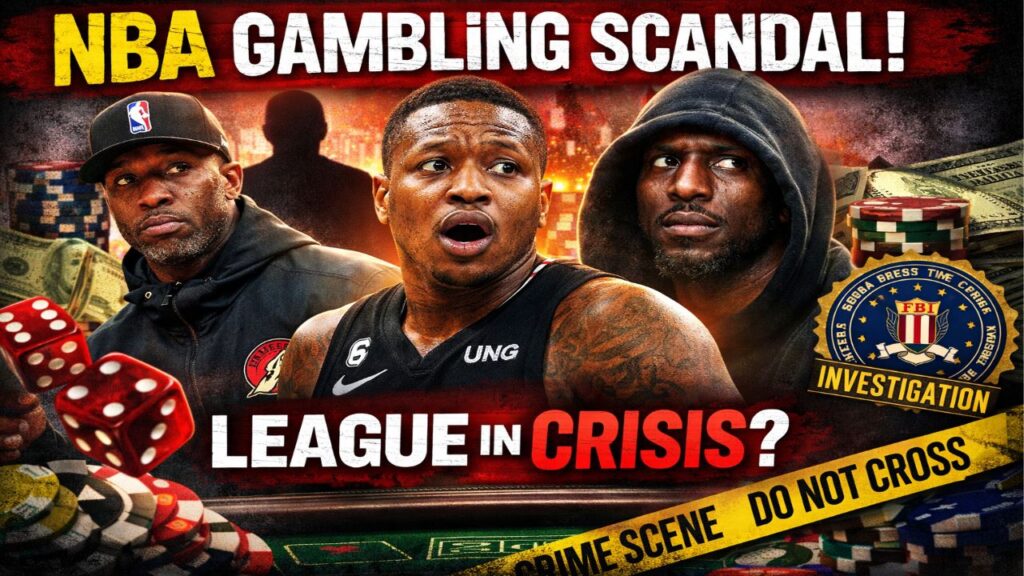
The NBA has always sold itself as more than just basketball. It’s been marketed as a clean, global entertainment product, a league built on trust, fair competition, and superstar integrity. For decades, fans believed that when a player stepped on the court, the only thing that mattered was skill, effort, and heart. But now, that belief is cracking. Quietly at first… and then all at once. Because behind the bright lights, packed arenas, and billion-dollar TV deals, something darker has been unfolding. A gambling controversy that refuses to disappear. A scandal that keeps growing instead of shrinking. And a question that fans around the world are starting to ask out loud: Can we still trust the NBA?
This isn’t just about one player. This isn’t about one bad decision or one isolated mistake. This is about a pattern. A trail of whispers that turned into reports. Reports that turned into investigations. And investigations that now threaten to shake the league’s credibility at its core. What makes this even more disturbing is how close gambling has become to the NBA itself. Sports betting ads during timeouts. Betting partnerships with major sportsbooks. Odds discussed openly on pregame shows. Parlays pushed to fans like harmless fun. The league embraced gambling publicly, confidently, almost proudly. But what happens when the line between entertainment and exploitation disappears? What happens when the people playing the game are suddenly connected to the bets surrounding it?
The scandal began quietly, the way most major controversies do. At first, it was just rumors about private poker games involving NBA figures. Nothing illegal on the surface. Wealthy people gambling among themselves wasn’t shocking. But then names started surfacing. Former players. Coaches. Associates. Conversations that weren’t supposed to leak. Financial transactions that didn’t quite add up. Suddenly, this wasn’t just about poker nights anymore. This was about organized gambling operations. Underground betting networks. And the possibility that NBA insiders were far closer to these worlds than fans ever imagined.
When federal investigators started digging, the tone changed instantly. This wasn’t social media speculation anymore. This wasn’t fans arguing in comment sections. This was serious. Documents requested. Phone records examined. Financial trails followed. And once the government steps in, there’s no such thing as a small issue. The investigation began expanding, touching multiple cities, multiple connections, and multiple levels of the basketball ecosystem. And that’s when the fear set in — not just for the people involved, but for the league itself.
Because here’s the uncomfortable truth: gambling scandals don’t need proof of fixed games to destroy trust. The damage happens the moment fans start questioning outcomes. The moment someone watches a missed free throw, a late turnover, or a strange substitution and wonders, “Was that real?” Basketball is built on belief. The belief that competition is honest. That stars are trying to win. That outcomes are earned, not influenced. Once that belief weakens, everything else follows.
The NBA knows this. That’s why its response has been so carefully worded. So measured. So cautious. Publicly, the league insists it has strict rules, strict monitoring, and zero tolerance for gambling violations. Privately, sources suggest panic. Because the league has spent years normalizing betting culture. And now it’s facing the consequences of that decision. You can’t push gambling to the center of the sport and then act shocked when lines blur. You can’t invite sportsbooks into the living room and then pretend players live in a separate world.
What makes this scandal especially explosive is the involvement — or alleged involvement — of respected basketball figures. People fans grew up watching. Names associated with championships, leadership, and professionalism. When those names get pulled into gambling discussions, even without charges, the damage is immediate. It forces fans to re-evaluate memories. Iconic moments. Historic games. Was everything as clean as it seemed? Or were there shadows even then?
Social media poured fuel on the fire. Clips resurfaced. Old interviews were reanalyzed. Off-hand comments suddenly felt suspicious. Fans became detectives, replaying games with new eyes. And in today’s digital world, perception spreads faster than truth. Even silence becomes suspicious. Every non-answer feels like confirmation. Every delay looks like a cover-up. The NBA found itself fighting not just an investigation, but a narrative — and narratives are almost impossible to control once they take off.
Meanwhile, the betting industry kept moving forward like nothing was wrong. New partnerships. New promotions. New incentives aimed at younger audiences. That contradiction didn’t go unnoticed. On one side, the league was distancing itself from scandal. On the other, it was profiting more than ever from betting culture. Fans noticed. Critics noticed. And the question grew louder: Is the NBA protecting integrity… or protecting revenue?
This scandal also exposed a deeper issue — player vulnerability. Many fans assume NBA players are immune to temptation because of their wealth. That assumption is dangerously wrong. Access, ego, pressure, and entitlement can be just as risky as poverty. When players and former players move in circles where high-stakes gambling feels normal, the risk multiplies. Add fame, influence, and connections, and suddenly small decisions can spiral into massive consequences.
There’s also the uncomfortable reality that gambling thrives on inside information. Injury updates. Locker room tension. Coaching decisions. Even mood and motivation can affect betting lines. If insiders share information — intentionally or casually — the integrity of betting markets collapses. And once markets are compromised, suspicion spreads to gameplay itself. That’s the nightmare scenario the NBA is desperate to avoid.
Fans aren’t stupid. They’ve seen this movie before in other sports. Baseball. Soccer. Cricket. Every league that underestimated gambling eventually paid the price. The NBA always believed it was smarter. Cleaner. More progressive. But scandals don’t care about branding. They expose weaknesses, not intentions. And right now, the NBA’s biggest weakness is its closeness to gambling money.
What’s especially dangerous is the timing. The league is expanding globally. Eyeing new markets. Negotiating massive media deals. Positioning itself as the future of sports entertainment. A major integrity crisis at this moment could cost billions. Sponsors don’t like uncertainty. Broadcasters don’t like controversy tied to legitimacy. Governments don’t like scandals involving regulated industries like gambling. The ripple effects go far beyond basketball.
Inside locker rooms, players are watching carefully. Many are frustrated. They don’t want their careers questioned because of someone else’s actions. They don’t want fans doubting every result. For players who work obsessively to win, the idea that outcomes could be questioned is insulting. And yet, silence also feels dangerous. Speak up, and you risk backlash. Stay quiet, and you look complicit. It’s a no-win situation.
Former players have started weighing in, cautiously choosing words, emphasizing that most players are clean, honest, and competitive. And that’s true. The vast majority of NBA players just want to hoop. But scandals don’t operate on majority rules. They focus on exceptions. And exceptions can rewrite narratives faster than decades of good behavior.
The league’s next steps will define this era. Strong enforcement could restore confidence. Weak punishment could destroy it. Transparency could calm fans. Secrecy could fuel paranoia. Every move matters. Every statement is analyzed. Every leak is magnified. This isn’t just damage control anymore — it’s a test of leadership.
And then there’s the fans. The lifeblood of the league. The people who invest emotionally, financially, and culturally in basketball. Fans don’t expect perfection. They expect honesty. They can forgive mistakes. What they won’t forgive is being lied to. If the NBA chooses to minimize, distract, or deflect, it risks losing something far more valuable than money: trust.
Because once fans stop believing, they stop caring. And when that happens, ratings drop. Engagement fades. Loyalty erodes. The NBA doesn’t just sell basketball. It sells belief. Belief in competition. Belief in fairness. Belief in heroes. Gambling scandals attack that belief directly.
This story is far from over. Investigations don’t move fast, but they move deep. More names could surface. More connections could be revealed. Or the league could emerge with its integrity intact, stronger rules, and a clear message. Either way, this moment will be remembered. It will be studied. It will be debated.
So the next time you watch a close game. A missed call. A late-game mistake. Ask yourself how much doubt it takes to change how you feel. Because scandals don’t need proof to hurt — they just need suspicion. And right now, the NBA is fighting the most dangerous opponent it’s ever faced.
Not another superteam.
Not declining ratings.
Not player movement.
But doubt.
And the outcome of this battle will shape the future of basketball itself.
Also Read: Latest Trending News