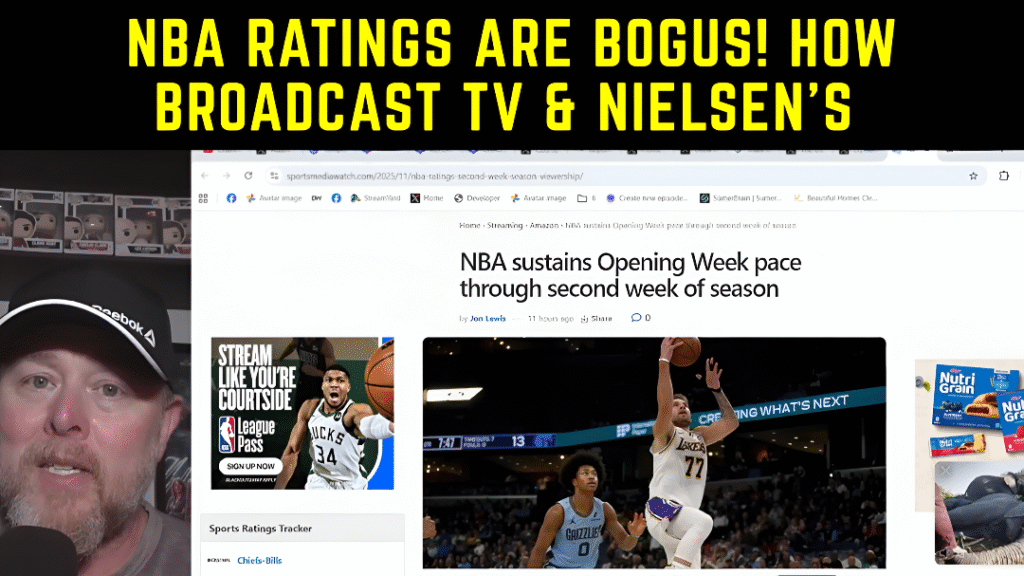
NBA ratings are inflated! The new Nielsen system and move to broadcast TV are creating bogus, misleading numbers — and fans aren’t buying it.
So apparently, the NBA is back, right? If you believe the mainstream sports media, basketball has never been more popular. Every outlet’s shouting about how NBA ratings are “up 61%,” and everyone’s just supposed to clap and move on. But here’s the problem — those numbers are bogus. Completely cooked.
Let’s cut through the noise: the NBA didn’t suddenly become a ratings juggernaut overnight. What really happened is that the league moved games to broadcast TV and started counting viewers using Nielsen’s brand-new system — one that practically guarantees inflated totals.
And yet, ESPN, NBC, and everyone else are pretending like this is some kind of organic ratings boom. Spoiler alert — it’s not.
The “NBA on NBC” Nostalgia Trap
I’ll admit it — the NBA on NBC looks great. That classic music, the polished graphics, the throwback energy. It’s hard not to get hit with nostalgia. It brings you back to when NBA basketball felt special.
But after that initial wave of excitement? Most people tuned out. I watched the first night myself and haven’t watched a minute since. The broadcast is solid — but that’s not the same as fans suddenly loving the NBA again.
And here’s the truth the networks won’t say: moving from cable (like TNT) to free, over-the-air TV always boosts ratings. That’s not a miracle — that’s basic math. When you put games on a platform that doesn’t require cable, obviously more people can stumble across them. That’s what’s happening here.
The Ratings “Increase” That Isn’t Real
Let’s talk about that headline-grabbing stat: NBA ratings up 61% from last year. Sounds great, right? Except it’s meaningless. You can’t compare numbers when the entire measurement system has changed.
Nielsen added “out-of-home” viewing and switched to something called “Big Data Plus Panel.” Translation? They’re blending in data from streaming platforms, smart TVs, and random analytics providers like Adobe. Basically, they’re throwing everything — and I mean everything — into one giant pot.
So when you see 3 million viewers being touted as the NBA’s “biggest audience since 1996,” know this — they’re combining two games, adding streaming viewers, and counting anyone who glanced at the broadcast for a few seconds. It’s like calling a fast-food chain the “#1 restaurant in America” because everyone drove past it once.
Combining Games = Fake Growth
NBC’s new “Coast-to-Coast” format is the biggest trick of all. Instead of reporting individual game ratings like before, they’re combining two regional games into one total viewership figure.
Think about that. In past years, Knicks–Bucks and Clippers–Warriors would’ve had separate ratings. Now they’re combined and presented as a single number — making the league’s audience look twice as large.
It’s like merging two YouTube videos and saying you “doubled your views.” It’s creative accounting, plain and simple.
The Media’s Complicity
The mainstream outlets know exactly what’s going on. But they’re not going to tell you. Why? Because everyone’s invested in the “NBA comeback” storyline. NBC wants its return to look like a triumph. ESPN wants to prove that basketball is surging. And Adam Silver? He needs to sell that narrative to sponsors and TV partners.
So they all play along. They’ll print glowing headlines, shout “NBA IS BACK!” in bold letters, and conveniently forget to mention the asterisk the size of a basketball court.
The World Series Still Destroyed the NBA
Here’s the kicker: even with all the new tricks, the World Series still crushed the NBA Finals. Game 7 between the Dodgers and Blue Jays pulled in 24.9 million viewers on Fox. Game 7 of the NBA Finals between the Thunder and Pacers? Just 16.4 million on ABC.
And even that NBA number is boosted by the same new Nielsen system! Imagine how wide the gap really is without those changes.
The MLB didn’t need gimmicks, cross-network data, or “coast-to-coast” packaging to pull in fans. They just put a great product on the field and let it speak for itself.
The New Nielsen Era: Shady and Confusing
To be clear — Nielsen’s new “Big Data” approach isn’t inherently evil. It’s supposed to give a more complete picture of viewership. But when networks use it to compare apples to oranges, that’s when things get shady.
Last year’s ratings were measured with the old system. This year’s are a blend of new data sources, expanded devices, and extra platforms. Comparing the two is like comparing YouTube Shorts views to Netflix watch time — they’re not the same thing.
So when you see the NBA bragging about “record growth,” just remember: these aren’t the same metrics. You can’t start a whole new measurement system and call it a comeback.
Why Fans Aren’t Buying It
Fans see right through this. People know when something feels real — and when it feels manufactured. You can slap fancy analytics and streaming data on a report all you want, but it doesn’t change the product.
Basketball’s got great moments, sure, but fans haven’t forgotten the league’s recent political baggage. And no amount of “record ratings” spin can erase years of alienating viewers. Even Adam Silver eventually had to pull back and tell players to cut out the political messaging because fans were walking away.
Meanwhile, over in the WNBA, they still haven’t learned that lesson — which might explain why their own ratings “surges” look suspiciously similar.
The Real Takeaway
Let’s just call it like it is: the NBA didn’t magically blow up in popularity. It changed platforms, it changed measurement tools, and it combined data sources to make the numbers look prettier.
The networks want fans to see “growth.” What they don’t want you to see is the fine print — that these “record ratings” are built on an entirely new foundation.
So yeah, the NBA’s “up 61%.” But from what? From data that no longer exists? From a cable system they’ve left behind? From metrics that can’t even be compared?
Fans deserve honesty. Not inflated charts and manipulated math.
Final Word
Moving to broadcast TV and using Nielsen’s revamped tracking might look like a victory for the NBA, but it’s smoke and mirrors. More people might be able to see the games now — but that doesn’t mean more people want to.
Because hype fades. Nostalgia fades. And when the dust settles, what’ll remain is the truth: the NBA’s “ratings boom” is nothing more than a data trick dressed up as a comeback story.
Also Read: Latest Trending News