Project B salaries are shaking up women’s basketball, with multimillion-dollar offers that threaten both the WNBA and Unrivaled. Could this league change everything?
It’s official — Project B is no longer just a rumor floating through basketball circles. What started as quiet whispers about a Saudi-backed women’s league has now turned into a full-blown movement that could reshape the future of women’s basketball. And make no mistake — this isn’t just another side project or exhibition league. With the kind of money being offered, Project B is throwing down a direct challenge to both the WNBA and Unrivaled, and people are starting to take notice.
At first, it all sounded far-fetched — another flashy “what if” story. But now? It’s very real. With top stars already signing and league executives with Silicon Valley and international sports ties, Project B’s arrival feels like a genuine disruptor moment in women’s basketball.
A League with Money That Speaks Louder Than Words
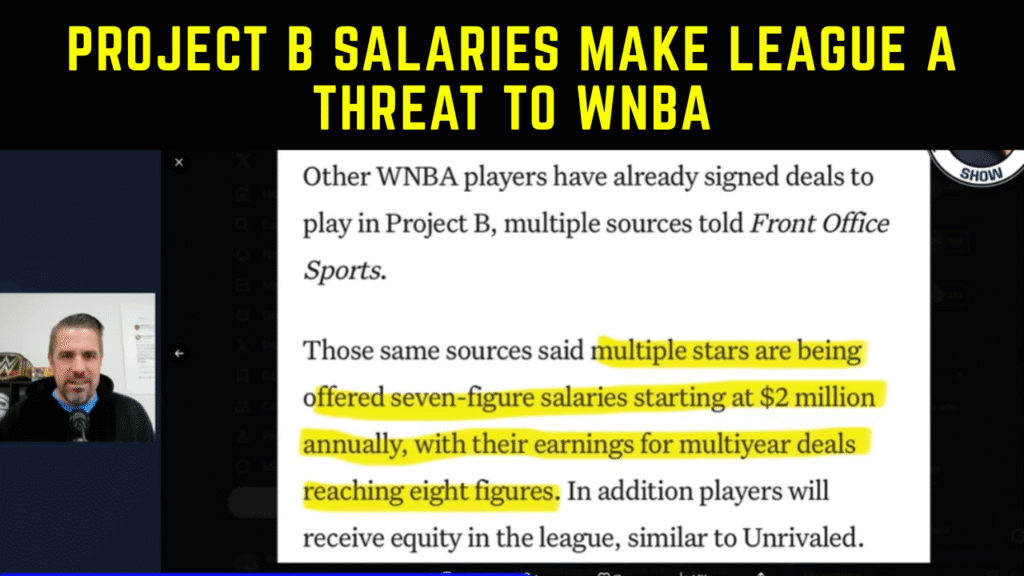
Let’s start with the numbers, because they’re jaw-dropping. Reports from Front Office Sports confirm that Project B is offering seven-figure salaries — starting at $2 million annually — with multi-year deals stretching into eight figures. That’s not hype; that’s real money.
For comparison, the WNBA supermax salary currently sits at $249,000 per season. You don’t need a calculator to see how wide that gap is. When a new league steps in offering ten times more, players are going to listen.
And that’s before you even factor in equity shares, which Project B is also including — a model that mirrors Unrivaled’s player-ownership structure. Equity changes everything because it’s not just about short-term paychecks. It’s about long-term wealth and investment power — something the WNBA has never truly been able to offer its athletes.
The Saudi Shadow and Big Tech Influence
Here’s where things get interesting. Officially, Project B is not directly funded by Saudi Arabia, but it’s complicated. The league is reportedly partnered with “SA Entertainment,” a company owned by the Saudi Public Investment Fund. So technically, the money trail leads back to Saudi interests — the same fund that backed LIV Golf, which disrupted the PGA Tour.
And yet, the faces running Project B aren’t from the oil world. They’re tech and sports figures — a former Facebook executive and the co-founder of Skype among them. The investor list includes heavyweights like Candace Parker, Novak Djokovic, and Sloane Stephens.
That combination — Saudi-scale money with Silicon Valley structure — gives Project B the credibility and capital to actually deliver.
The WNBA’s Legacy vs. Project B’s Offer
No one’s saying the WNBA is vanishing overnight. It has brand recognition, history, and loyal fans. But players have families, careers, and limited windows to earn. The bottom line is simple: everybody has a price.
If you’re a mid-tier player making $120K in the WNBA and someone offers you $2 million to play in Project B, what do you do? That’s life-changing money.
Even for the stars — Breanna Stewart, A’ja Wilson, Sabrina Ionescu — those numbers are impossible to ignore. And if the new league truly builds a competitive product with top talent, the WNBA’s monopoly on legitimacy could start to fade.
The Unrivaled Dilemma
Here’s the immediate issue — Unrivaled is the first to feel the heat. Co-founded by Napheesa Collier and Breanna Stewart, Unrivaled was built to offer players ownership and better pay than the WNBA offseason overseas contracts. It was supposed to be the alternative.
But Project B’s arrival changes the calculus. Both leagues operate in the offseason window, which means they directly compete for players. And if Project B’s salaries dwarf Unrivaled’s — plus offer similar equity deals — that’s a serious threat.
Unrivaled is based in Miami and has a smaller footprint with training and development components, but players chasing financial stability may not care about the location. They’ll follow the money, and Project B has more of it — a lot more.
Caitlin Clark: The Wild Card in All This
No conversation about the future of women’s basketball can skip over Caitlin Clark. The Iowa phenom turned WNBA rookie has become the most influential figure in the sport, both on and off the court.
Clark has repeatedly said it’s her dream to play in the WNBA and inspire young girls to do the same. She’s built her entire brand on that idea — being the face of the league’s next era. Unless Project B offers her something astronomical or her experience in the WNBA sours dramatically, she’s not likely to jump ship.
And that’s the key — as long as Caitlin Clark stays, the WNBA’s brand remains intact. But if she even flirts with Project B? That’s when everything could unravel fast.
History Shows the Door Is Already Open
Let’s not forget — WNBA players have been leaving for higher pay overseas for years. Diana Taurasi once skipped an entire WNBA season to take a million-dollar deal in Russia. That precedent matters.
The difference this time is that Project B isn’t some faraway European club — it’s a structured, media-ready league with global investors, based on Western business models, and built to directly challenge the WNBA’s economic structure.
The timing couldn’t be more volatile either. The WNBA Players Association is already preparing for tough CBA negotiations. Players want more pay, better travel conditions, and higher revenue shares. Project B just handed them all the leverage they need.
What Happens Next?
Women’s basketball is in a pressure cooker moment. The sport’s popularity has exploded — record-breaking college viewership, new stars, endorsement deals. But the infrastructure hasn’t caught up to the demand.
Now, Project B is essentially saying: We’ll build the house the WNBA never did.
That’s both thrilling and dangerous. A splintered market could slow long-term growth, but it might also be the competition needed to push women’s sports to true professional parity.
If Unrivaled falters, Project B could dominate the offseason. If Project B gains traction, the WNBA may have to double its salary cap or risk losing players. Either way, things won’t be the same.
Final Thoughts
This isn’t about loyalty. It’s about legacy — and leverage. The WNBA has heart and history, but Project B has capital and timing. The first league to truly pay women like pros will own the future of the sport.
Right now, that might just be Project B.
Also read: Latest Trending News