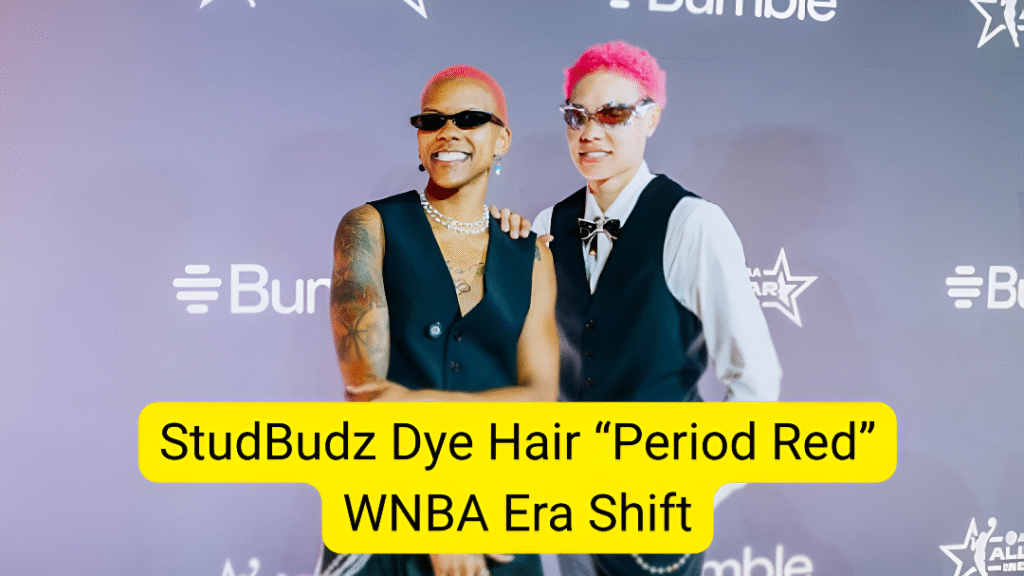
In the 2025 WNBA season, an unexpected act of bold color became a seismic message for women’s sports: Courtney Williams and Natisha Hiedeman, the Minnesota Lynx teammates known as StudBudz, dyed their hair “period red” in a partnership with U by Kotex. What could have been dismissed as another athlete stunt instead instantly sparked conversation, igniting discourse on menstruation, visibility, authenticity, and how women athletes use their bodies and platforms to rewrite the narrative. In that moment, they transformed hair dye into social commentary, and the league—already bursting with cultural energy—shifted again.
From the moment the two revealed their red locks, their intent was clear: normalize discussion of periods in sports, push back on shame, and use their public platform to make invisible experiences visible. They didn’t issue a press release; they simply appeared in that shade, and the world noticed. Fans, media and fellow players paused. Hair had become a statement, a billboard for women’s health, identity, and resistance. The red stood out not just visually, but symbolically—a defiant flash in a league increasingly defined by statuesque icons but also intimate disclosures.
It matters precisely because until now, menstruation remained a taboo in athletic discourse. Rarely have top athletes used their bodies as literal statements on female biology. In a sport where women’s bodies are always under scrutiny—how they look, how they move, how they “carry themselves” —this was a different kind of bold move. StudBudz turned that scrutiny into agency. They refused secrecy, demanded normalization, and made it public. Their decision shattered the default invisibility of a monthly cycle, signaling to fans, brands, and governing bodies that what happens off-court is just as important as performance on it.
This act also plays into broader cultural shifts in the WNBA, where players are increasingly refusing sanitized, image-safe public personas. In recent years the league has witnessed Athletes becoming storytellers, expressing gender, sexuality, mental health, politics—blurring lines between sport and identity. The period red hair is not a one-off stunt; it is the latest in a string of moves that mark WNBA stars as culture creators, not merely competitors. It also dovetails with how younger players now enter the league with built-in brands, social media savvy, and a sense that self-expression is safe, expected, and powerful.
By choosing to dye their hair in the name of menstrual visibility, StudBudz push all of us to see the intersection of body and sport. They force the question: if menstruation is normal, why does it remain silenced in elite athletics? Their bold move invites coaches, sponsors, media and fans to reckon with stigma. Could training camps, locker rooms, and medical protocols change? Could performance conversations include menstrual wellness openly? At the least, that shift is now harder to ignore.
The ripple effect has already begun. Fans began posting images of red hair, menstruation awareness graphics, and celebrating athletes who speak candidly about their cycles. Young women at camps texted coaches about how to manage periods. Sponsors in women’s health and wellness started messaging quietly. The betting odds on whether this becomes mainstream? Already shifting. The hair color is just the hook—what follows may be structural change in how we talk about women’s health in sports.
This moment also sharpens the divide between performance narratives limited to stats and a more holistic culture of sport. Stats, achievements, trade rumors—they remain vital. But the urgency of the period red act is that it puts narrative back into athlete bodies and choices. It reminds fans and media that players are people first, each with cycles, bodies, challenges, and voices. In WNBA’s current media explosion, this act bypasses filtered coverage; it demands raw conversation.
As the league builds global reach, record attendance, explosive social media growth, and deepening cultural legitimacy, it needs not just stars who score but voices who shift norms. StudBudz just added a new note to that chorus. When the next young fan Googles “WNBA activism” or “menstruation in sports,” period red will show up, not as sensationalism but as precedent.
In years to come, we may look back on that moment as turning point: the first time a mainstream women’s league saw an athlete dye her hair not for fashion but to destigmatize biology. It’s a reminder that even in the glare of arenas, bodies remain central. We will discuss not just who won points, but who shifted what questions can be asked. The WNBA has long been culture forward, but now its stars are more than symbols—they are advocates in paint, pigment, and presence.
In every arena this season, in locker rooms, in media studios, in social media threads, that period red will deserve its place in the story of women’s sports evolving. StudBudz did more than dye their hair. They painted a challenge across the ceiling: talk about what we’ve never been allowed to see.
Also Read: Latest trending News