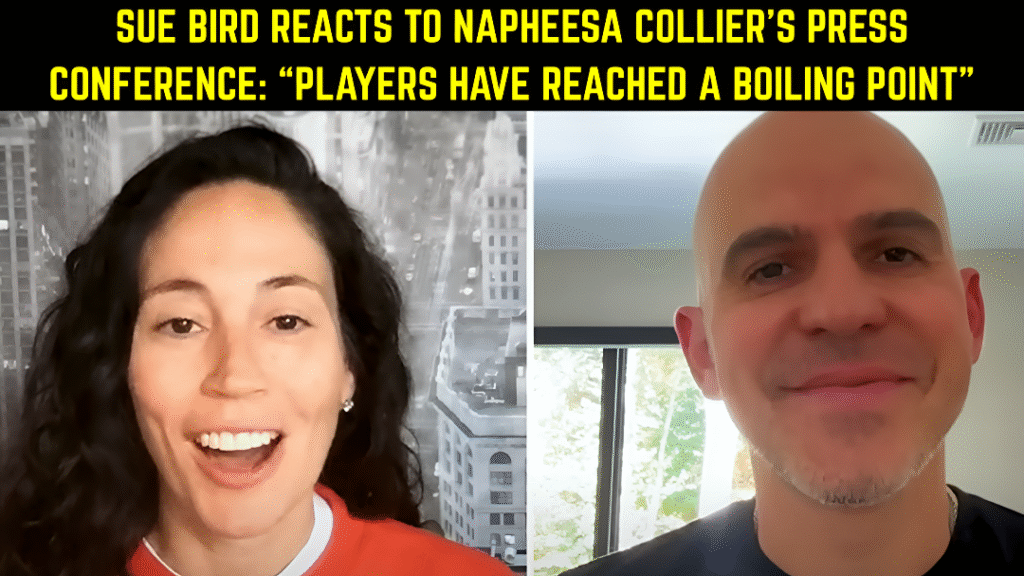
Sue Bird reacts to Napheesa Collier’s press conference, addressing WNBA officiating, player frustrations, and the league’s long history of athletes using their voices for change.
The Boiling Point Nobody Can Ignore
When Napheesa Collier sat down at her exit interview and aired frustrations about the WNBA, it wasn’t just about a single foul in Game 3 of the Lynx–Mercury series. It was years in the making. Tensions have been simmering for players across the league, and now, as Sue Bird put it, they’ve reached “a boiling point.”
Bird, who has seen the WNBA from nearly every angle — as a player, leader, and now part of ownership — spoke candidly about Collier’s words. She emphasized that this isn’t an isolated complaint, but rather the culmination of ongoing issues with officiating, physical play, and a league office slow to acknowledge player concerns.
Beyond One Foul Call
To outsiders, Collier’s comments might look like an overreaction to one non-call at the end of Minnesota’s playoff loss. But Bird disagrees.
“This didn’t happen in a vacuum,” she explained. “Yes, maybe that play was a small catalyst, but what Nafisa said is about something much bigger. It’s years of players feeling like their voices aren’t being heard.”
From the lack of freedom of movement on the floor to officiating inconsistencies, players believe the style of play doesn’t showcase their talent the way it should. Instead of adapting to a league built to highlight skill, they feel forced into physical battles that don’t represent the best of the WNBA.
History Repeats Itself: Players Speaking Up
Bird also pointed to history — a history where change has only come when women in the league speak up publicly.
“It’s sad that it has to happen this way,” she admitted. “But if you look back, every major shift in this league came after players used their voices. That’s what creates movement.”
From equal pay fights to travel improvements, player advocacy has consistently driven reform. The fact that Collier, a respected leader and thoughtful speaker, decided to go public says a lot about how urgent the situation feels.
The Officiating Dilemma
The heart of this conversation, though, is officiating. Sue Bird recalled how Paige Bueckers once told her she had to “learn to defend while fouling” in the WNBA — the exact opposite of what she was taught in college. That says everything about how the league’s physicality has shifted.
For Bird, the issue isn’t about blaming referees individually. She recognizes how tough the job is and how much scrutiny they face. Instead, she calls for systemic changes.
“It’s about mandates,” she explained. “Refs can clearly call games differently when they have to. In college, they’re told to emphasize freedom of movement. In the WNBA, it’s different. That comes from the top.”
Her biggest fix? Address the constant grabbing and holding off the ball. “If you clean that up, suddenly skill gets showcased again,” she said.
A Bigger Problem: Losing Top Talent
Bird also highlighted a painful truth for women’s sports: the WNBA often loses its best referees, coaches, and staff to men’s leagues where money and resources are greater.
“We see refs work here for a couple years, then all of a sudden, they’re in the NBA. That’s not just officiating — it’s trainers, marketing, broadcasting. It’s a pattern.”
The challenge becomes not only developing the best officials and staff but keeping them in the women’s game. Without investment and incentives, the cycle continues.
Why Public Acknowledgment Matters
Perhaps the most striking point Bird made was about transparency. Even if the league is reviewing these issues behind the scenes, she believes a public acknowledgment would go a long way.
“Imagine if leadership just came out and said, ‘We’ve heard the players, and we’re taking a thorough look at officiating and the style of play.’ That would at least show that voices are being heard.”
Instead, silence has created defensiveness, leaving players feeling dismissed.
Collier, Bird, and the Future of the WNBA
What makes this moment so pivotal is that it’s not just one star speaking up. Coaches across teams, players from nearly every roster, and now legends like Sue Bird are echoing the same concerns.
Collier’s press conference didn’t just shine a light on officiating — it magnified the larger disconnect between players and the league office. Bird’s reaction shows this is about the future of the WNBA: how it presents itself, how it treats its athletes, and how it earns the respect of fans who see the talent but question the infrastructure around it.
Conclusion: The Voices Are Growing Louder
Napheesa Collier’s words weren’t random frustration. They were deliberate, thoughtful, and backed by years of built-up tension. Sue Bird’s response only validated how serious this moment is for the league.
History tells us one thing: when WNBA players speak, change follows. The question now is whether leadership will listen before the frustration grows even louder.
Also Read: Latest Trending News