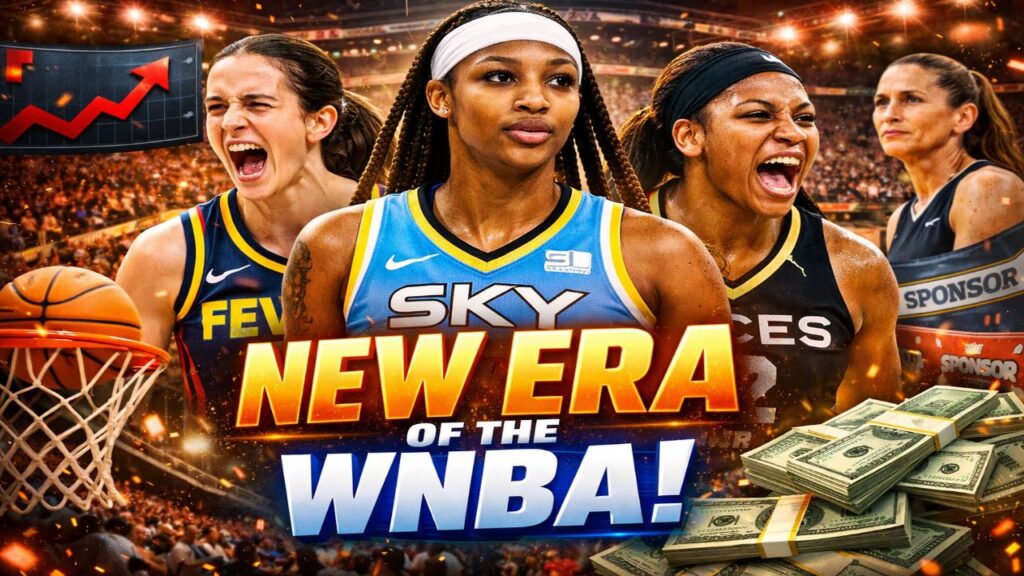
Something historic is happening in the WNBA right now, and if you’ve been watching closely, you can feel it. The arenas are louder. The debates are sharper. The rivalries feel personal again. The jerseys are selling out. The television ratings are climbing. And at the center of it all is a powerful shift — a new generation of stars stepping into the spotlight and refusing to wait their turn. This isn’t just another season. This feels like the beginning of a new era, and today we’re breaking down exactly how young superstars are changing the WNBA forever.
For years, the league has been built on the foundation of greatness. Legends carried franchises, built fanbases, and fought for respect when cameras weren’t always there and crowds weren’t always packed. Those veterans didn’t just play basketball — they built the culture. They set the standard for toughness, leadership, and professionalism. They turned the WNBA into a league that players across the world dream about joining. But every great league reaches a turning point. A moment when the torch starts to shift hands. And right now, that moment is unfolding in real time.
The new wave of WNBA stars isn’t just talented. They are magnetic. They come into the league with millions of followers, NIL experience, national recognition, and fearless confidence. They’re walking in as professionals who already understand branding, media narratives, and fan engagement. They aren’t waiting to “earn attention.” They’re commanding it from day one. And that changes everything — from ticket sales to locker room dynamics to how the league markets itself globally.
You can see it in the attendance numbers. Certain games now feel like playoff atmospheres in the middle of the regular season. Opposing arenas sell out when these young stars come to town. Fans line up hours early just to watch warmups. That wasn’t always the case. The league has had iconic players before, but this level of traveling fan presence feels different. It feels mainstream. It feels national. It feels like the WNBA has finally broken through into a wider sports conversation.
And it’s not just hype. The on-court product backs it up. These young players are coming in more polished than ever. They’re shooting deeper threes, pushing faster pace, defending multiple positions, and playing with a style that fits the modern game perfectly. The skill development at the college and grassroots level has skyrocketed. Players arrive league-ready. They aren’t adjusting slowly. They’re producing immediately. Double-doubles as rookies. Game-winning shots. Viral highlights. Signature moments in their first season.
But what makes this era so compelling isn’t just talent — it’s tension. There’s an unspoken battle happening between generations. The veterans understand what it took to build this platform. They remember charter flight debates, salary discussions, media indifference. They fought for respect. So when rookies walk in with massive followings and instant sponsorship deals, there’s pride involved. There’s competitiveness. There’s a desire to remind everyone that the league wasn’t created overnight.
And that dynamic creates drama — the kind fans can’t look away from. Hard fouls. Intense stare-downs. Physical games that feel personal. Post-game interviews where every word gets analyzed. Social media dissecting every clip. That’s not negativity — that’s energy. That’s what drives sports culture. Rivalries fuel leagues. Debate keeps fans engaged between games. And right now, the WNBA has storylines that stretch far beyond the box score.
The growth isn’t just emotional — it’s financial. Sponsorship interest is increasing. Brands are investing earlier and more aggressively. Corporate partnerships are aligning with individual players and with the league itself. Young stars bring younger audiences. Younger audiences bring advertisers. Advertisers bring money. And money brings infrastructure improvements — better facilities, expanded marketing, larger media deals. It’s a domino effect, and the first tile is star power.
Social media has amplified everything. A single highlight can reach millions in minutes. A crossover move becomes a trending topic. A post-game quote sparks national debate. Players are building personal brands in real time, engaging directly with fans. That accessibility creates loyalty. It makes fans feel personally connected to the athletes, not just to the team logo. The relationship feels closer than ever before.
And with that closeness comes pressure. Young players aren’t just carrying basketball expectations — they’re carrying narratives. They’re seen as symbols of growth, representation, and league transformation. Every performance is magnified. Every slump becomes a headline. But so far, this generation has shown resilience. They’ve responded to physical defense with toughness. They’ve responded to criticism with production. They’ve responded to hype with maturity.
What’s fascinating is how the style of play is evolving. The pace feels faster. The spacing is cleaner. The confidence from three-point range has expanded dramatically. Players are comfortable shooting from well beyond the arc, stretching defenses in ways that open the floor like never before. That creates higher-scoring games, more transition opportunities, and more highlight plays — exactly the type of basketball modern audiences gravitate toward.
At the same time, defense hasn’t disappeared. If anything, the physicality has intensified. Veterans aren’t handing over the spotlight easily. They’re making rookies earn every bucket. That clash creates must-watch television. You’re not just watching a game — you’re watching a test. Can the new star handle playoff-level pressure in June? Can she respond after a rough shooting night? Can she adjust when defenders take away her favorite move?
Those story arcs keep fans emotionally invested over the entire season. It’s not just about one viral moment. It’s about growth. It’s about seeing a player struggle in May and dominate by August. It’s about watching chemistry develop between teammates. It’s about seeing leadership emerge organically.
Another factor changing the league is global attention. International fans are tuning in more than ever. Highlights circulate across continents. Merchandise ships worldwide. Young players already have global followings before stepping into the league, which expands the WNBA’s reach beyond North America. That international engagement strengthens the league’s long-term sustainability.
Then there’s the media shift. Major sports networks are dedicating more airtime to women’s basketball discussion. Debate shows are breaking down plays. Analysts are arguing about MVP races. The WNBA isn’t a side segment anymore — it’s part of the daily sports conversation. And that visibility compounds growth.
But let’s talk about locker rooms. That’s where real transitions happen. Veterans teaching rookies how to study film. Rookies pushing veterans to adapt to faster pace. Shared goals blending different perspectives. Some teams are finding perfect balance — experienced leadership paired with fearless youth. Those teams look dangerous. They’re not rebuilding. They’re reloading.
Coaches also play a critical role in this new era. They must manage expectations, media noise, and evolving team identities. They’re not just strategists — they’re culture builders. They have to ensure that competition between generations fuels excellence rather than division. The best coaches are leaning into the spotlight rather than shying away from it.
And the fans — the fans might be the biggest story of all. New supporters are discovering the league for the first time. Longtime fans feel validated watching arenas fill up. Social media arguments might get heated, but underneath it all is passion. Passion is proof of growth. Indifference is the enemy of sports leagues. Right now, there is nothing indifferent about the WNBA.
Merchandise sales are another indicator. Jerseys are becoming fashion statements. Custom sneakers tied to individual players are generating buzz. Limited drops sell out quickly. That crossover between sports and culture is a major sign of staying power.
There’s also the impact on youth basketball. Young girls now see players who feel accessible and modern. They follow them online. They copy their moves. They attend games with their families. That pipeline of inspiration strengthens the sport at every level.
Of course, challenges remain. Expansion discussions raise questions about roster depth. Salary conversations continue. Media narratives sometimes oversimplify rivalries. But the difference now is momentum. The league feels like it’s moving forward, not fighting to be noticed.
When historians look back at this period, they may identify it as the tipping point — the moment when mainstream breakthrough became permanent. Not because of one player, but because of a collective surge of talent arriving at the same time. Timing matters in sports. When multiple stars rise together, rivalries form naturally. And rivalries create eras.
We’re witnessing an era being born. The veterans aren’t fading quietly. They’re competing fiercely, adding legacy chapters. The rookies aren’t intimidated. They’re attacking the spotlight. The league office is capitalizing on attention. Sponsors are investing. Fans are debating. That combination is powerful.
The most exciting part? This is only the beginning. As younger players continue entering the league with advanced skill sets and national followings, the growth curve could accelerate even more. Expansion teams could reshape the competitive landscape. Media rights deals could expand visibility further. International exhibitions could introduce new markets.
So when you tune into a WNBA game now, understand what you’re watching. You’re not just seeing a regular season matchup. You’re watching a transformation. You’re watching generational pride collide with fearless ambition. You’re watching business evolution intertwined with athletic excellence. You’re watching culture shift in real time.
And that’s why this moment matters. Because leagues don’t change overnight. They evolve through tension, through talent, through opportunity. Right now, the WNBA has all three. The new era isn’t coming — it’s already here. The young superstars are not waiting for permission. They are redefining expectations, rewriting records, and reshaping the future of women’s basketball.
If this trajectory continues, we may look back and say this was the season everything accelerated. The season where packed arenas became normal. The season where highlight clips became routine viral moments. The season where debates expanded beyond core fans into mainstream sports culture.
The WNBA has always had greatness. What’s different now is visibility, velocity, and volume. More eyes. Faster growth. Louder conversations. And at the heart of it all — a fearless generation determined to leave its mark.
The question isn’t whether the league is changing. The evidence is everywhere. The real question is how big this new era will become. And judging by what we’re seeing right now, the ceiling might be higher than anyone ever imagined.
Also Read: Latest Trending News