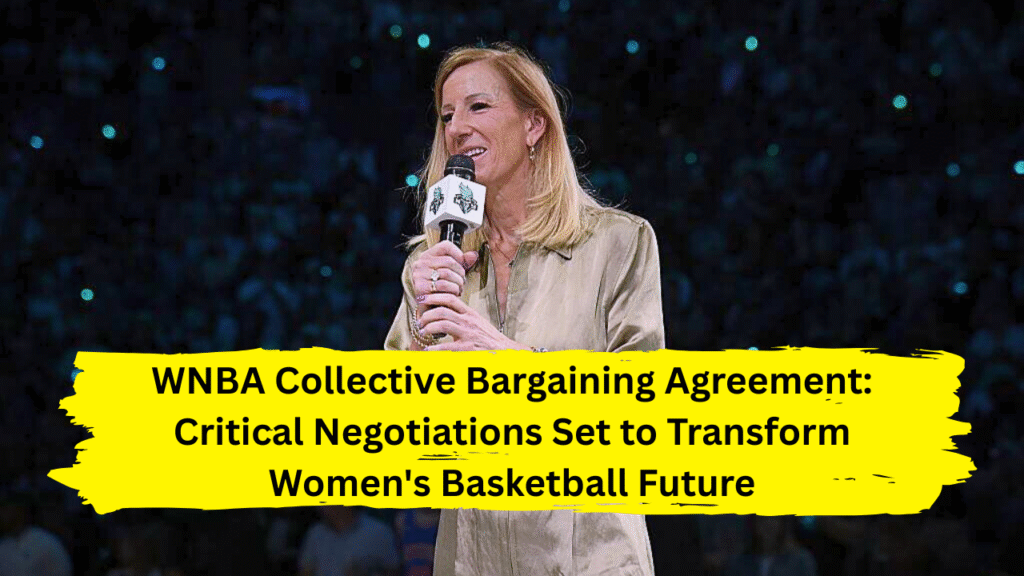
WNBA collective bargaining agreement negotiations reveal key issues that will reshape player compensation, working conditions, and league growth in women’s professional basketball.
The upcoming WNBA collective bargaining agreement negotiations represent the most consequential labor discussions in women’s professional basketball history, with potential outcomes that could fundamentally reshape player compensation, working conditions, and the league’s competitive landscape. These talks will determine whether the WNBA can capitalize on unprecedented growth momentum or face disruptions that could set back progress in women’s professional sports.
The WNBA collective bargaining agreement discussions come at a pivotal moment when the league is experiencing record attendance, television ratings, and commercial interest. The timing creates both opportunities and pressures that will influence negotiation strategies and ultimate outcomes for all stakeholders involved in these critical talks.
Key Financial Issues at Stake
The WNBA collective bargaining agreement negotiations will center heavily on compensation structures, salary caps, and revenue sharing arrangements that determine how league growth translates into improved player earnings. Current salary limitations have become increasingly contentious as the league’s profile and profitability continue expanding.
Player salary caps and individual compensation maximums represent core elements of the WNBA collective bargaining agreement that must be addressed to retain top talent and remain competitive with international opportunities. Many elite players currently earn more overseas than in their home league, creating retention challenges.
Revenue sharing formulas and how league growth benefits are distributed between owners and players will be crucial components of the new WNBA collective bargaining agreement. Players are seeking greater participation in the financial success they help generate through their on-court performance and marketing appeal.
Bonus structures, playoff compensation, and performance incentives are additional financial elements that require attention in the WNBA collective bargaining agreement to properly reward excellence and provide motivation for sustained high-level performance.
Working Conditions and Player Welfare
The WNBA collective bargaining agreement must address working conditions that affect player health, career longevity, and quality of life during and after their professional careers. These issues have become increasingly important as players advocate for better treatment and support.
Travel accommodations, practice facilities, and medical support represent practical elements of the WNBA collective bargaining agreement that directly impact daily player experiences and professional development opportunities. Current standards vary significantly across franchises.
Retirement benefits, healthcare coverage, and post-career support programs are essential components of any comprehensive WNBA collective bargaining agreement that recognizes the relatively short earning windows in professional athletics and need for long-term security.
The WNBA season length, playoff format, and off-season requirements all factor into working condition discussions that will shape the final collective bargaining agreement and influence player career decisions.
League Expansion and Growth Considerations
The WNBA collective bargaining agreement negotiations occur amid unprecedented expansion discussions that could significantly alter league structure, competitive balance, and economic opportunities for current and future players. These growth prospects influence negotiation priorities.
Expansion franchise fees, player allocation systems, and roster construction rules all require consideration in the WNBA collective bargaining agreement to ensure fair treatment of existing players while accommodating league growth and development goals.
Market development strategies and revenue generation initiatives that emerge from league expansion must be addressed in the WNBA collective bargaining agreement to ensure players benefit appropriately from increased commercial success and fan engagement.
The timeline and structure of potential expansion affects negotiation urgency and influences how both sides approach the WNBA collective bargaining agreement discussions and their long-term strategic implications.
Media Rights and Commercial Partnerships
Television contracts, streaming deals, and media rights arrangements represent significant revenue sources that must be factored into WNBA collective bargaining agreement discussions. Recent media deals have demonstrated growing commercial value of women’s professional basketball.
Player marketing rights, image usage, and commercial partnership opportunities require clear definition in the WNBA collective bargaining agreement to protect individual interests while supporting league-wide promotional efforts and brand development.
Social media policies, content creation rights, and digital platform utilization are modern issues that must be addressed in contemporary WNBA collective bargaining agreement negotiations to reflect current media landscape realities.
International broadcasting, global marketing initiatives, and overseas revenue streams add complexity to WNBA collective bargaining agreement discussions while creating additional opportunity for growth and compensation improvement.
Competitive Balance and Roster Construction
The WNBA collective bargaining agreement will need to address salary cap structures, luxury tax systems, and competitive balance mechanisms that ensure league-wide competition remains compelling while allowing successful franchises to invest in excellence.
Draft systems, rookie contracts, and player development programs require attention in the WNBA collective bargaining agreement to create fair pathways for new talent while protecting veteran player interests and career opportunities.
Free agency rules, restricted player systems, and contract negotiation parameters all factor into WNBA collective bargaining agreement discussions that will determine how player movement and team building occur in future seasons.
International player recruitment, overseas playing policies, and global talent development initiatives must be incorporated into the comprehensive WNBA collective bargaining agreement framework.
Health and Safety Protocols
Player health monitoring, injury prevention programs, and medical treatment standards represent critical components of any comprehensive WNBA collective bargaining agreement that prioritizes athlete welfare and career longevity considerations.
Concussion protocols, injury rehabilitation support, and return-to-play procedures require detailed attention in WNBA collective bargaining agreement negotiations to ensure player safety while maintaining competitive integrity and season continuity.
Mental health resources, counseling services, and psychological support programs have become increasingly important elements that must be included in modern WNBA collective bargaining agreement discussions and final agreements.
Substance abuse policies, testing procedures, and treatment programs need updating and clarification in the new WNBA collective bargaining agreement to reflect current best practices and legal requirements.
Technology Integration and Innovation
The WNBA collective bargaining agreement must address how technological innovations in performance monitoring, data collection, and fan engagement affect player rights, privacy, and compensation opportunities in the modern sports landscape.
Player tracking systems, biometric monitoring, and performance analytics raise privacy and usage questions that require resolution in the WNBA collective bargaining agreement to protect individual rights while enabling technological advancement.
Virtual reality training, digital content creation, and interactive fan experiences create new revenue opportunities that must be addressed in WNBA collective bargaining agreement negotiations to ensure fair compensation distribution.
Artificial intelligence applications, automated officiating assistance, and technology-enhanced game presentation all factor into comprehensive WNBA collective bargaining agreement discussions about league evolution.
International Competition and Global Growth
The WNBA collective bargaining agreement must account for international playing opportunities, Olympic participation, and global competition that affects player availability and career development outside the domestic league structure.
FIBA competition requirements, national team obligations, and international tournament participation need clear policies in the WNBA collective bargaining agreement to balance domestic and global basketball commitments effectively.
Overseas contract restrictions, international playing periods, and global basketball calendar coordination require attention in WNBA collective bargaining agreement negotiations to optimize player development and earning opportunities.
Global marketing initiatives, international broadcast requirements, and worldwide fan engagement strategies must be incorporated into the comprehensive WNBA collective bargaining agreement framework.
Timeline and Negotiation Process
The WNBA collective bargaining agreement negotiation timeline affects all stakeholders, with potential work stoppages or disruptions that could impact season schedules, fan engagement, and league momentum during this critical growth period.
Negotiation strategies, compromise positions, and final agreement ratification processes will determine how quickly and smoothly the WNBA collective bargaining agreement discussions reach successful conclusion and implementation.
Public relations considerations, media management, and stakeholder communication become important factors in WNBA collective bargaining agreement negotiations that occur under intense public scrutiny and fan interest.
Legal challenges, arbitration procedures, and dispute resolution mechanisms must be established in the WNBA collective bargaining agreement to handle future conflicts and interpretation disagreements.
Long-term Impact and Future Implications
The WNBA collective bargaining agreement outcomes will influence women’s professional sports development, player career decisions, and league sustainability for years beyond the immediate contract period and negotiation resolution.
Precedent-setting elements of the new WNBA collective bargaining agreement may influence labor negotiations in other women’s professional sports leagues and establish standards for athlete treatment and compensation.
Also Read: Latest Trending News at USASportsPulse.com for comprehensive coverage of all major sports developments and breaking news.
Conclusion
The WNBA collective bargaining agreement negotiations represent a defining moment for women’s professional basketball that will determine whether recent growth momentum translates into meaningful improvements for players while maintaining league stability and continued development.
Success in these WNBA collective bargaining agreement discussions requires balancing player welfare, competitive integrity, and business sustainability in ways that support long-term league growth and athlete satisfaction. The stakes extend far beyond immediate contract terms to encompass the future direction of women’s professional sports.
The ultimate WNBA collective bargaining agreement will serve as a blueprint for how women’s professional sports can evolve and thrive in an increasingly competitive entertainment marketplace while providing fair compensation and treatment for elite female athletes.