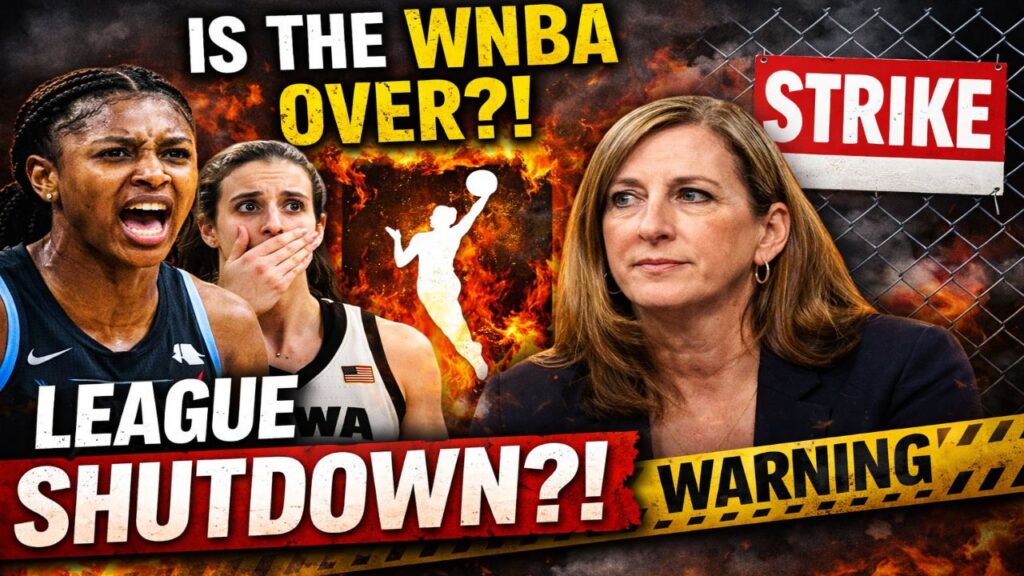
The WNBA is standing at the edge of its most dangerous moment in league history, and most fans don’t even realize how close everything is to collapsing. Behind the highlight reels, behind the social media celebrations, behind the “growth era” headlines, something far more serious is unfolding. Quiet meetings. Missed deadlines. Silence from league offices. And frustration boiling over among players who feel they’ve waited long enough. This is not just another labor disagreement. This is not posturing. This is a ticking time bomb that could shut the league down, cancel games, and permanently fracture trust between players and leadership.
For years, the WNBA has marketed itself as a league on the rise. New stars, record attendance, viral moments, sold-out arenas, and global attention. The narrative has been growth, progress, and momentum. But behind closed doors, players are asking a question that cuts through all the marketing gloss: if the league is growing so fast, why do they still feel unheard? Why are negotiations stalling? And why, at the most critical moment, does it feel like the league has gone silent?
This controversy starts with the Collective Bargaining Agreement, a phrase fans hear but rarely understand. The CBA is not just paperwork. It determines everything. Salaries. Revenue sharing. Housing. Travel. Health care. Maternity benefits. Offseason opportunities. How long careers last. How safe players feel. How respected they feel. And right now, the WNBA’s CBA talks are frozen at the worst possible time.
Players submitted proposals. They waited. And waited. And waited. And what shook the league was not a rejection. It wasn’t even a counteroffer. It was silence. No response. No compromise. No clear direction. For players, that silence felt louder than any “no.” It felt like disrespect. It felt like being ignored at the very moment when the league is profiting most from their labor.
This is where frustration turns into fury.
Veteran players who have sacrificed for years are watching rookies enter the league with massive hype but the same structural limitations. Stars are carrying the league’s visibility while still flying commercial. Players are becoming global icons while worrying about housing stability. And when leadership proposes solutions that feel disconnected from reality, the gap between players and executives grows wider.
One housing proposal in particular ignited backlash across social media and locker rooms. What was framed as progress felt, to many players, like a half-measure wrapped in public relations language. Instead of relief, it sparked anger. Instead of unity, it exposed how far apart the two sides really are. Players spoke out. Fans took sides. And suddenly, the image of a unified league cracked in public view.
But this controversy goes deeper than housing. It’s about power. It’s about who controls the narrative of “growth.” It’s about whether players are partners in that growth or just faces used to sell it. The league celebrates expansion, but players ask why revenue sharing still lags. The league celebrates sponsorships, but players question how that money is distributed. The league celebrates attention, but players ask why they still feel like they’re begging for basic respect.
And this is where the word “strike” enters the conversation.
For many fans, the idea of a WNBA strike feels unthinkable. The league is finally gaining mainstream traction. Why risk it now? But for players, the logic is brutal and simple: if not now, when? Strikes don’t happen when conditions are worst. They happen when workers finally have leverage. And for the first time, WNBA players feel like the world is watching.
Social media has amplified every disagreement. Every leaked comment. Every player reaction. Every fan argument. Some fans accuse players of being ungrateful. Others accuse the league of exploitation. The comment sections are war zones. Podcasts are divided. Analysts are careful with their words. And players are done being careful.
What makes this moment especially volatile is the generational divide. Younger stars are entering the league with NIL money, endorsements, and personal brands that don’t rely solely on WNBA salaries. Veterans built the league when there was no spotlight, no safety net, no viral fame. Now those two groups are aligned in frustration but for different reasons. One group wants fairness for the sacrifices they already made. The other wants a future that matches the league’s promises.
And then there’s the commissioner.
Leadership has become a lightning rod in this controversy. Every public statement is dissected. Every pause is criticized. Every proposal is analyzed for sincerity versus optics. Players no longer speak in vague terms. They speak directly. Publicly. Boldly. And when stars speak, fans listen.
This tension has spilled beyond the WNBA ecosystem. NBA players are weighing in. Media personalities are chiming in. Comparisons are being made. Debates about revenue, respect, and gender equity are crossing sports boundaries. And that’s when things get dangerous for a league — when the story stops being just basketball.
Some fans argue the league is still financially fragile. Others argue that players are the product and deserve a bigger share. Both sides feel justified. And that polarization fuels virality. Every tweet becomes content. Every interview becomes evidence. Every rumor becomes a headline.
What truly terrifies league insiders is not the possibility of a strike. It’s the loss of trust. Once players believe leadership isn’t negotiating in good faith, everything changes. Negotiations become battles. Compromises become concessions. And silence becomes a weapon.
The timing couldn’t be worse. The league is riding unprecedented momentum. New audiences are tuning in. Young fans are choosing WNBA jerseys over NBA ones. Media coverage is expanding. Sponsors are watching. A labor shutdown now wouldn’t just pause games. It could reset public perception in the most damaging way possible.
Yet from the players’ perspective, continuing under the current structure feels like surrender. They argue that growth without fairness is exploitation dressed up as progress. They point to packed arenas and viral highlights and ask why those moments don’t translate into structural change. They point to the future and wonder if this is their only chance to force real reform.
This is why emotions are so raw. This isn’t about one proposal or one policy. It’s about years of feeling undervalued colliding with a moment of maximum leverage. It’s about deciding whether to protect momentum or demand justice. And there is no painless option.
Behind the scenes, players are talking to each other more than ever. Solidarity is growing. Conversations are happening across teams, across generations, across roles. That unity scares management more than any public statement ever could. Because once players stand together, silence stops working.
Fans are caught in the middle. Some fear losing a season. Others support players unconditionally. Some just want basketball. Others want change. The league is being forced to confront a reality it can no longer manage quietly.
And here’s the truth no one wants to say out loud: even if a strike doesn’t happen, this controversy has already changed the WNBA forever. Players have found their collective voice. Fans have seen the cracks. The image of smooth progress is gone. From now on, every announcement will be questioned. Every promise will be measured. Every silence will be noticed.
The league can still choose a different path. It can engage openly. It can respond with urgency. It can treat players like partners instead of problems. Or it can continue to underestimate the moment and risk everything it has built.
This isn’t just a labor dispute. It’s a defining test of whether the WNBA’s growth era is real or performative. Whether the league believes in its players as much as it markets them. Whether progress is shared or controlled.
And as the deadline approaches, one thing is clear: the clock isn’t just ticking on negotiations. It’s ticking on trust, credibility, and the future of the league itself.
Because once players decide they’ve waited long enough, there’s no press release that can undo that.
And when the silence finally breaks, the entire sports world will be listening.
Also Read: Latest Trending News