The WNBA is changing right before our eyes, and if you’ve been watching closely, you can feel it. Not just in the arenas packed with louder crowds. Not just in the record-breaking TV ratings. Not just in the jersey sales flying off the shelves. Something deeper is happening. Something emotional. Something that feels like a shift in power. For the first time in league history, the spotlight isn’t just shining on greatness built over years of sweat and sacrifice — it’s exploding around rookies before they’ve even played a full season. And that has created a conversation nobody wants to say out loud, but everybody is thinking. Is the WNBA growing stronger than ever… or is it quietly dividing from within?
Let’s start with what nobody can deny. The new wave of rookies entered the league with a level of hype the WNBA has never seen before. We’re talking about players who arrived with millions of followers, national endorsement deals, sold-out arenas on the road, and highlight clips going viral within seconds. These athletes didn’t just join the league. They brought an audience with them. A massive one. Suddenly, casual basketball fans who had never tuned into a WNBA game were watching. Sports debate shows that barely mentioned the league were leading with WNBA segments. Ticket resale prices skyrocketed. Social media engagement exploded. It felt like overnight the league stepped into a different tier of relevance.
But here’s where it gets complicated.
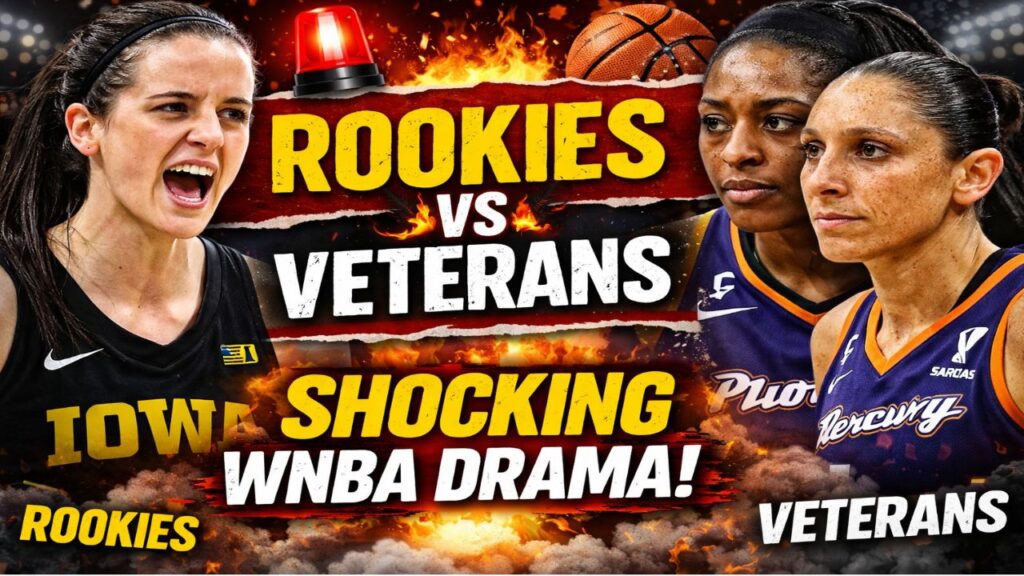
The WNBA wasn’t built overnight. It was built brick by brick. Year after year. By players who flew commercial, who played overseas in the offseason to make ends meet, who fought for charter flights, who advocated for better facilities, who endured low ratings and limited coverage. Veterans who dedicated a decade or more to making the league sustainable. Players who dominated on the court long before the cameras showed up. So when rookies arrive and immediately become the face of the league, it raises a natural question — what about the ones who built it?
This isn’t about jealousy. It’s about legacy. It’s about respect. And in professional sports, respect matters.
Imagine being a multi-time All-Star, a champion, maybe even an MVP. You’ve poured everything into this league. You’ve sacrificed. You’ve spoken on panels. You’ve mentored younger players. And then suddenly, media narratives shift. Headlines focus on first-year players adjusting to the pros. Pre-game shows center around rookie stats. Social media accounts post every move they make — good or bad. Meanwhile, established superstars are quietly putting up elite numbers without nearly the same buzz.
It creates tension. Not necessarily open conflict. But energy shifts. Conversations happen in private. Competitors notice.
And let’s be clear — this isn’t new in sports. The NBA has experienced it. The NFL has experienced it. Whenever a generational rookie enters a league, attention follows. But the WNBA’s situation feels amplified because the league is still growing. It’s still fighting for mainstream recognition. So when one or two players draw the majority of attention, it can feel like the spotlight is uneven.
Now here’s the twist. That spotlight is also fueling unprecedented growth. TV ratings are climbing. Arenas are fuller. Sponsorship dollars are increasing. Expansion conversations are getting louder. Corporate partnerships are strengthening. The salary cap discussions are more serious than ever. In many ways, the rookie hype is lifting the entire league.
So is this tension actually a sign of evolution?
Because when a league grows, dynamics change. New stars challenge old hierarchies. Media ecosystems shift. Fans choose sides. And the conversations get louder.
Social media has amplified everything. A hard foul becomes a viral clip. A stare-down becomes a trending debate. A post-game quote gets dissected for hidden meaning. Fans interpret body language. Analysts speculate about locker room chemistry. Narratives spread within minutes. And sometimes, a simple competitive moment gets framed as personal drama.
But professional athletes are competitors. They’re supposed to compete hard. They’re supposed to guard the rookie aggressively. They’re supposed to test newcomers. That’s part of sports culture. Veterans don’t hand over the throne. It has to be taken.
What makes this era different is the scale of attention. Every rivalry becomes content. Every matchup feels symbolic. “Old guard versus new wave.” “Proven greatness versus rising hype.” And fans eat it up.
And let’s talk about the fan divide, because that might be the most fascinating part of all this.
You now have longtime WNBA fans who have supported the league for years. They understand its history. They know the legends. They respect the grind it took to get here. And then you have a surge of new fans who are following specific players. Their loyalty is tied to individuals rather than franchises. That changes online culture. It changes discourse. It changes how games are experienced.
Suddenly comment sections turn into battlegrounds. Debates about who deserves MVP consideration. Arguments about media favoritism. Accusations of disrespect. Claims that certain players are being targeted unfairly. Claims that others are being protected.
The emotional investment has intensified.
But here’s the reality — this might be exactly what the league needed.
For years, critics said the WNBA needed more attention. More debate. More personality-driven storylines. More cultural presence. Now it has all of that. And with visibility comes scrutiny. With hype comes backlash. With stars come storylines.
The question isn’t whether tension exists. Competition always creates tension. The real question is whether that tension becomes destructive or transformative.
There’s a scenario where veterans feel pushed aside, rookies feel pressured under unrealistic expectations, and media narratives pit players against each other in ways that strain relationships. That’s the fragile path.
But there’s another scenario.
A scenario where the rookie spotlight increases league revenue. Increased revenue strengthens collective bargaining power. Stronger bargaining power improves salaries and conditions for everyone. Expansion adds more roster spots. More roster spots create opportunities for the next generation. Veterans get long-overdue recognition as their highlights resurface for new audiences discovering the league’s history.
In that version, tension becomes fuel.
Let’s also acknowledge the mental pressure on rookies. The hype isn’t always glamorous. Every missed shot becomes a headline. Every turnover becomes a trending clip. Expectations skyrocket instantly. Instead of quietly developing, they’re scrutinized on national platforms. That kind of spotlight can either build diamonds or crush confidence.
Veterans understand that grind differently. They earned their status through seasons of proving themselves. So when they test rookies physically and mentally, it’s not personal. It’s initiation. It’s tradition. It’s the unspoken rule of professional basketball — earn it.
But fans don’t always see it that way. They see viral moments. They choose narratives. They assign motives.
And the media? The media thrives on narratives.
“Is there jealousy?”
“Is there favoritism?”
“Is the league divided?”
“Are veterans threatened?”
These questions generate clicks. They generate engagement. And engagement drives revenue.
The WNBA is entering a commercial phase where storytelling matters as much as box scores. Rivalries drive ratings. Debate drives algorithms. Passion drives loyalty.
But here’s something deeper to consider.
For decades, women’s sports were criticized for lacking drama compared to men’s leagues. Now that the WNBA has real rivalries, intense competitiveness, and visible emotion, some observers feel uncomfortable. Why? Because strong personalities and visible tension challenge outdated stereotypes.
This era is redefining perception.
We’re witnessing a league transition from survival mode to spotlight mode. That shift isn’t smooth. It never is. Growth creates friction.
And let’s talk about the business side because that’s where this story becomes historic.
Television networks are investing more heavily. Brands are attaching themselves to star power. Social media platforms are prioritizing WNBA content because engagement numbers justify it. Merchandise sales are climbing. Expansion cities are being discussed more aggressively than ever before.
If this trajectory continues, the league could enter its most financially stable era in history.
And ironically, it’s the rookie hype — the very thing causing whispers of tension — that’s accelerating that momentum.
So maybe the divide isn’t a weakness. Maybe it’s a sign of transformation.
Think about other leagues during their breakthrough moments. There were always generational clashes. Magic and Bird reshaped the NBA. Kobe challenged veterans early. LeBron entered with unprecedented hype. Every era shift came with debate. With criticism. With veterans questioning whether the newcomer deserved the crown.
History shows that leagues don’t shrink during those transitions. They expand.
Now imagine five years from now. Today’s rookies become established stars. New rookies enter with even bigger social media followings. The cycle repeats. The league’s audience doubles. Media coverage becomes normalized rather than novel.
The current tension becomes a footnote in a much bigger success story.
But we’re in the middle of it right now. And being in the middle feels chaotic.
You see intense playoff-style defense in regular season games. You see emotional post-game interviews. You see players subtly addressing narratives without naming names. You see fans passionately defending their favorites.
It feels alive.
And maybe that’s the word that defines this era — alive.
The WNBA isn’t just existing. It’s commanding attention.
The locker rooms are adjusting. The media landscape is evolving. The fanbase is expanding. The business ecosystem is strengthening. The cultural relevance is rising.
Is it uncomfortable? Sometimes.
Is it competitive? Absolutely.
Is it dramatic? Without question.
But is it progress? That depends on perspective.
If the league continues to balance respect for its foundation with excitement for its future, this could be the golden turning point. Veterans can embrace mentorship roles while still dominating. Rookies can earn respect through performance. Media can celebrate multiple stars instead of isolating one. Fans can appreciate greatness across generations.
The worst outcome would be allowing narratives to overshadow basketball itself. The best outcome would be using this spotlight to elevate every corner of the league.
Because at its core, this is about competition. Elite athletes chasing championships. Generations colliding in pursuit of excellence. And fans witnessing the evolution in real time.
So the next time you see a hard foul, a heated stare-down, or a viral debate clip, ask yourself — is this division? Or is this growth?
Is this jealousy? Or is this competitiveness?
Is this fragility? Or is this transformation?
The WNBA stands at a crossroads unlike any in its history. The foundation built over decades is finally supporting skyscraper-level attention. The question isn’t whether the league can handle the spotlight. It’s whether it can harness it.
Because if it can, we’re not watching a divided league.
We’re watching the beginning of its most powerful era yet.
Also Read: Latest Trending News