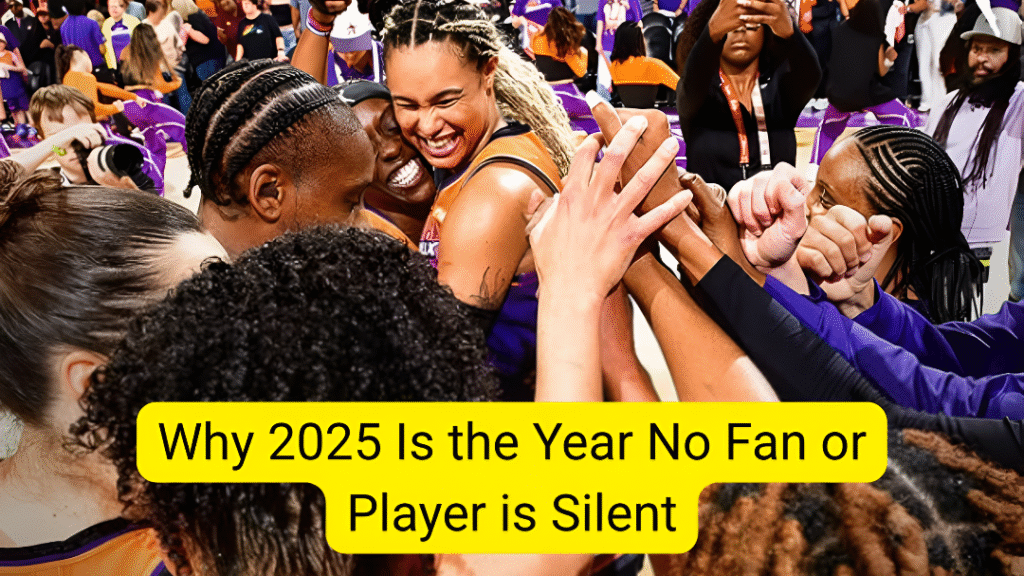
If you thought the WNBA’s story was only being written on the court, think again. In 2025, something deeper is happening—something that touches the digital pulse of fans, the voices of players, and the quiet but powerful movement toward safety, respect, and mental wellness. This season isn’t just about points, rebounds, or championships. It’s about searches, hashtag activism, platform accountability, and the way the league is stepping up to protect both players and fans online. It’s a transformation that promises to change how every WNBA fan experiences the game—from social media to stadium chants, from locker room struggles to public policy. And once you see how far it’s already come, you’ll understand: no fan, no athlete, can remain silent.
Part 1: The Digital Surge — What the Numbers Reveal
First things first: the WNBA isn’t just growing—it’s exploding in the digital domain. Online searches are up massively. Global interest is surging. Metrics that measure social media engagement, Google searches, and fan interaction are climbing faster than ever before, outpacing many larger, more established sports leagues. The hunger for women’s basketball content—player stories, game highlights, controversies, community moments—has never been this pronounced.
What that means practically:
- New fans discovering WNBA via search trends and social media are no longer fringe; they’re becoming mainstream.
- Athlete content isn’t just post-game summaries—it’s micro-videos, personal stories, mental health journeys, activism, even fan-player interaction.
- Media & sponsors notice. Visibility increases revenue potential, but also raises stakes. When an athlete’s voice or a fan’s concern shows up in search data, it becomes harder to ignore.
This digital surge isn’t incidental—it’s a mirror of something deeper: people want connection, authenticity, vulnerability.
Part 2: More Than Fame — Players’ Mental Health Takes Center Stage
To accompany this dramatic digital exposure, the WNBA is pairing up with mental health initiatives like never before. If once players were expected to be tough, silent, or only speak in sports-terms, now they’re opening up, demanding space, and the league is listening.
Key shifts:
- Players are more visible in sharing mental health challenges — performance anxiety, burnout, online harassment. These are no longer whispers behind closed doors.
- The league has introduced initiatives to give players tools: therapy resources, counseling, clinical support, safer online environments.
- Off-season and community programs are being shaped to include mental health awareness, not just physical performance, drills, or conditioning.
The effect of this is powerful. Fans see players not as invincible icons but as real people. That builds empathy, loyalty—and a more sustainable environment for athletes.
Part 3: “No Space For Hate” — WNBA’s Platform for Digital Safety
One of the concrete actions that’s turning heads is the “No Space For Hate” platform. This is the WNBA drawing a line in the sand.
What it includes:
- Enhanced monitoring of online platforms where players are targeted with hateful speech, threats, or harassment.
- A robust fan code of conduct. Not lip service—but stricter rules, clearer boundaries, and consequences.
- League-level security and mental health staff who are dedicated not just to performance, but to protection—of dignity, of identity, of peace of mind.
Why this matters in 2025:
Fans have more access than ever to players through social media, live streaming, and fan content. That amplifies both the good (inspiration, connection) and the bad (harassment, negativity). The WNBA is saying: you get the connection, but not the hate.
Part 4: The Intersection — Search Growth + Mental Health + Safety
Individually, the online growth, mental health awareness, and anti-hate platform each matter. Together, they create a movement. They shift the whole ecosystem of women’s basketball toward something more human, more responsible, more resilient.
Consider this:
- When a player is harassed online, it’s not just one moment: those moments add up. Combined with performance pressure, travel fatigue, injuries, etc., they can shape season-outcomes, even careers.
- As fan interest grows, so does exposure. The more fans, the more voices—and among those voices, the toxic ones too. Without protection, athletes suffer.
- League actions matter in how the WNBA is perceived: as a league that protects its stars, that says mental health is essential, that stands against hate. That perception feeds into sponsorships, fan loyalty, media coverage, ratings, and ultimately, financial sustainability.
Part 5: Impact on Fans & Community
Fans aren’t passive in this evolution. They’re part of it.
How fans and community are impacted:
- Fans are refusing to sit quietly when players are attacked online. They’re amplifying positive messages, creating supportive spaces.
- Community programs and foundations (player-led) are bringing mental wellness into youth sports, schools, local clubs. It’s no longer just about physical training but emotional welfare.
- For many fans, seeing this transparency and action deepens fandom. It shifts the emotional investment: not just “did my team win?” but “does this team/league stand up for what matters?”
Part 6: Challenges To Navigate
This transformation isn’t without friction. There are tension points that the WNBA must carefully manage:
- Balancing exposure with privacy: As players share more, where’s the line? Vulnerability helps, but oversharing risks exploitation.
- Online hate is persistent & evolving: Trolls adapt. Platforms shift. Rules can be weak or unevenly enforced.
- Resource allocation: Mental health programs, clinician support, moderation teams—they cost. Ownership, broadcast partners, sponsors will need to buy in financially, not just in statement.
- Expectations from fans & media: When a player speaks up or the league promises action, fans expect follow-through. When that doesn’t happen, trust erodes.
Part 7: What’s Coming & What to Watch
Over the next few seasons, this trend will deepen. Here are milestones to track:
- How search/engagement data evolves: which players become symbols not just for performance but for voice, activism, wellness.
- How measurement partnerships (ratings, streaming, digital platforms) capture these off-court stories.
- How league policies evolve: will the “No Space For Hate” platform get stronger enforcement, better detection tech, player input in rule making?
- How younger players/emerging stars use their platforms: Will new rookies be more open about mental health from day one?
- Whether sponsors/media will escalate support (monetary & promotional) for mental health, social justice, and player protection programs.
Conclusion
2025 is shaping up to be the year the WNBA proves something vital: it’s not just the scoreboard that defines greatness. It’s how players are treated—on and off the court, on screen and online. It’s not just which shots go in, but whether voices are heard. The digital momentum, the awareness of mental wellness, the stance against hate—they’re converging to redefine what it means to be part of this league.
So when you come for a game, check social channels. Watch for authenticity. Notice who’s speaking out. And remember: no fan, no player, no community needs to be silent. The WNBA is rapidly becoming not just a league of athletes, but a movement of heart, humanity, and hope.
Also Read: Latest Trending News