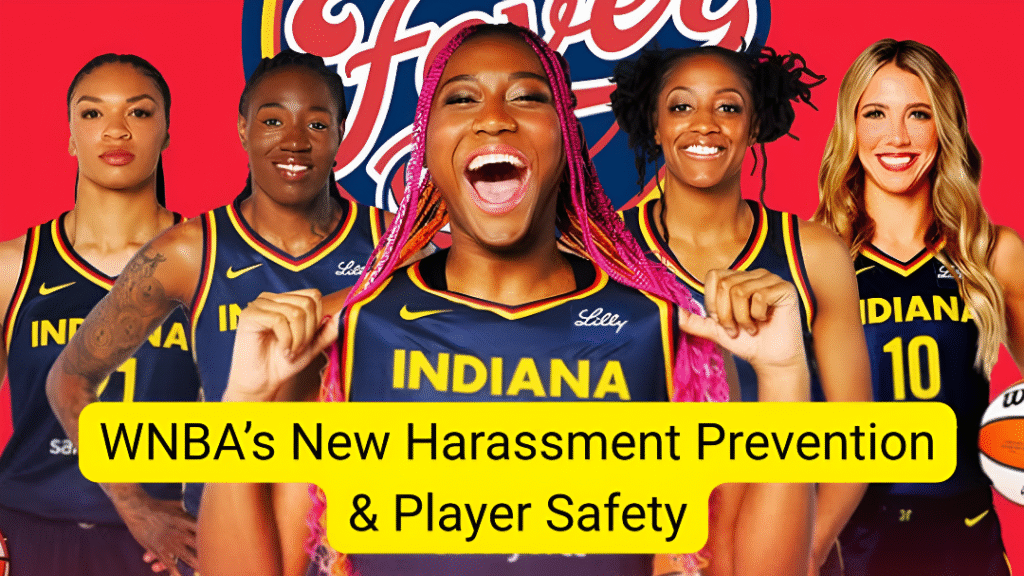
Every buzzer, every highlight, every roaring crowd—WNBA players are used to the spotlight. But with rising fame comes a darker shadow: harassment, threats, and online abuse have become part of the territory. In 2025, the WNBA has launched a far-reaching plan to protect its players—offering what might be one of the most important yet least discussed transformations in women’s sports. This isn’t just about safety. It’s about respect. It’s about trust. And by the end, you’ll see why this program is not just timely—it’s essential.
When Stardom Meets Vulnerability
Recent seasons have made clear: more viewership, more attention, more media coverage has equaled more exposure for players—but also more risk. Female athletes often face abuse that their male counterparts might rarely see: sexist comments, racist attacks, stalking, unsolicited messages, personal threats. Social media amplifies every slip, every misstep, and often with no accountability.
The WNBA, known for its fierce competition and inspiring stories, suddenly also faces urgent conversations about off-court safety. Fans want authenticity, but many players feel exposed. And when exposure isn’t accompanied by safety nets, things go wrong.
What the New Program Hunts Down
The program introduced by the WNBA in 2025 is multi-dimensional. It doesn’t just treat harassment as isolated incidents—it treats it as systemic, something that needs structural solutions. Here’s what’s in motion:
- Monitoring & detection via tech tools. The league is investing in systems to track threats and harassment online, at scale. Automated detection of abusive content, real-time monitoring of social media, and flagging mechanisms both publicly and internally are being put in place.
- Tighter conduct standards. The WNBA is working to strengthen rules around fan behavior in arenas, verbal harassment, and online conduct by supporters. This includes stronger penalties for violations, more robust reporting systems, and clearer definitions of what kinds of behavior are unacceptable.
- Enhanced security & venue safety. Players will see increased physical security in arenas, more situational awareness for events, better crowd control. The league is exploring safety protocols for both their home games and travel, so no player feels unsafe just walking on or off the court.
- Dedicated mental health & wellness resources. Because abuse isn’t just physical or external: it has emotional scars. WNBA is ensuring clinicians, counselors, and support systems are more easily accessible for players coping with the psychological fallout from harassment. The league is expanding mental health services and ensuring they’re confidential, culturally attuned, and timely.
- Partnerships & education initiatives. The program includes workshops for fans, staff, and media about respect, the impact of harassment, how to report it, and the responsibility of bystanders. Also, player education about how to handle abuse, how to use support systems, knowing their rights.
Why 2025 Is the Tipping Point
This shift isn’t just reactive—it feels like a necessary turning point. Several forces are converging:
- Visibility — WNBA’s popularity is surging. More watch games, more talk about the league. That brings scrutiny, not just of play, but of what lies around it. As attention grows, so do the stakes of inaction.
- Player voices — Players are no longer tolerating silence. Many have raised concerns about abuse, unfair treatment, or feeling unsafe. The pressure is now loud enough that the league has to respond.
- Fan expectations — Newer fans aren’t just looking for athletic heroics. They want ethics, responsibility, safety. They expect leagues to protect players, not just entertain.
- Social media era — Abuse online spreads fast. If there’s no system to check it, it can become toxic, affecting well-being and performance, and even possibly threatening players physically or emotionally.
What’s At Stake If It Fails
If this program fails, the consequences are serious:
- Player retention & mental burnout. Stars might step back, or retire early. New talent might hesitate to join a league perceived as unsafe.
- Reputation risk. Sponsors, partners, media outlets don’t like association with controversy. If harassment is seen as tolerated, brands might withdraw support or demand stronger action.
- Fan trust & league growth. Fans want fair, inspiring competition—but also moral leadership. If players are seen as unprotected, some fans may disengage; some may criticize. Growth may slow.
- Widening equity gaps. Women’s sports already fight for equality. If player safety is neglected, it reinforces the idea that women’s leagues are “less protected,” which undermines progress.
Early Signs & Promise
You might already see some promising signs:
- The league has announced “anti-harassment task forces” and dedicated leadership roles to address digital threats and fan-behavior.
- Partnerships with mental health organizations are expanding; players are being offered confidential counseling and wellness support.
- Some teams have begun fan education campaigns — in-arena announcements, digital content, signage reminding fans of respectful behavior, and what harassment looks like.
- Reports of abuse, threats, or safety concerns are no longer being hushed: there’s public acknowledgment, sometimes even league statements taking ownership and promising action.
What TRUE Success Will Look Like
The program’s true success won’t just be that the policies exist. It’ll show up in lived experiences.
Here are metrics / signs that indicate a success:
- Decrease in reported harassment incidents over time (online & offline). Fewer threats escalating to legal or safety concerns.
- Players expressing, in interviews or anonymously, that they feel safer—on social media, at home, in arenas.
- Fans behaving more respectfully in arenas: cleaner crowd behavior, fewer in-person disruptions, fewer social media incidents tied to game broadcasts.
- Psychological well-being metrics: lower rates of burnout, better mental health scores, fewer reported trauma-related declines in performance due to off-court issues.
- Consistent enforcement: violations by fans or others result in actual consequences; league actions are transparent and follow through.
Possible Challenges Ahead
But of course, implementing such a sweeping program is complex. Some potential obstacles:
- Freedom of speech vs. harassment definitions. Enforcing rules without clashing with rights or causing backlash over perceived censorship.
- Scale & cost of tech. Monitoring online behavior at scale isn’t cheap; nor is ensuring security at all venues. Smaller franchises may struggle more.
- International/social media jurisdiction. Threats or abuse may come from global users, complicating policing or legal accountability.
- Maintaining confidentiality, trust. Players have to believe the support systems are safe, private, and effective—or they won’t use them.
- Consistency across teams. All franchises in the WNBA must adopt uniform standards. If some lag, enforcement or protection will be patchy.
Why This Might Be the WNBA’s Most Important Story You Haven’t Heard
Because while everyone watches final scores, trade rumors, and player stats, relatively little attention has been paid to what happens behind the scenes—how players are protected, how safe they feel, how the league handles abuse. And yet, this is the foundation. Performance on court means little if the people on court don’t feel safe, centered, respected.
If this harassment prevention & player safety program works, it sets a new standard—not just for WNBA, but for women’s sports globally. It signals: we care about more than athletic display. We care about humanity.
And when fans agree that players deserve safety and dignity as much as fame or championships, the connection becomes deeper, loyalty becomes more potent.
Final Take: Safety Is the New Edge
In 2025, the WNBA isn’t just competing in games. It’s competing for a new standard of what a professional sports league can be—one that values its players not just for points, but for personhood. This harassment prevention and player safety program is far more than policy. It could be the defining character of the league’s legacy.
Because stardom is fragile. Fame is bright. But safety, trust, and respect—they endure.
So when you watch the next WNBA game, pay attention. Not just to what the players do, but to what the league does. To how players are protected off court. To what fans see, speak, and enforce. Because sports greatness isn’t only measured by wins. It’s earned in the way we care for those who make the game.
Also Read: Latest Trending News