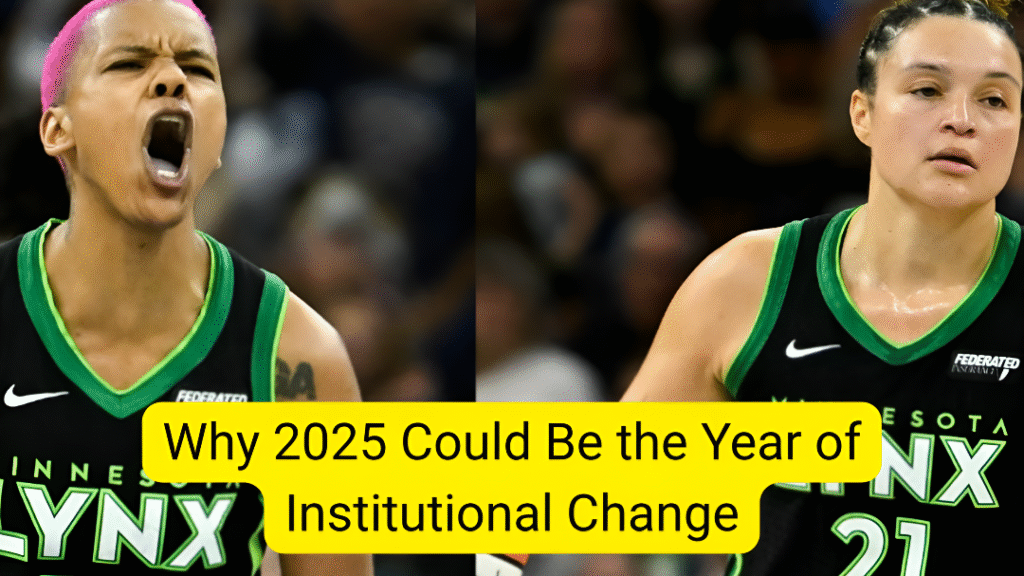
Something is shifting in the WNBA—and it’s not a new player or historic trade. It’s the referees. The calls. The inconsistency. For years, murmurs among coaches, players, and fans about officiating have rippled under the surface. In 2025, they’ve exploded into a public demand for accountability and change. This isn’t just complaining. It’s a reckoning—and it might just redefine the league’s integrity. By the time you reach the end, you’ll see how officiating inconsistency has become the WNBA’s most urgent issue—and why the solutions being proposed could reshape how the game is called forever.
What’s Going On: More than Missed Calls
It’s easy to write off “bad calls” as part of the game. But in the WNBA lately, what’s being noticed is deeper: a pattern of inconsistency across games that goes past isolated errors.
- Coaches and teams are increasingly vocal, criticizing foul calls, flagrant / technical fouls, and non-uniform enforcement of physicality.
- Fans are picking up on it too—seeing mismatches in how aggressively some players are defended, or how certain fouls are ignored depending on the matchup or location.
- Media coverage and social discussions point toward uneven standards: some games seem tightly officiated while others are loose, especially in terms of defensive contact and what constitutes a foul deserving a whistle.
These are not just frustration moments. They accumulate: momentum shifts, morale, strategy—even the integrity of outcomes can be affected.
Why 2025 Feels Different
There are multiple forces converging in 2025 that make this issue more urgent and visible than ever before:
- Stronger leadership voices. Coaches like Natalie Nakase (Golden State Valkyries) are no longer just raising browns—they’re speaking out. Complaints about officiating inconsistency are going public. The pressure isn’t behind closed doors; it’s front-and-center.
- Player empowerment. Players, especially stars, are more comfortable calling out officiating. They want not just fairness, but consistency. They’re weary of “one-game you get the whistle, next game you don’t.” They know the stakes—momentum, safety, respect.
- Fan scrutiny & social media. With increased viewership, expanded broadcast deals, and more eyes—fans and analysts alike are noticing these patterns, posting clips, calling out what feels unfair. That amplifies pressure on the league to respond.
- League growth + stakes. As the WNBA expands, its financial value climbs, franchise stakes grow, and expectations rise. Larger markets, higher salaries, more media attention — everyone wants the league to feel polished, just, credible. Bad officiating harms that credibility.
What’s Being Criticized Most
Let’s get specific: here are the main grievances that keep cropping up in 2025:
- Uneven foul calling. Some games feel physical, others feel choppy. The difference in how aggressively perimeter defense is allowed, or how verticality is interpreted, seems game-by-game and referee-by-referee.
- Inconsistency in technical / flagrant fouls. What one referee calls a technical, another lets slide. Physicality that feels borderline sometimes earns little more than a warning—or nothing.
- Lack of transparency & accountability. Unlike some other leagues, there is less publicly available data or reports that break down individual referee performance or highlight calls that were reviewed and overturned (or that should have been).
- Impact on player safety. When calls go unwhistled, rough play can go too far. Players argue that inconsistent officiating not only impacts fairness, but also increases risk of injury.
What Could Change: The Proposed Solutions
If 2025 becomes the year of change, here are some of the solutions being floated — some already in motion, others hotly debated:
| Proposed Reform | What It Might Include |
|---|---|
| Full-time/referees employment model | Move toward referees being salaried, full-time, with standardized training & evaluation—less variability in game-by-game assignments. |
| Standardized referee transparency & public accountability | Releasing analysis of key calls, referee performance, post-game reports, a “last two minutes” style report (similar to NBA) to ensure decisions in critical moments are reviewable. |
| Better review & challenge systems | Expanding or refining coach’s challenge, instant replay, perhaps making more events reviewable. Ensuring consistency in what’s subject to review. |
| Clearer rule interpretations & training | Tighten the definitions around what constitutes foul (e.g. hand check, verticality, reach or body contact). Pre-season sessions for referees, video training, unified rubric. |
| Player-ref interaction & feedback loops | Regular meetings where referees, players, coaches review problematic calls. Mechanisms for officiating feedback without fear of retaliation. |
Stakes: What’s on the Line
Why does this matter so much? Because officiating isn’t just about fairness—it’s about the trust, legitimacy, and future growth of the league.
- Credibility with fans. As the WNBA fights for attention, sponsorship, viewers—perceived or real unfairness undercuts fan trust. If fans believe some games are rigged, or that outcomes are overly influenced by inconsistent refereeing, engagement suffers.
- Player morale & career impact. For players, bad calls can mean missed stats, reduced playing time, more wear & tear. Over time, inconsistent calls can tilt opportunities.
- Safety. As noted, inconsistent enforcement of physicality can lead to risk of injury—especially where players are pushing boundaries physically. Clean play depends on consistent rules.
- Competitive balance. Teams that repeatedly get favorable or unfavorable calls could benefit unfairly. Over a season, it affects standings, playoff seedings, and even championship outcomes.
Why the WNBA Now Has Momentum to Tackle It
Certain institutional and cultural shifts make real change more possible now than maybe ever:
- The league is expanding. More teams, more games, more visibility. Larger sample sizes for data. Stakes are higher.
- Media deals are increasing. More broadcast scrutiny. Higher production values. Calls are replayed, discussed. Bad calls are more visible—and harder to avoid mention.
- Players’ union (WNBPA) is more organized and vocal. They have real leverage during CBA negotiations; officiating consistency could become a negotiated issue.
- Fan base maturity. More fans expect transparency. They have social media, replays, analytics. They want accountability.
Potential Obstacles & What the WNBA Needs to Watch Out For
Even with momentum, real reform faces challenges:
- Cost & logistics. Full-time referees, improved technology for replay, evaluation systems—all require funding and infrastructure.
- Pushback on traditions. Some will argue that every game is different, and variability is inevitable. There will be resistance from those comfortable with existing models.
- Maintaining fairness while increasing scrutiny. Over-correcting may lead to hyper-technical officiating or slower pace of games if too many whistles or reviews are introduced.
- Balancing transparency with referee privacy. Releasing performance data is useful, but referee mistakes are sensitive; there must be systems that support improvement rather than punishment alone.
What Fans Can Do to Support Change
If you believe officiating consistency is crucial, here’s how fans can help push the needle:
- Pay attention & call out not just egregious errors but patterns. Use social media, fan forums. The more consistent the critique, the harder it is to ignore.
- Advocate for transparency: support public reports, post-game analyses, referee metrics being shared.
- Support players and coaches who speak up. Raising concerns publicly helps make this not just an issue on the sideline but core to the league’s culture.
- Stay educated about the rules. When fans understand rule interpretations, they can better identify when calls are inconsistent vs. rule compliant.
What Could True Change Look Like—A Vision
Imagine this:
- Starting 2026, all WNBA referees are on full contracts, with standardized weekly training, shared classroom video sessions, and a centralized evaluation system that reviews performance on consistency, calls accuracy, and professionalism.
- Every game ends with a short referee performance recap for the last two minutes—calls made, those overturned, transparent explanation, posted publicly.
- Coach’s challenges expanded: more types of calls can be challenged; teams get additional challenges if their prior ones are successful; broadcast replay support is enhanced.
- Rulebook clarifications released each season in preseason, with video examples, to reduce ambiguity in what constitutes contact, verticality, hand checking.
- A referees-players-coaches advisory board that meets regularly to discuss borderline calls, gather feedback, and adapt interpretations as the game evolves.
This kind of shift won’t just reduce controversy. It would build respect. It would signal that as the WNBA grows, its operations grow too—professionalism, fairness, transparency.
Final Word
Here’s the thing: games are won and lost on many fronts. Talent. Coaching. Heart. But when officiating inconsistency is allowed to fester, it poisons everything else. It sows doubt—not just among players, but among fans, commentators, media partners. In 2025, the WNBA is at a crossroads: grow without fixing it, and risk eroding trust; confront it, and earn respect, credibility, long term stability.
Your next WNBA game might look different: you might spot a whistle more fairly applied, a replay review made visible, a coach’s challenge granted, a contentious call explained. And slowly, across the league, a culture of consistent officiating could become something fans expect—something rare in many women’s sports, but fundamental to greatness.
If you care at all about integrity in the game, about fairness, about every player, every coach, every moment counting, this is the story to watch. Because the WNBA’s officiating reckoning isn’t just about the refs. It’s about whether the league lives up to its aspirations—and whether we, as fans, can trust what happens on the court.
Also Read: Latest Trending News